How Does Understanding Back Pain Reduce Fear?
TL;DR
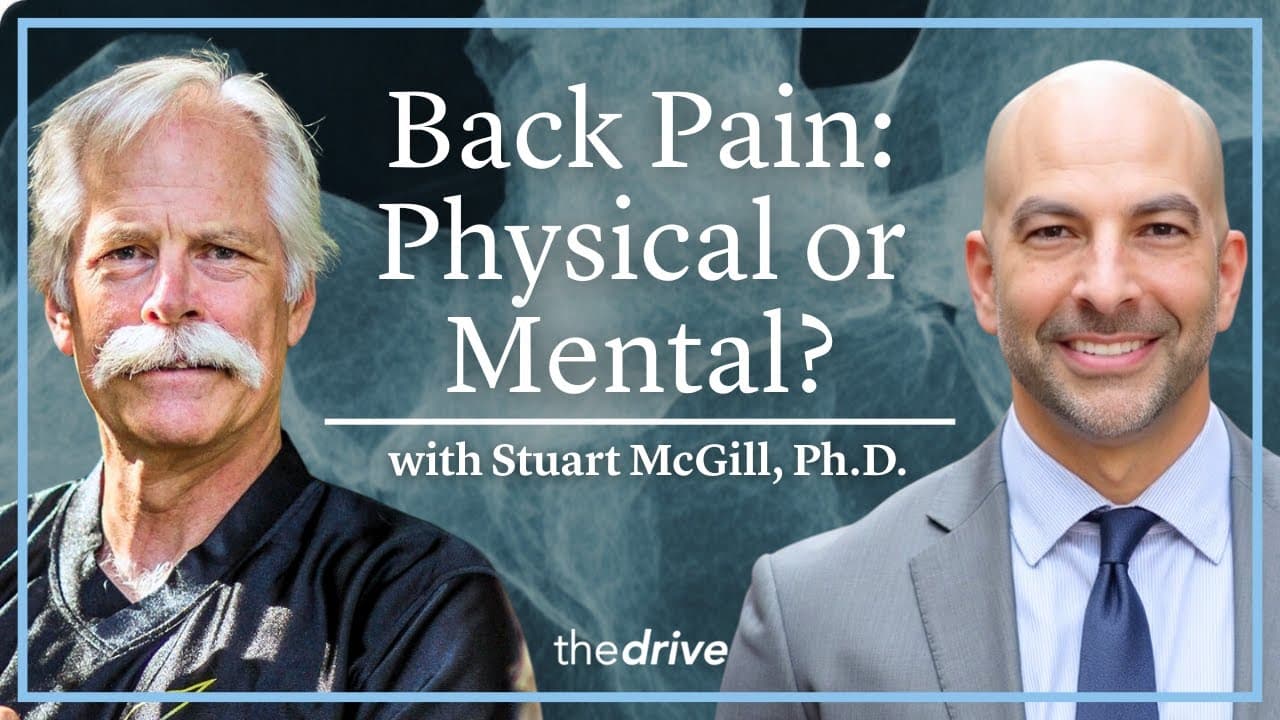
Back pain should not be dismissed as psychological simply because previous treatments failed. Identifying the movement, posture, or loss of muscular control that triggers pain can reveal a mechanical pathway and guide targeted coaching. Understanding that pathway may reduce fear, restore a sense of control, and support recovery, although persistent symptoms can take months to settle.
Transcript
Let's pivot for a moment to talk a little bit about um the the amount of psychological trauma that exists in the patient with lower back pain. And I'm I'm thinking very specifically even about some of my own patients or friends who have been in the throws of lower back pain. And um I if if nothing else, Stuart, I take a great degree of comfort from... Read More
Key Insights
- Pain dismissal is psychologically damaging when clinicians describe unresolved symptoms as being solely in a patient’s head. One patient interpreted that judgment as meaning he was crazy and undeserving of life, showing how inadequate evaluation and careless language can intensify an already serious crisis.
- A pain mechanism can remain hidden when clinicians rely on imaging or standard treatment without observing the provoking action. McGill asked a patient to reproduce his symptoms because watching the exact movement offered a way to identify what previous assessments had missed.
- Muscular control is a source of spinal stability during movement. Measurements showed that one patient used his muscles while rotating, then completely relaxed at the critical position, allowing a small shear translation or clunk that irritated the sciatic root and produced severe pain.
- Targeted coaching can interrupt a repeatable pain trigger. The patient practiced maintaining muscular tone while moving through the previously dangerous position, completed the motion without the clunk, and reportedly experienced no further acute episodes during the follow-up period described in the transcript.
- Recovery can continue after the primary trigger has been corrected. Although the coached patient stopped producing the painful clunk, the residual ache took about four months to settle, distinguishing immediate control of the mechanism from the slower reduction of lingering symptoms.
- Posture can connect emotional state with physical aggravation. McGill observed that a former police officer sat in a posture associated with depression, while that same slumped position was unfavorable for his posterior disc bulge and helped maintain his painful condition.
- Understanding pain mechanics can change a patient’s psychological outlook by replacing helplessness with a practical strategy. In both stories, identifying a modifiable physical trigger gave the patient evidence that symptoms could be influenced rather than merely endured indefinitely.
- Mechanism-specific assessment was central to McGill’s research clinic approach. Patients were categorized by their pain pathway, given an appropriate exercise prescription, and followed for two years, including checks on compliance and outcomes after applying the plan described as virtual surgery.
Install to Summarize YouTube Videos and Get Transcripts
Explore YouTube Video Summarizer or Get YouTube Transcript Extractor
Questions & Answers
Q: How can clinicians tell whether back pain is physical or psychological?
McGill’s approach is to investigate the specific movement, posture, or activity that produces symptoms rather than deciding that unresolved pain is purely psychological. He asks patients to demonstrate the trigger, observes how they move, and, in one case, uses muscle and spinal-motion measurements. The transcript emphasizes interaction between mechanics and psychology, not a simple choice between physical and mental causes.
Q: Why is it harmful to tell patients that back pain is in their head?
Telling a patient that pain is in their head can make the person feel disbelieved, blamed, or considered crazy. In the case McGill describes, a patient became suicidal after unsuccessful treatment and the suggestion that his pain was psychological. A careful mechanical assessment later identified a repeatable trigger, gave him a strategy, and changed his sense of helplessness into control.
Q: How was the first patient’s back pain mechanism identified?
The patient reproduced his symptoms by winding his body around until he reached a critical position. Muscle measurements and three-dimensional spinal-motion monitoring showed that he initially used his muscles for stability, then completely relaxed at the top position. That loss of control allowed a small shear translation or clunk, which McGill said irritated the sciatic root and caused the severe painful episode.
Q: How did muscle control prevent the patient’s painful back clunk?
McGill coached the patient to push against his fingers, maintain muscular tone, keep talking, and preserve that control throughout the provoking movement. When the patient reached the position that had previously caused the clunk, he remained controlled and completed it without the painful event. The coaching gave him a practical way to avoid repeating the mechanical trigger during later movement.
Q: How long did recovery take after the mechanical trigger was corrected?
The acute clunk was prevented as soon as the patient learned to maintain muscular control through the triggering position, but the remaining ache did not disappear immediately. McGill says it took about four months for the ache to wind down. He also reports that the patient later said he never experienced another acute episode, including when they met again ten years later.
Q: How can posture connect depression and lower back pain?
McGill describes a former police officer who sat slumped with his knees together and moved with a depressed demeanor. He says that posture was also unfavorable for the man’s posterior disc bulge. After McGill showed him a different squat procedure, the man sat upright and later stood without pain, illustrating how emotional presentation and mechanical aggravation can reinforce one another.
Q: Why does understanding the cause of back pain reduce fear?
A clear mechanism gives patients a specific explanation and an action they can control. Instead of believing that pain is mysterious, imaginary, or permanent, they can recognize which movement or posture provokes it and apply a strategy to reduce that trigger. In McGill’s examples, this understanding changed the patients’ psychological outlook by replacing hopelessness with evidence that their behavior could influence symptoms.
Q: What outcomes did McGill report from his back pain clinic?
McGill says the University of Waterloo experimental research clinic assessed patients according to their pain pathways, prescribed appropriate exercises, checked whether they complied, and followed every patient for two years. Among the subgroup for whom other approaches had failed and surgery had been recommended, 95% reported that they avoided surgery after following the described virtual-surgery plan and were glad they did.
Summary & Key Takeaways
-
Lower back pain can involve a powerful interaction between physical symptoms and psychological distress. McGill argues that clinicians should not assume pain is imaginary after unsuccessful treatment. Instead, they should investigate when symptoms appear, identify the provoking movement or posture, and determine whether a specific mechanical pathway explains the patient’s experience.
-
One patient triggered severe sciatic pain while rotating his body and relaxing his torso muscles at a critical point. Motion monitoring and muscle measurements showed that this loss of control allowed a small translation or clunk. Coaching him to maintain muscular tone prevented the clunk, although the remaining ache required about four months to subside.
-
A second patient’s depressed, slumped posture aggravated his disc-related pain, while a simple change in movement and sitting position relieved it during the lecture. McGill presents these cases as evidence that understanding pain mechanics can restore hope. He also reports that 95% of a selected clinic subgroup avoided recommended surgery after following the prescribed plan.
Read in Other Languages (beta)
Share This Summary 📚
Summarize YouTube Videos and Get Video Transcripts with 1-Click
Try YouTube Summary with ChatGPT & Claude or YouTube Transcript Generator
Explore More Summaries from Peter Attia MD 📚



Summarize YouTube Videos and Get Video Transcripts with 1-Click
Try YouTube Summary with ChatGPT & Claude or YouTube Transcript Generator