How to Plan a Simple, Stress-Free New Year
TL;DR
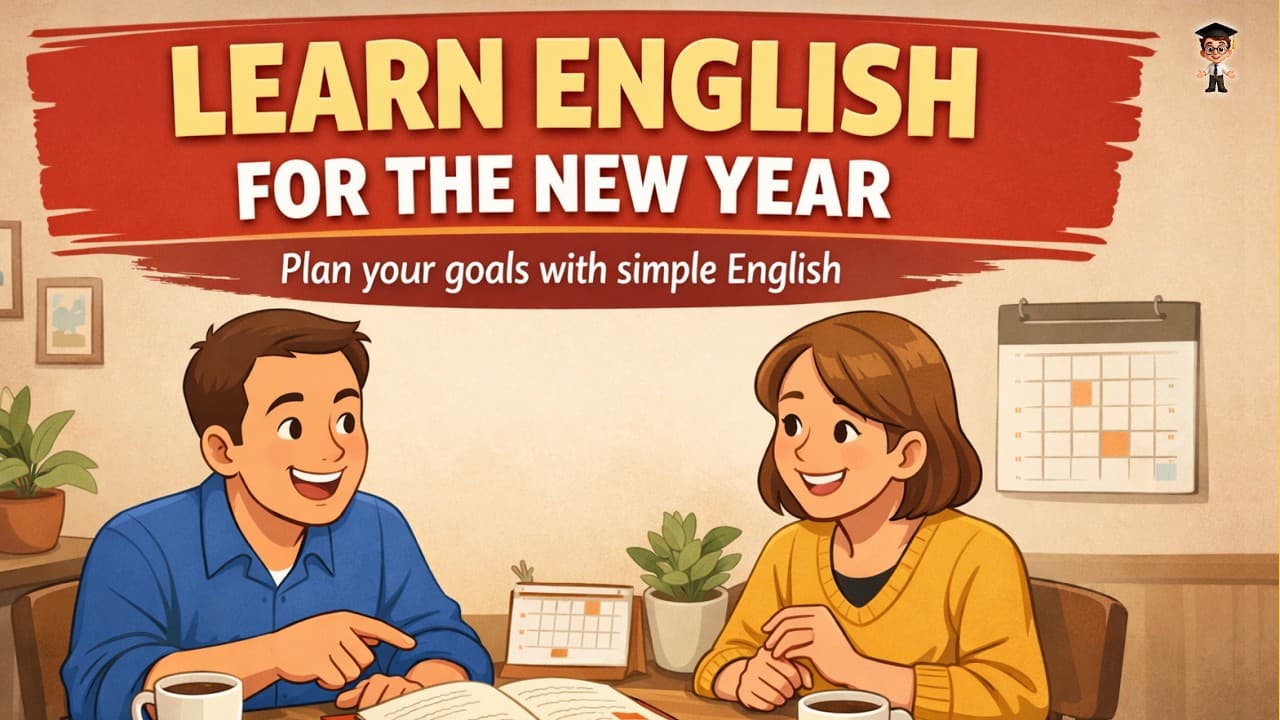
Start by reflecting on three to five happy moments, then choose one major goal and divide it into small, practical steps. Add birthdays, holidays, rest, and fun activities to a calendar, select a motivating word for the year, and create a specific English-learning habit that is easy to repeat.
Transcript
[music] [music] Hello everyone and welcome [clears throat] back to Mr. English channel where learning English [music] is easy and fun. I'm Emily. >> Hello Emily. Hello to our amazing listeners. I am so happy [music] to be here with you today. >> It is great to see you Paul. You look very happy today. You have a big smile. >> I do. I'm feeling very ... Read More
Key Insights
- Reflection is the first step in planning a new year because it identifies what mattered during the year that is ending. Writing three to five happy highlights in a notebook helps clarify the people, activities, and experiences you value.
- One major goal is easier to focus on than a long list of ambitious resolutions. Choosing a single priority, such as health, money, or English, reduces the risk of becoming tired and abandoning the entire plan early in the year.
- A big goal becomes practical when it is divided into small actions. A goal of becoming stronger, for example, can begin with walking for 20 minutes every day, turning a broad intention into a simple and repeatable habit.
- A calendar is useful for organizing both responsibilities and meaningful personal events. Recording family birthdays, holidays, vacations, and long weekends helps prevent forgotten dates while ensuring that rest and enjoyable activities receive space in the yearly plan.
- Rest and fun are important parts of a balanced yearly plan. Scheduling a vacation, a camping trip, or a long weekend makes enjoyable time visible, creates anticipation, and prevents work from becoming the only activity represented on the calendar.
- A word of the year is a single theme that can guide feelings and decisions. Words such as calm or learn provide a simple reminder of the direction you want to follow whenever you face a choice or lose motivation.
- Practical English goals are more useful than aiming for perfection. Listening to a podcast every Tuesday or learning five new words each week creates a specific routine, and five weekly words add up to more than 250 words in a year.
- Writing plans in a special notebook can make the new year feel like a fresh start. A clean page, colored pens, and a clearly labeled yearly plan make the process enjoyable while moving ideas out of your head and reducing stress.
Install to Summarize YouTube Videos and Get Transcripts
Explore YouTube Video Summarizer or Get YouTube Transcript Extractor
Questions & Answers
Q: How do you begin planning for a new year?
Begin by reflecting on the year that is ending rather than immediately focusing on the future. Take a notebook and write down three to five highlights or happy moments. These could include a family beach trip or another experience that made you feel good. Reviewing positive memories helps you recognize what is important to you before you choose priorities for the next year.
Q: Why should you choose only one big goal for the year?
Choosing one big goal allows you to focus instead of spreading your attention across many demanding resolutions. A long list involving daily exercise, many books, new languages, and cooking can become exhausting, causing the plan to stop early. Selecting one priority, such as health, money, or English, makes the year feel less overwhelming and gives your effort a clear direction.
Q: How can you turn a big yearly goal into small steps?
Start by identifying actions you can perform regularly instead of treating the broad goal as an immediate result. If your major goal is health and you want to become stronger, a small step could be walking for 20 minutes every day. The action should feel simple and achievable, because repeatable habits make a large goal less frightening and more practical.
Q: What should you add to a yearly calendar?
Add important dates such as family and friends' birthdays, holidays, vacations, and planned long weekends. You can use a phone calendar or a large paper calendar that displays the whole year. Recording these events helps you remember special occasions, avoid missing birthdays, and reserve time for rest and fun instead of filling the year only with work.
Q: What is a word of the year, and how does it help?
A word of the year is one word that represents the theme or feeling you want to carry through the coming year. Calm can remind someone to slow down and breathe after a busy year, while learn can encourage reading or developing new skills. When making a choice or feeling unmotivated, the word provides a simple guide for deciding what to do.
Q: How should beginners plan their English learning?
Beginners should avoid a vague goal such as becoming perfect in English and choose a specific, practical habit instead. Examples include listening to a podcast every Tuesday or learning five new words each week. These plans clearly state what to do and when to do it. Small routines are easier to follow, and five weekly words become more than 250 words over a year.
Q: Why is a notebook useful for yearly planning?
A notebook gives your goals, reflections, and habits one visible place instead of leaving them as thoughts in your head. A new notebook can also create the feeling of a clean page and a fresh start. You can label the first page with the year, use colored pens, and make the plan enjoyable. Writing everything down can quiet your mind and reduce stress.
Q: How can yearly planning include rest and enjoyment?
Plan enjoyable time with the same intention used for goals and important dates. Write a vacation, camping trip, or long weekend on the calendar before the year becomes crowded. Seeing the activity written down makes it feel real and gives you something exciting to anticipate. This also reflects the idea that rest matters alongside work and supports a happier, more relaxed year.
Summary & Key Takeaways
-
Begin planning by looking back at the year that is ending. Write three to five highlights or happy moments in a notebook, such as enjoyable time with family. Reflection reveals which experiences matter to you and provides a positive, meaningful foundation for deciding what you want from the coming year.
-
Choose one major goal instead of creating an overwhelming list of resolutions. Write the goal clearly, then translate it into small actions that feel manageable. A health goal, for example, can become a daily 20-minute walk. This focused approach makes the plan less intimidating and easier to continue beyond the first months.
-
Use a calendar to record birthdays, holidays, vacations, long weekends, and other enjoyable plans. Choose one word, such as calm or learn, to guide decisions throughout the year. For English practice, replace perfection with a specific routine, such as listening every Tuesday or studying five new words each week.
Read in Other Languages (beta)
Share This Summary 📚
Summarize YouTube Videos and Get Video Transcripts with 1-Click
Try YouTube Summary with ChatGPT & Claude or YouTube Transcript Generator
Explore More Summaries from Mr. English Channel 📚





Summarize YouTube Videos and Get Video Transcripts with 1-Click
Try YouTube Summary with ChatGPT & Claude or YouTube Transcript Generator