How to pick hobbies that rewire your brain for success
TL;DR
Hobbies protect your brain from constant screen dopamine and AI overreliance. Use the VIBE framework to choose one or two hobbies that boost vitality, inquiry, belonging, and expression. Start small, avoid posting about them, and evaluate whether you feel more alive after each session.
Transcript
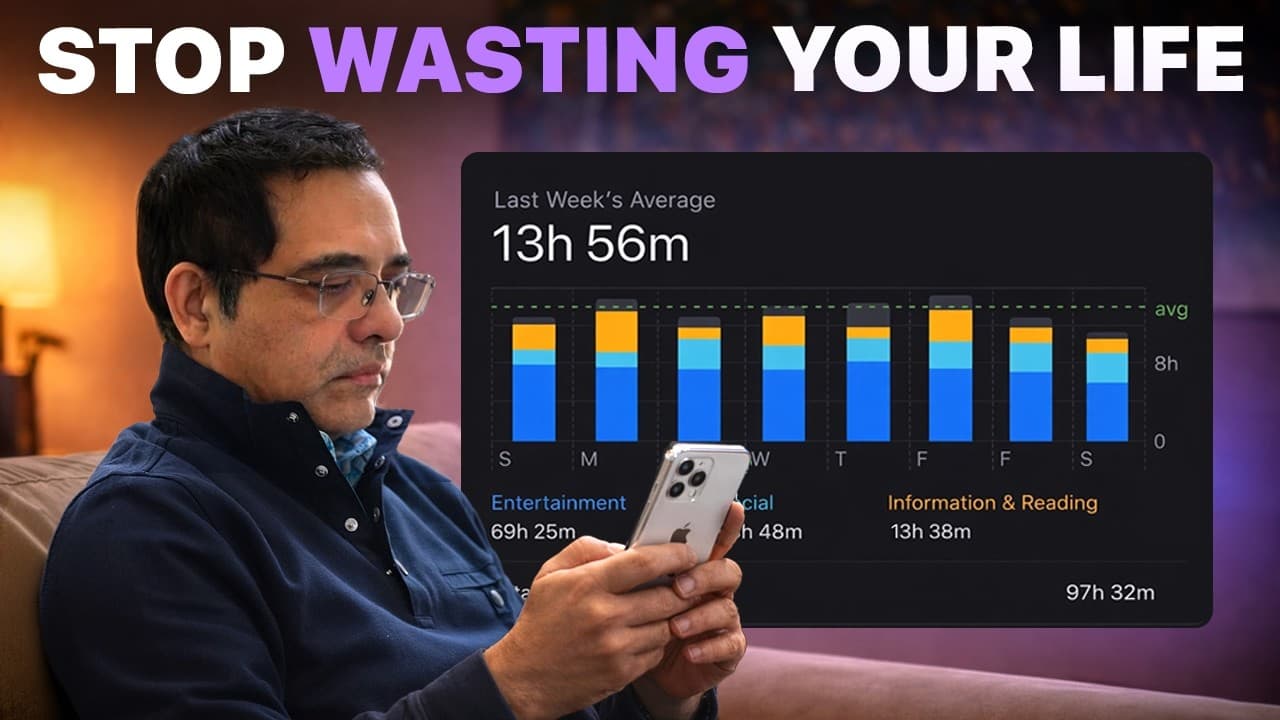
20 years ago, people had hobbies. Now they have a screen. The average person now spends 70 hours a week staring at a screen. That's not just wasting time. It's slowly destroying our brain. I went from a homeless teen to an MIT grad to building and advising companies worth billions. Somewhere in that journey, I almost lost every hobby I ever loved. ... Read More
Key Insights
- Hobbies act as a brain rehab, countering rapid dopamine hits from screens and social media, which rewires attention and pleasure response. The practice of regular, non performative play rebuilds your capacity for focus and curiosity.
- AI shifts responsibility away from your mind, making you rely on external tools. Hobbies counter this by training independent thinking, which sustains agency and critical thinking in high tech environments.
- The VIBE framework helps you pick hobbies by mapping them to four pillars: vitality, inquiry, belonging, and expression, ensuring activities address physical energy, continuous relearning, social connection, and authentic creation.
- Choosing one or two hobbies and applying the framework twice can reveal fit; a rule of three helps test commitment before deep investment, reducing wasted time and effort.
- Posturing about hobbies ruins intrinsic joy. The video argues to keep play private, avoid metrics, and resist turning hobbies into public performance to preserve real enjoyment.
- Hobbies should be pursued with low-cost gear and a focus on minutes rather than metrics, encouraging sustainable engagement and reducing barriers to starting or continuing.
- The habit of hobbies is linked to higher overall happiness and productivity, as evidenced by Nobel Prize winners who reportedly pursued serious hobbies and formal training more often than peers.
- The Finland example demonstrates how a culture designed around nature, accessible education, trust, and equality aligns with the VIBE pillars to create a happier, more balanced society.
Install to Summarize YouTube Videos and Get Transcripts
Explore YouTube Video Summarizer or Get YouTube Transcript Extractor
Questions & Answers
Q: What is the core idea behind protecting hobbies in a high tech world?
The core idea is that hobbies function as a rehab for the brain, countering the brain rot from constant screen time and AI reliance. By engaging in meaningful, non transactional activities, you rebuild focus, introduce real learning, and maintain agency. This supports long term performance and personal fulfillment rather than chasing quick digital dopamine fixes.
Q: How does AI affect a person’s thinking according to the video?
AI changes attention and agency by outsourcing thinking itself. When people become overconfident in AI, they stop double checking their work and critical thinking declines. The video uses a metaphor of outsourcing your mind to describe how reliance on AI can diminish personal problem solving and initiative, reducing overall cognitive engagement.
Q: What does the VIBE framework stand for and how is it used?
The VIBE framework stands for Vitality, Inquiry, Belonging, and Expression. It is used to choose hobbies by evaluating how each potential activity supports physical energy, ongoing learning, social connection, and authentic creative output. The idea is to pick hobbies that naturally fit into one or more pillars and enhance overall well being.
Q: Why should you pick one or two hobbies and apply the framework before committing?
Starting with one or two hobbies and applying the framework helps you test fit without overcommitting. The rule of three encourages trying a hobby three times to assess enjoyment and alignment with the pillars. This approach minimizes wasted time and ensures you invest in activities that genuinely restore and energize you.
Q: Why is it important not to post about your hobbies or seek external validation?
Posting about hobbies or seeking external validation turns play into performance, which erodes intrinsic joy. The video argues that the moment you start performing for an audience, you outsource your joy to the algorithm and lose the personal, restorative value of the activity. Private play preserves authenticity and growth.
Q: What practical tips help maintain a hobby without turning it into a grind?
Practical tips include using cheap gear to lower friction, focusing on minutes rather than metrics, and avoiding doom scrolling during play. After each session, ask whether you felt more alive or more judged, which helps you gauge the restorative impact and stay true to the purpose of the hobby.
Q: How do Nobel Prize winners relate to the message about hobbies?
The video cites a 20 year study of 773 Nobel Prize winners showing they had three times more serious hobbies and were more likely to have formal training in crafts or arts. This supports the argument that hobbies fuel high performance by broadening cognitive skills, creativity, and sustained discipline, rather than detracting from work.
Q: What societal example is used to illustrate how a supportive environment affects happiness?
Finland is used as an example, showing that a culture with access to nature, walking and biking, affordable education, high trust, and lower inequality aligns with the VIBE pillars and leads to high happiness. The message connects macro factors to micro personal development and work life balance.
Summary & Key Takeaways
-
Hobbies act as a rehab for the brain, countering dopamine overload from screens and AI, and they help restore focus and real learning. The piece argues that nurturing hobbies fuels long term success and fulfillment rather than detracting from work. It emphasizes tangible steps to protect play and avoid performance pressures.
-
The VIBE framework is a four pillar model: Vitality, Inquiry, Belonging, and Expression, guiding how to select hobbies that fit your life and goals. The framework supports choosing activities that challenge, connect with others, and let you create without seeking external validation.
-
Finland is used as a case study to show how a supportive environment with nature, affordable education, trust, and low inequality can foster happier lives when aligned with the VIBE principles. The video ties culture and policy to personal well being and performance.
Read in Other Languages (beta)
Share This Summary 📚
Summarize YouTube Videos and Get Video Transcripts with 1-Click
Try YouTube Summary with ChatGPT & Claude or YouTube Transcript Generator
Explore More Summaries from Sandeep Swadia 📚
Summarize YouTube Videos and Get Video Transcripts with 1-Click
Try YouTube Summary with ChatGPT & Claude or YouTube Transcript Generator