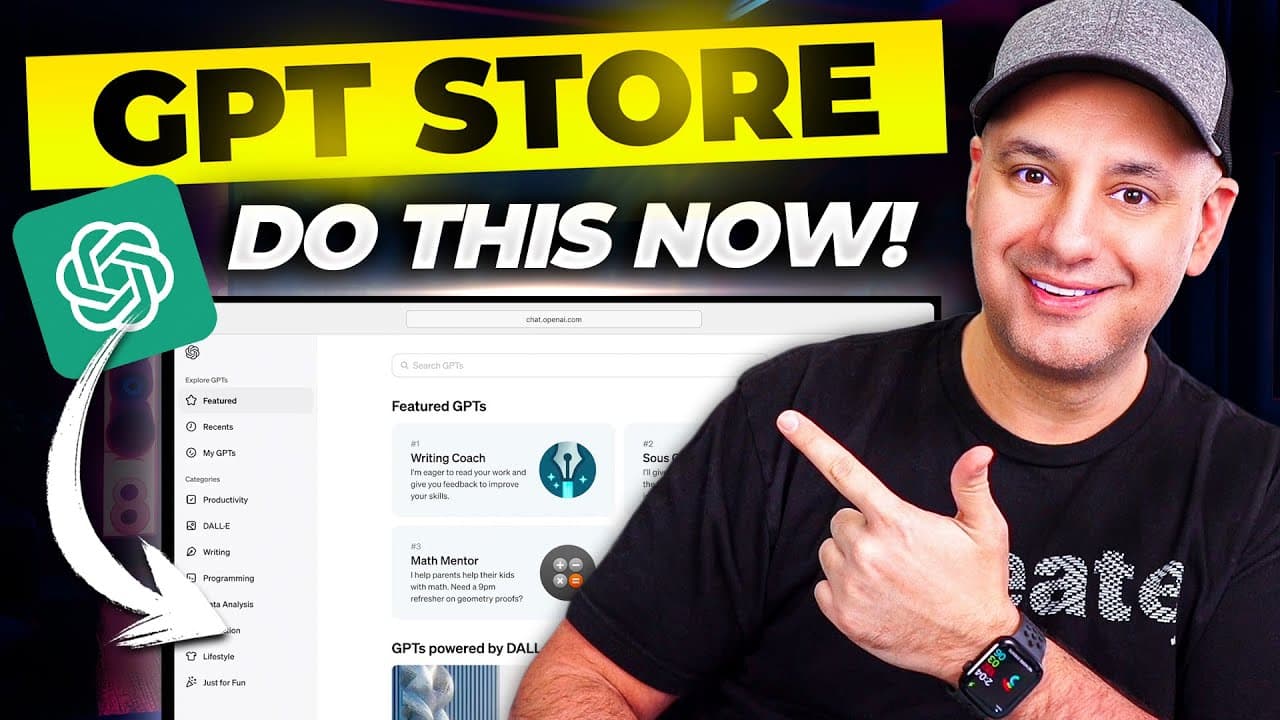
How to get GPTs ready for the GPT Store today
TL;DR
You should follow three immediate steps to be store ready: review and comply with OpenAI usage and branding policies, set up and verify a Builder profile with a domain, and publish your GPTs publicly. Being early and transparent helps improve chances for store inclusion and exposure.
Transcript
the highly anticipated GPT store the official GPT store from open AI is coming next week and they just sent out an email telling us three different things we need to do right now to make sure our gpts are ready to be considered for the GPT store so if you've ever built a GPT this is a good time to make sure you do these three things right now and b... Read More
Key Insights
- OpenAI will require three concrete steps to prepare GPTs for store submission.
- Usage and branding policies must be read and followed to avoid disallowed content and trademark issues.
- Disclaimers are required for consumer facing GPTs in regulated areas like medical or legal fields.
- Plugins or actions used by GPTs must have a clear description that matches API functionality.
- Brand guidelines discourage naming a GPT with a trailing GPT in the name, and trademark usage must be authorized.
- Builder profile verification requires binding a domain via a DNS TXT record to show ownership.
- Verified domains enable site links to appear on the Builder profile and improve credibility.
- All GPTs must be saved publicly to be eligible for the GPT Store, private ones are not accepted.
Install to Summarize YouTube Videos and Get Transcripts
Explore YouTube Video Summarizer or Get YouTube Transcript Extractor
Questions & Answers
Q: What are the three things you must do now to prepare your GPTs for the store
The three things are: first, review and comply with OpenAI usage policy and branding guidelines to ensure your GPTs do not violate rules such as illegal activities, spam, or deception. Second, verify and set up your Builder profile, including domain verification via a DNS TXT record to prove ownership. Third, save all GPTs publicly so they are eligible for store submission, as private or unlisted GPTs are not accepted.
Q: Why is it important to read the usage policy and branding guidelines
Reading the usage policy and branding guidelines is essential because they specify what you can and cannot build, including restrictions on harmful content and the correct way to present your GPTs. Following these rules reduces the risk of policy violations, helps with trust, and aligns your GPTs with OpenAI’s expectations for store eligibility.
Q: What content is explicitly disallowed when building GPTs
Disallowed content includes illegal activities, generating hateful or violent content, malware, fraudulent or deceptive practices, and scams. Additionally, for consumer facing GPTs in fields like medical or legal, you must disclose AI usage and potential limitations. These restrictions are designed to protect users and maintain safety and integrity on public platforms.
Q: How does AI usage disclosure work for consumer facing GPTs
Consumer facing GPTs that touch on sensitive areas such as medical, financial, or legal topics must include a disclaimer that AI is used and that there may be limitations. The disclosure is part of the policy to ensure users understand when AI is involved and to set appropriate expectations about accuracy and liability.
Q: What is the role of the plugin policy in preparing GPTs
The plugin policy requires that any actions or APIs connected to a GPT have a description that clearly matches the exposed API functionality. This ensures transparency about external connections and data flows, helping users understand what the GPT can do and how it interacts with other services.
Q: What branding considerations affect GPT naming and logos
Brand guidelines advise naming practices that avoid assertions of affiliation with existing brands unless authorized, and warn that using another organization’s trademark or logo without permission is not allowed. Also, ending a GPT name with GPT is discouraged to improve alignment with store expectations and branding ethics.
Q: How is the Builder profile verified and why is it important
Builder profile verification involves making the user’s name visible and linking a verified website by adding a DNS TXT record to the domain. This verification demonstrates ownership and credibility, which helps OpenAI assess eligibility and increases trust from users who discover your GPTs through the profile.
Q: Why must GPTs be saved publicly, and what happens if they are not
GPTs must be saved publicly because private or unlisted GPTs are not eligible for the GPT Store. Public visibility increases discoverability and aligns with store submission requirements, allowing users to access and evaluate the GPTs, which in turn improves chances of acceptance and early adoption.
Summary & Key Takeaways
-
The video emphasizes three immediate actions to prepare GPTs for the upcoming GPT Store, starting with policy compliance, branding rules, and platform requirements. It also highlights the importance of transparency, disclaimers for certain domains, and the role of public visibility in eligibility.
-
A Builder profile must be completed and linked to a verified domain to establish identity and credibility for potential store submission, with steps including DNS TXT record verification and enabling a website link.
-
Publishing GPTs publicly is mandatory for store eligibility; private or unlisted GPTs are not eligible, and this public status helps creators leverage early mover advantages and drive traffic to their sites.
Read in Other Languages (beta)
Share This Summary 📚
Summarize YouTube Videos and Get Video Transcripts with 1-Click
Try YouTube Summary with ChatGPT & Claude or YouTube Transcript Generator
Explore More Summaries from Skill Leap AI 📚






Summarize YouTube Videos and Get Video Transcripts with 1-Click
Try YouTube Summary with ChatGPT & Claude or YouTube Transcript Generator