Why Do You Overthink and How Can You Recognize It?
TL;DR
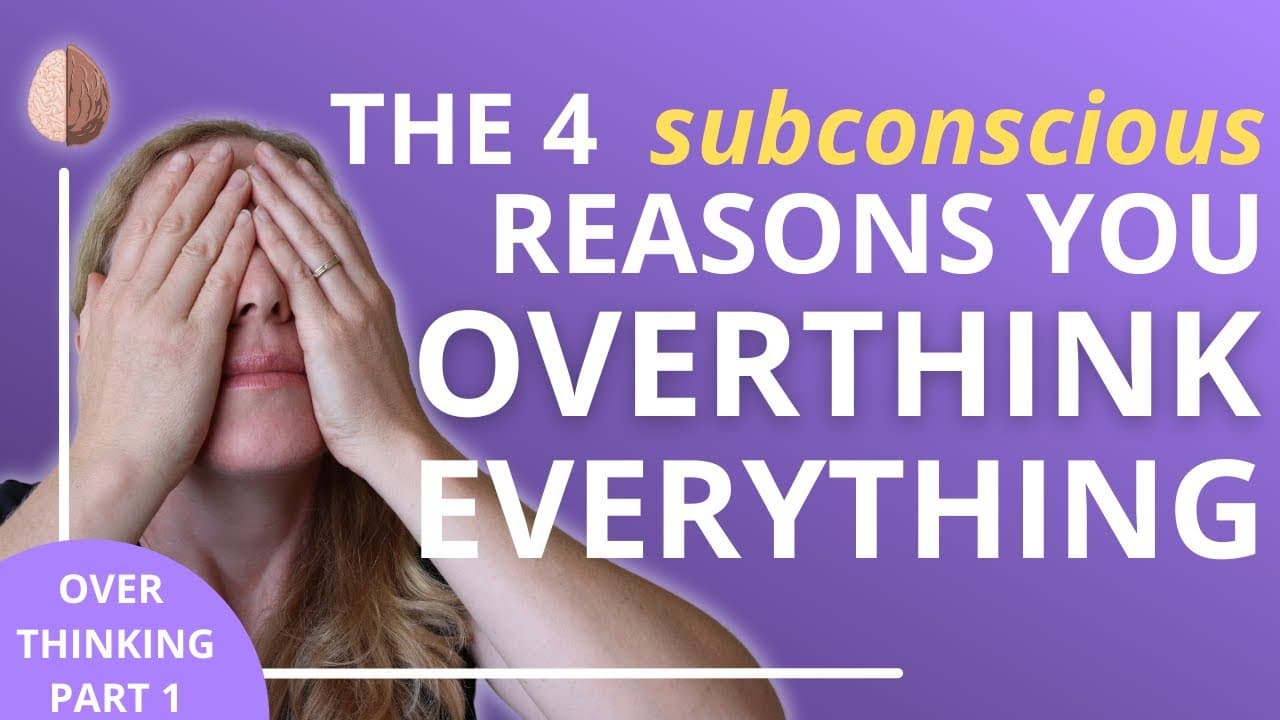
Overthinking persists because it provides short-term rewards: a false sense of control, hope of avoiding mistakes through perfection, temporary relief from uncertainty, and the feeling of doing important work. Unlike productive reflection, rumination repeatedly focuses on fear, negativity, and uncontrollable outcomes without producing insight or action. Recognizing this pattern is the first step toward changing it.
Transcript
I had a client who made a mistake at work. Let's call her Layla. Now, her mistake wasn't catastrophic, but she spent the next week worrying about it. She couldn't sleep, she couldn't focus on anything else. She just kept rehashing this problem around in her brain over and over and over. It made her stomach hurt. She couldn't enjoy anything, and... Read More
Key Insights
- Overthinking is a learned habit, not a permanent identity or fixed personal trait. Because practiced thinking patterns can change, a person can develop skills that reduce rumination and create a greater sense of calm.
- Rumination is repetitive thinking that fails to generate new insight or productive action. It can disrupt sleep, concentration, work, relationships, physical health, creativity, and problem-solving while contributing to stress, tension headaches, and stomachaches.
- Seven signs of overthinking include sleep difficulty, second-guessing decisions, replaying embarrassing moments, asking what-if or why-me questions, struggling to concentrate, reading between the lines, seeking repeated reassurance, and thinking without making progress.
- Four types of unproductive overthinking are depressive rumination, anxious worry, decision paralysis, and socially focused rumination. Each pattern keeps attention fixed on negative memories, imagined catastrophes, imperfect choices, or assumptions about how other people judge you.
- Overthinking can create a false sense of control by making endless analysis feel protective. A person may believe that examining every possibility will prevent unwanted outcomes, even though compulsive thinking often increases fear instead of creating safety.
- Perfectionism can reward overthinking by promising that mistakes are avoidable if every detail receives enough analysis. This promise encourages repeated mental checking, but confident people are not necessarily more accurate, they are more willing to make imperfect choices.
- Intolerance of uncertainty can drive repeated planning and reassurance seeking. Trying to know every outcome may briefly reduce fear, but it cannot guarantee control, and repeatedly asking others for reassurance can keep the underlying thinking habit active.
- Productive self-reflection is purposeful, balanced, and directed toward learning or action. Rumination focuses on negative feelings and uncontrollable matters, while problem-solving makes concerns concrete through writing, speaking, diagrams, time limits, outside perspectives, or specific next steps.
Install to Summarize YouTube Videos and Get Transcripts
Explore YouTube Video Summarizer or Get YouTube Transcript Extractor
Questions & Answers
Q: What is overthinking, and how is it different from self-reflection?
Overthinking, also called rumination, is repetitive thought that dwells on negative feelings, feared outcomes, or matters outside a person's control without creating new insight. Healthy self-reflection has a purpose: it helps someone learn about themselves, gain perspective, or decide what action to take. Self-reflection leads toward understanding and action, while rumination tends to produce stagnation and continued distress.
Q: How can you tell if you are overthinking?
Signs of overthinking include being unable to quiet your mind when trying to sleep, struggling to make decisions, second-guessing completed choices, and repeatedly reliving embarrassing moments. Other signs include asking what-if or why-me questions, losing concentration, assuming hidden meanings in other people's words, seeking constant reassurance, and revisiting the same issue without reaching insight or taking action.
Q: What are the four types of unproductive overthinking?
The four types are depressive rumination, anxious rumination, decision paralysis, and socially focused rumination. Depressive rumination repeatedly examines negative events. Anxious rumination analyzes past situations and imagines future catastrophes. Decision paralysis delays action because choosing incorrectly feels threatening. Social rumination repeatedly examines conversations, other people's possible judgments, and what someone supposedly meant.
Q: Why does the mind keep overthinking?
The mind continues behaviors that receive some form of short-term reward. Overthinking may create a false sense of control, promise protection from mistakes through perfection, provide temporary relief from uncertainty, or feel like important mental work. These rewards are connected to avoiding fear. Although the thinking may initially feel protective or productive, it eventually backfires and increases distress.
Q: How does overthinking create a false sense of control?
Overthinking creates a false sense of control by making a person believe that enough analysis can account for every possibility and prevent an unwanted result. Repeatedly reviewing a mistake, planning every detail, or imagining numerous outcomes can feel like preparation. However, many outcomes remain uncontrollable, and compulsively thinking about them does not create safety or guarantee that nothing will go wrong.
Q: How is productive problem-solving different from rumination?
Productive problem-solving focuses on elements a person can control and leads to a concrete action. For an upcoming test, useful stress might prompt studying, improving a project, or organizing a study group. Rumination instead concentrates on unknown test questions, a parent's possible reaction, or broad conclusions about personal failure. One approach supports preparation, while the other consumes time without resolving the concern.
Q: What practical steps can make thinking more productive?
Productive thinking can begin by setting a time limit and moving thoughts out of the mind into a concrete form. Write the issue down, say it aloud, diagram it, or create a pros-and-cons list that considers more than negative possibilities. Sharing shame with someone or asking another person for perspective can also challenge distorted assumptions and support a specific next action.
Q: What effects can chronic overthinking have on daily life?
Chronic overthinking can interfere with sleep, focus, work, relationships, creativity, problem-solving, physical health, and enjoyment. It may contribute to stress, tension headaches, and stomachaches, and it is associated with depression, anxiety, PTSD, and OCD. The relationship can operate in both directions: rumination can worsen anxiety and depression, while anxiety and depression can also contribute to more rumination.
Summary & Key Takeaways
-
Overthinking, also called rumination, involves repeatedly revisiting thoughts without developing useful insight or taking effective action. Common signs include difficulty sleeping, indecision, replaying embarrassing experiences, asking repeated what-if questions, losing concentration, reading hidden meanings into interactions, seeking reassurance, and remaining stuck instead of solving the problem.
-
Four forms of unproductive overthinking are identified: depressive rumination about negative events, anxious rumination about past choices or future catastrophes, decision paralysis caused by fear of choosing incorrectly, and socially focused rumination about other people's judgments. These patterns are associated with anxiety, depression, PTSD, and OCD, while also reinforcing emotional distress.
-
Productive thinking focuses on controllable actions and turns concerns into concrete steps. A person can set a time limit, write thoughts down, speak them aloud, create diagrams or pros-and-cons lists, seek another perspective, and discuss shame with someone. The goal is to replace vague, repetitive thinking with balanced analysis and action.
Read in Other Languages (beta)
Share This Summary 📚
Summarize YouTube Videos and Get Video Transcripts with 1-Click
Try YouTube Summary with ChatGPT & Claude or YouTube Transcript Generator
Explore More Summaries from Therapy in a Nutshell 📚


Summarize YouTube Videos and Get Video Transcripts with 1-Click
Try YouTube Summary with ChatGPT & Claude or YouTube Transcript Generator