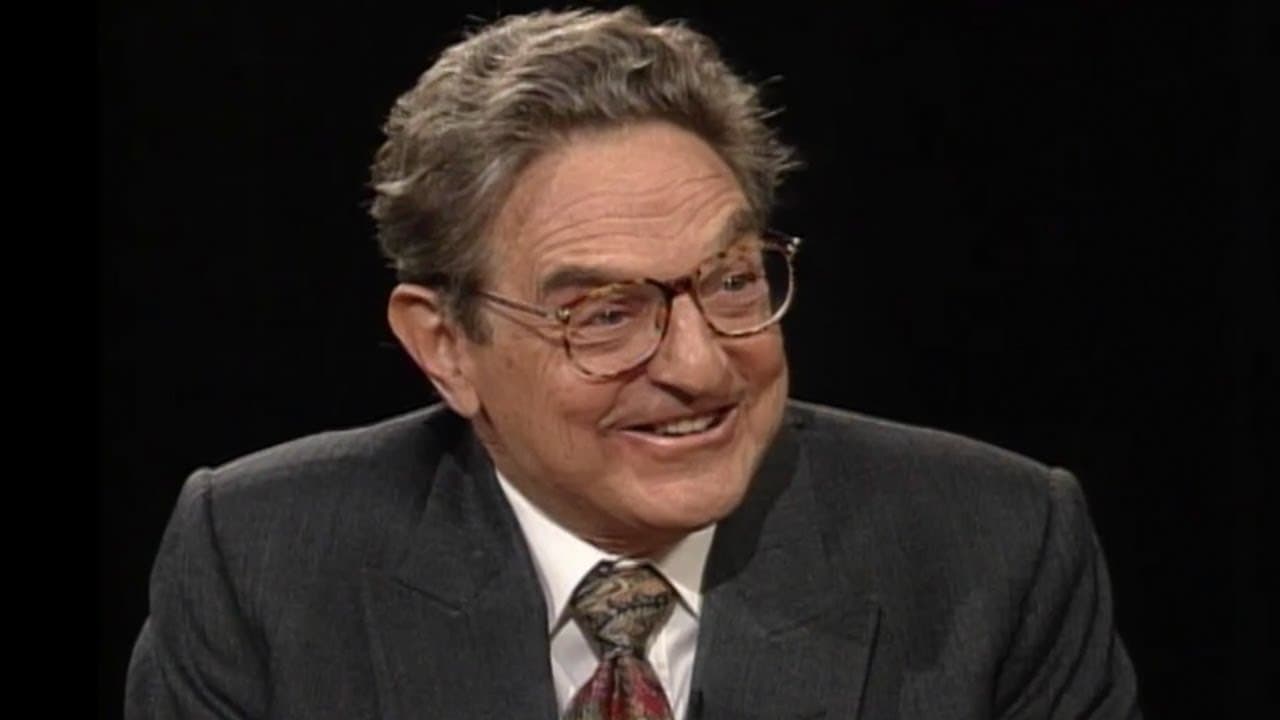
George Soros | Charlie Rose | 1994
TL;DR
Open societies require sustained outside support, strong institutions, education, science, and the rule of law, especially after closed political systems collapse. George Soros argues that insufficient Western assistance allowed nationalism, regional disorder, and demagoguery to gain strength in parts of Eastern Europe and the former Soviet Union, while long-term philanthropic work remained essential despite failed short-term reforms.
Transcript
he has called the most powerful investor in the world a man whose actions and utterances have rocked world financial markets the quantum fund which he started in 1969 with 4 million is now worth 4.5 billion but lately george soros team spends more than time giving away money than he spends making it he was born in hungary in 1930 and after a stint ... Read More
Key Insights
- Soros devoted about 80 percent of his time to his foundations in 1994, down from roughly 90 percent earlier. He said Eastern Europe's revolutionary urgency was fading, requiring a shift from a short burst of intervention toward sustained, long-distance institutional work.
- Open society is a more advanced form of social organization, according to Soros, and societies cannot establish it in one short interval. Successful transformation after communism therefore required extensive outside help, which he believed Western countries failed to provide at the necessary scale.
- The collapse of communist dogma was irreversible, but Soros believed the opportunity for rapid regional transformation had been lost. He distinguished Central Europe from the former Soviet Union and former Yugoslavia, where breakdown increasingly produced closed societies organized around ethnic identity.
- Ethnic nationalism works by mobilizing belonging against a designated enemy, according to Soros. Political demagogues can turn another ethnic group into a scapegoat for social problems, using hostility and identity to consolidate support for their own political programs.
- Protecting civilians in Bosnia required a credible willingness to use force, Soros argued. He opposed committing American ground troops but believed air power could deter Serbian and Croatian forces because neither side could afford to lose military assets while their conflict remained unfinished.
- Russian reform failed because of reformers' ineptitude, the magnitude of the challenge, and inadequate Western support, according to Soros. He saw two dangerous possibilities: renewed nationalism under a strong central state, or regional disintegration that became anarchy without law.
- Long-term open-society infrastructure remained worth supporting even after immediate political reform failed. Soros continued funding education, science, and related institutional foundations while rejecting unconditional Western support for Boris Yeltsin and opposing the restoration of dominance by large industrial complexes.
- Soros's investment record financed his philanthropic capacity. He said the Quantum Fund earned around one billion dollars from sterling in 1992, all his funds made 3.8 billion dollars in the following year, and his average return over 26 years was 35 percent.
Install to Summarize YouTube Videos and Get Transcripts
Explore YouTube Video Summarizer or Get YouTube Transcript Extractor
Questions & Answers
Q: Why did George Soros reduce his time spent on philanthropy?
George Soros said his allocation had shifted from roughly 90 percent philanthropy and 10 percent business to about 80 percent philanthropy and 20 percent business. Eastern Europe was cooling after its revolutionary period, so the work no longer resembled a short, urgent spurt. He still cared about the region, but expected its development to require long-distance effort rather than immediate transformation.
Q: Why did the transition to open society fall short after communism?
Soros argued that the collapse of communist dogma created an opportunity to extend open society into Eastern Europe and the former Soviet Union. However, open society was a more advanced organizational form that could not be established quickly or without major outside assistance. He believed the rest of the world showed insufficient commitment and failed to provide the sacrifices and support required for successful transformation.
Q: How does ethnic nationalism create closed societies?
Ethnic nationalism organizes society around a shared ethnic identity and a strong sense of belonging. Soros said political leaders seeking to mobilize people behind a nationalist objective must identify an enemy. Demagogues can then blame another ethnic group for existing problems, convert that group into a scapegoat, and use the resulting hostility to build support for their politics.
Q: What did George Soros believe should be done in Bosnia?
Soros said the declared protected areas should actually be protected and humanitarian aid should reach civilians. He believed this required a readiness to use force against forces already employing violence. Although he regarded American ground troops as politically out of the question, he argued that credible air power could deter Serbian and Croatian forces because they could not afford the destruction of military assets.
Q: Why did George Soros criticize Western policy in Yugoslavia?
Soros criticized Western European countries and the United States for emphasizing negotiation and conciliation instead of taking a firm stand against aggression and what he identified as genocide. Without a willingness to apply force, he considered the search for a peace settlement futile. He also described Sarajevo as effectively confined and argued that existing arrangements helped preserve the oppression of its civilians.
Q: Why did political and economic reform fail in Russia?
Soros attributed Russia's failed reform effort to three factors: the ineptitude of the reformers, the enormous size of the problem, and the lack of substantial Western support. He believed reform could not have succeeded without such assistance. Its failure left Russia facing either nationalism backed by a powerful central state or continued regional disintegration without an effective rule of law.
Q: What was George Soros's assessment of Boris Yeltsin?
Soros called Boris Yeltsin a spent force and a burnt-out case who had lost substantial support during his confrontation with parliament. Although he described Yeltsin as the only remaining option and a weak barrier against disaster, he opposed supporting him at all costs. Soros believed Yeltsin had turned away from reform and lacked new ideas for Russia's challenge.
Q: How did George Soros's childhood shape his open-society beliefs?
Soros was 14 when German forces entered Hungary. He survived by living under false names, while his father took evasive measures that helped the entire family survive. That experience, followed by the beginning of communist rule, taught him that the character of a society profoundly affects individual life. When he later had financial resources, he used them to support open society.
Summary
In this video, George Soros, a billionaire investor and philanthropist, discusses his shift from focusing on making money to giving it away through his foundation. He talks about the missed opportunity to transform Eastern Europe into an open society after the fall of communism and the negative consequences of the rise of ethnic nationalism. Soros also talks about the Bosnian war and the lack of action from Western European countries and the United States. He shares his views on the fragile state of Russia and his thoughts on Mikhail Gorbachev and Boris Yeltsin. Soros reflects on his own experiences during the Nazi occupation of Hungary and the communist regime, which shaped his belief in the importance of open societies. He also discusses his trading strategies and the impact of his philanthropic work.
Questions & Answers
Q: Why did George Soros shift his focus from making money to giving it away?
Soros explains that he shifted his focus because he cares deeply about the concept of an open society. He sees it as the values of our civilization and believes that society should make sacrifices to protect and promote it. He uses his money to support and promote open societies, particularly in Eastern Europe.
Q: Why does Soros think the opportunity to transform Eastern Europe into an open society was missed?
Soros argues that although there was an opportunity to establish open societies in Eastern Europe after the fall of communism, it required a lot of help from the outside world. However, he believes that the rest of the world did not share his vision and did not believe in the concept of an open society enough to make the necessary sacrifices.
Q: How serious a mistake does Soros consider the missed opportunity to transform Eastern Europe into open societies?
Soros believes that it is a very serious mistake because the breakdown of the former Soviet Union and the former Yugoslavia has led to the rise of close societies based on ethnic nationalism. He sees this as a dangerous trend that scapegoats and mobilizes society against ethnic groups instead of working towards an open society.
Q: What does Soros think should be done about the situation in Bosnia?
Soros believes that the primary goal should be to deliver humanitarian aid and protect the civilian population. He argues that the international community should use whatever means necessary, including force, to protect the designated protected areas. Soros describes the situation in Sarajevo as almost like a concentration camp, and he criticizes the lack of action and negotiation attempts instead of taking a stand against aggression and genocide.
Q: Does Soros condemn Western European countries and the United States for their inaction in Bosnia?
Soros strongly condemns Western European countries and the United States for their inaction. He believes they have taken the wrong approach by trying to negotiate and conciliate instead of standing up against aggression and using force. He sees their lack of will to protect the civilian population as a weakness of open societies.
Q: How does Soros view the stability and future of Russia?
Soros believes that the stability of Russia is extremely fragile both economically and politically. He thinks that reform has failed, partly due to the ineptitude of the reformers, the magnitude of the problems, and the lack of support from the West. Soros sees two potential outcomes: the rise of nationalism with a strong central state or continued disintegration and regionalism leading to anarchy.
Q: What does Soros think of Boris Yeltsin?
Soros considers Yeltsin a spent force and believes that he has no new ideas and is unprepared for the challenges facing Russia. He sees Yeltsin as a weak read standing between Russia and disaster.
Q: What does Soros think will happen in Russia in the future?
Soros believes that without successful reform, the most likely direction for Russia is a breakdown into regionalism and anarchy. He sees the lack of political will and support as major hindrances to successful reform and stability in the country.
Q: How does Soros view his own power and influence?
Soros compares his feelings about power to how porcupines feel about love—very careful. While he acknowledges having a significant impact with his opinions on interest rates, markets, and currencies, he believes in the fallibility of everyone, including himself. He sees the stock market and financial markets as a historical process shaped by the fallibility and mistakes of individuals.
Q: What brought Soros the greatest satisfaction in his life?
Soros finds the work of his foundation, the promotion of open societies and philanthropy, to be the most satisfying aspect of his life. He values doing something beyond his own self-interest and contributing to causes that align with his beliefs.
Takeaways
George Soros shares his shift from focusing on making money to giving it away through his foundation, prioritizing the promotion of open societies. He discusses missed opportunities to transform Eastern Europe, the negative consequences of ethnic nationalism, the Bosnian war, the fragile state of Russia, and his thoughts on Boris Yeltsin. Soros reflects on his experiences during Nazi occupation and the communist regime in Hungary, which shaped his belief in open societies. He emphasizes the fallibility of individuals and the importance of making sacrifices for an open society. Soros also discusses his trading strategies and the impact of his philanthropic work.
Summary & Key Takeaways
-
George Soros says he shifted from spending about 90 percent of his time on philanthropy to an 80-20 division because the revolutionary period in Eastern Europe was cooling. He remained committed to the region, but viewed the work as a long-distance effort after the short-term opportunity for rapid transformation had largely passed.
-
Soros argues that communism's failure created an opportunity to extend open society into Eastern Europe and the former Soviet Union. That transition required substantial outside assistance because open society was a more advanced form of organization. Insufficient Western support contributed to ethnic nationalism, scapegoating, demagoguery, and political fragmentation.
-
The interview connects Soros's public commitments with his personal history and investment career. He describes surviving the German occupation of Hungary under false names, developing convictions about open society, supporting education and science, and managing funds that averaged a 35 percent return over 26 years, including a major sterling trade.
Read in Other Languages (beta)
Share This Summary 📚
Summarize YouTube Videos and Get Video Transcripts with 1-Click
Try YouTube Summary with ChatGPT & Claude or YouTube Transcript Generator
Explore More Summaries from Investor Archive 📚

Summarize YouTube Videos and Get Video Transcripts with 1-Click
Try YouTube Summary with ChatGPT & Claude or YouTube Transcript Generator