Warren Buffett: I Missed The Boat On Google | May 8, 2017
TL;DR
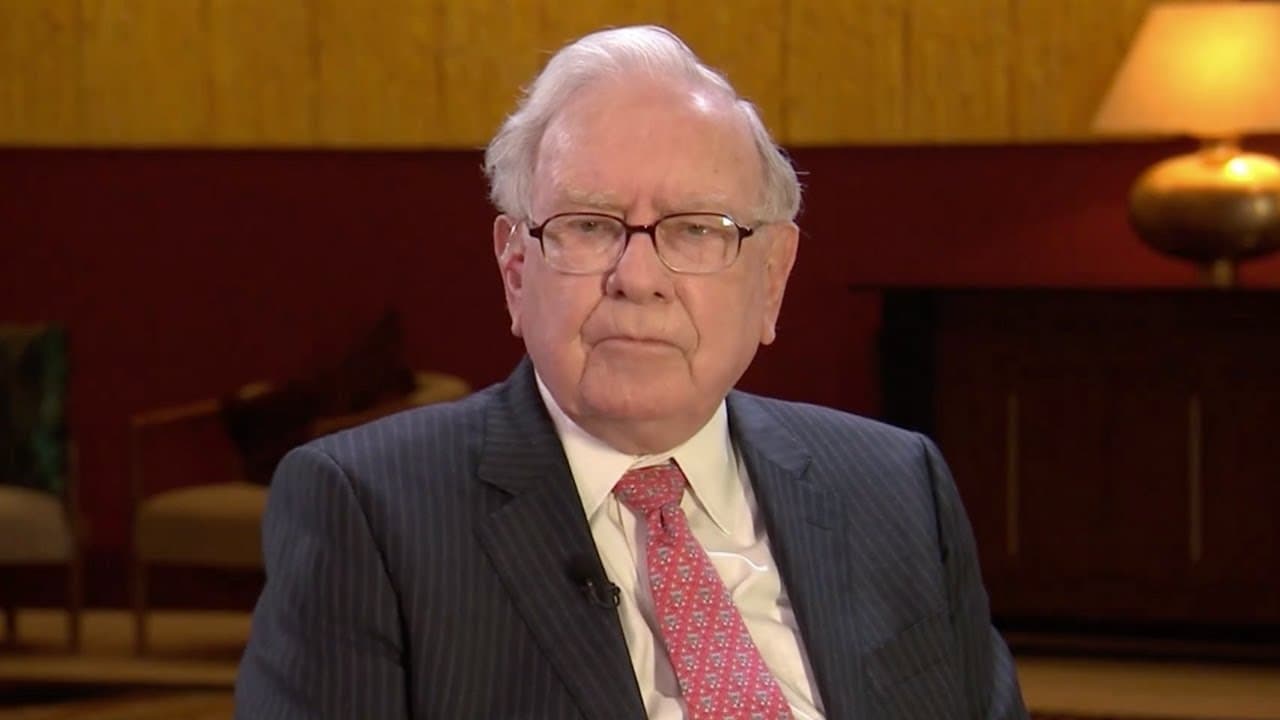
Warren Buffett admits missing out on Google's success despite insights from its early use by Geico. He discusses investment strategies, including his approach to buying Apple and selling IBM. Buffett emphasizes the importance of understanding business fundamentals and long-term value over short-term market fluctuations.
Transcript
is our guest this morning he's the chairman and ceo of berkshire hathaway and this is his first interview sitting down since he spoke to 40 000 or so berkshire shareholders over the weekend just across the street from here warren thank you very much for joining us this morning i was kind of thinking back and this is 52 years now that you've been do... Read More
Key Insights
- Warren Buffett acknowledges missing the investment opportunity in Google despite early insights from its use by Geico.
- Buffett's investment strategy focuses on understanding business fundamentals and long-term value rather than short-term market trends.
- He explains the psychological difficulty of buying a stock at a higher price after passing on it at a lower price.
- Buffett discusses the importance of first-mover advantage and technological innovation in a company's success.
- He contrasts his investment in Apple with Google, citing Apple's more reasonable valuation at the time of purchase.
- Buffett highlights the value of businesses that require minimal capital investment while generating high returns.
- The discussion touches on the broader economic impacts of healthcare costs on U.S. businesses.
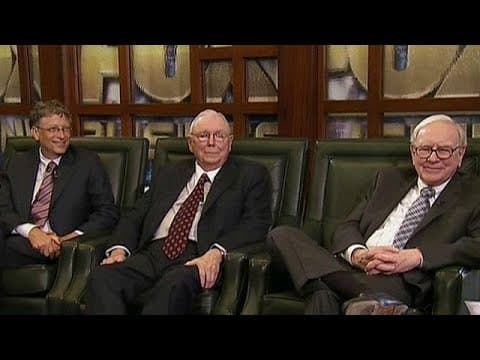
- Buffett, alongside Charlie Munger and Bill Gates, explores topics like healthcare reform, tax policy, and economic growth.
Install to Summarize YouTube Videos and Get Transcripts
Explore YouTube Video Summarizer or Get YouTube Transcript Extractor
Questions & Answers
Q: Why did Warren Buffett regret not investing in Google?
Warren Buffett regrets not investing in Google because he recognized its potential early on through Geico's use of Google's advertising services. Despite this insight, he failed to act on the opportunity, missing out on Google's significant growth and success. Buffett acknowledges the challenge of identifying and investing in emerging technologies and companies at an early stage.
Q: What factors influence Buffett's investment decisions?
Buffett's investment decisions are influenced by a deep understanding of business fundamentals, long-term value, and competitive advantage. He prioritizes companies with sustainable growth potential, strong management, and reasonable valuations. Buffett avoids speculative investments, focusing on businesses with clear economic moats and the ability to generate high returns with minimal capital investment.
Q: How does Buffett view the role of technological innovation in investments?
Buffett views technological innovation as a critical factor in a company's success, particularly in industries with rapid change. He emphasizes the importance of first-mover advantage and the ability to maintain a competitive edge. However, he admits to challenges in predicting technological advancements and their impact on business models, which can lead to missed investment opportunities like Google.
Q: Why did Buffett choose to invest in Apple over other tech companies?
Buffett chose to invest in Apple due to its strong brand loyalty, competitive position, and reasonable valuation at the time of purchase. He appreciated Apple's consumer-centric approach and the ecosystem it created, which drives customer retention and product demand. Buffett saw Apple as a more understandable business compared to other tech companies with complex and rapidly changing dynamics.
Q: What economic challenges does Buffett highlight in the discussion?
Buffett highlights the economic challenges posed by rising healthcare costs, which significantly impact U.S. businesses' competitiveness. He emphasizes the need for healthcare reform to address inefficiencies and reduce costs. Buffett also discusses the importance of tax policy and its implications for economic growth, advocating for a balanced approach that supports business innovation and investment.
Q: How does Buffett approach market fluctuations in his investment strategy?
Buffett approaches market fluctuations with a focus on long-term value rather than short-term price movements. He believes in buying quality businesses at reasonable prices and holding them for the long haul, regardless of market volatility. Buffett's strategy involves patience, discipline, and a deep understanding of a company's intrinsic value, allowing him to weather market ups and downs without reactive decision-making.
Q: What insights do Buffett, Munger, and Gates provide on healthcare reform?
Buffett, Munger, and Gates discuss the need for healthcare reform to address inefficiencies and high costs in the U.S. system. They explore the potential benefits of a single-payer model and emphasize the importance of innovation and cost control. The discussion highlights the impact of healthcare expenses on economic growth and the competitiveness of U.S. businesses in the global market.
Q: What role does tax policy play in Buffett's investment considerations?
Tax policy plays a significant role in Buffett's investment considerations, as it affects corporate profitability and economic growth. He advocates for a fair and predictable tax system that encourages business investment and innovation. Buffett is cautious about dynamic scoring and tax cuts that disproportionately benefit the wealthy, emphasizing the need for balanced policies that support long-term economic stability and growth.
Summary
In this interview, Warren Buffett reflects on the recent Berkshire Hathaway annual meeting and discusses a range of topics, including technology investments, the housing market, the economy, and Berkshire Hathaway's approach to business. Buffett also addresses questions about 3G and the political environment, as well as his views on the airline industry.
Questions & Answers
Q: What was Buffett's headline takeaway from the recent Berkshire Hathaway annual meeting?
Buffett's headline takeaway was that people continue to have fun at the annual meeting. He noted that shareholders come to the meeting expecting a good time and the company strives not to disappoint them.
Q: Despite not being a technology guy, Buffett spent a lot of time talking about technology investments at the annual meeting. Can he explain his interest in technology stocks like Apple and Google?
Buffett acknowledged that although he is not a tech expert and doesn't even own a smartphone, he was interested in certain technology investments. For example, he missed out on Google despite the fact that Geico, a Berkshire-owned company, was a heavy user of Google advertising. Buffett admitted that he should have had more insight into Google's potential, but he also highlighted that technology advancements and competition could have affected the company's future prospects.
Q: Why does Buffett feel more comfortable investing in Apple compared to Google or Amazon?
Buffett explained that Apple's stock was more reasonably priced at the time Berkshire bought it and the company was already doing well in terms of current earnings. He believed that Apple didn't necessarily have to do a lot better in the future to justify its valuation. On the other hand, companies like Google and Amazon were priced for their future potential, which made it harder for Buffett to invest at higher valuations.
Q: Can Buffett provide some insights into the value and benefit of Google's search ads?
Buffett highlighted the value of Google's search ads, mentioning that Geico used them extensively. He explained that Geico was paying around $10 or $11 per click, which was a good deal considering there were no costs of goods sold associated with the ads. He recognized that Google's search ads were an extraordinary business, almost like a natural monopoly, given the convenience and usefulness they provided to users.
Q: Did Buffett have any insight into the missed opportunity with Google, given that the founders came to see him before the company took off?
Buffett acknowledged that the founders of Google had indeed visited him prior to the company's success. However, he admitted that he missed the opportunity to invest. While he liked the founders, he didn't fully grasp the potential of Google's technology and the market dynamics that could have affected its success.
Q: Why doesn't Buffett buy Google now, given that he believes in its value and potential?
Buffett explained that psychologically, it's harder to buy a stock at a higher price after passing on it at a lower price. He acknowledged that if he were forced to buy or short Google, he would buy it, just like he would with Amazon. However, buying a stock at a higher valuation than he initially evaluated often leads to hesitation. Buffett emphasized that it's generally not a good idea to wait for a stock to reach a previous lower price before purchasing it.
Q: Are people always willing to pay a high price for smartphones or will prices eventually come down?
Buffett recognized that prices for smartphones can eventually come down if there's intense competition or if companies don't keep adding value to their products. However, he also pointed out that people don't choose smartphones solely based on price. The loyalty and preference for certain brands, like Apple, can create a significant price inelasticity, as consumers are willing to pay a premium for the product they trust and find valuable.
Q: Can Buffett discuss the performance of IBM's Watson and its relationship to Berkshire's stake in IBM?
Buffett clarified that the sale of Berkshire's stake in IBM was not related to the performance of IBM's Watson. He highlighted that Watson has shown promise and is being used in different areas like healthcare, HR, and legal services. However, Buffett noted the importance of assessing whether Watson's AI capabilities can effectively replace human labor and generate significant value. He also acknowledged the potential for other companies creating similar products that might compete with Watson.
Q: Will Watson's success threaten human jobs and result in reduced employment opportunities?
Buffett agreed that if Watson, or any similar technology, replaces human labor in a significant way, it could have a lot of value. He explained that machines don't ask for higher wages, don't require healthcare, and don't need specific benefits like humans do. However, Buffett cautioned that the threat to human jobs is not solely determined by technology but also by other competitive factors. He emphasized that the greatest value in AI like Watson could come from entirely new forms of information that humans are incapable of accessing or processing effectively.
Q: Is Buffett concerned about the potential risks associated with artificial intelligence, as demonstrated in movies like "2001: A Space Odyssey"?
Buffett revealed that while he has sat in the same room with AI systems like Watson, he doesn't trust them completely. He jokingly mentioned that he keeps an eye on Watson during their interactions. He also shared conversations with experts in the field of artificial intelligence who have differing opinions on its potential risks and benefits. While acknowledging the potential concerns, Buffett emphasized that current AI systems are still far from achieving true human-level intelligence.
Q: Can Buffett provide his perspective on the impact of the French election on the markets?
Buffett expressed that he doesn't pay much attention to specific election results when it comes to making investment decisions. He pointed out that in his experience, market reactions to election outcomes can be unpredictable, citing the example of the market reacting negatively to Trump's election initially but rebounding quickly. Buffett emphasized that he has never made stock trades based on GDP figures or election results, focusing instead on the long-term value of businesses.
Q: How does Buffett view the current state of the U.S. economy?
Buffett stated that the U.S. economy has been growing at a rate of around two percent since 2009. He explained that quarterly GDP figures can be influenced by various factors, such as data collection methods and the relationship between quarters, which makes them less significant to him. He noted that the figures may not accurately reflect the actual state of the economy and may be subject to revisions. Overall, Buffett did not view the 0.7% GDP growth in the first quarter as a cause for concern.
Q: What insights does Buffett gain from the businesses he owns, such as the railroad industry and housing market?
Buffett explained that by owning various businesses, such as railroads and housing-related companies, he can assess the health of those industries through their performance. Examples include rail freight volume, coal shipments, and sales in the housing market. He acknowledged that railroads have significantly improved their productivity but have reduced the number of employees over time. In the housing market, he noted positive trends, such as increased sales and improvements in related industries like furniture and flooring.
Q: In the current political environment, how does Buffett respond to concerns about layoffs associated with 3G's approach to streamlining businesses?
Buffett acknowledged that there can be political reactions to layoffs, especially in companies where 3G has implemented workforce reductions. He emphasized that productivity gains are essential for societal progress and often require streamlining operations and reducing excess workforce. Buffett recognized the pain caused to those affected by layoffs but stressed the importance of taking care of individuals who may lose their jobs due to productivity improvements. He highlighted the need for society to support and ensure the well-being of these individuals.
Q: Will 3G's zero-based budgeting model put pressure on other Berkshire-owned companies, such as Coca-Cola, to adopt similar cost-cutting measures?
Buffett acknowledged that 3G's zero-based budgeting approach has been successful in achieving efficiency gains in the companies it owns. He noted that Coca-Cola has already announced job reductions at its headquarters to reflect a more cost-effective and productive organization. Buffett believed that companies, even those performing well, should always strive to have the right number of people necessary to achieve their objectives. He emphasized the importance of productivity in capitalism and the need to avoid unnecessary excess workforce.
Q: How do Berkshire-owned consumer businesses, such as Nebraska Furniture Mart and See's Candies, perform in the current environment?
Buffett highlighted the positive performance of Berkshire's consumer businesses, mentioning that Nebraska Furniture Mart, for example, has shown decent gains. He explained that the housing market has been improving, resulting in increased furniture sales. Similarly, See's Candies and Dairy Queen have done well, reflecting positive consumer sentiment and spending. However, Buffett noted that some of Berkshire's companies have room for improvement in terms of efficiency and eliminating inefficiencies.
Q: What are Buffett's thoughts on the airline industry as Berkshire holds significant investments in major airlines like United?
Buffett acknowledged Berkshire's large investments in the airline industry, including United. He noted that he has taken more commercial airline flights than most people, dismissing the idea that he doesn't understand or experience the airline industry. However, he implied that his personal experiences alone don't necessarily provide deep insights into the industry's dynamics and performance. He didn't offer specific comments on the airline industry's prospects and instead emphasized the importance of monitoring the companies' financial performance.
Summary & Key Takeaways
-
Warren Buffett reflects on missing the opportunity to invest in Google, despite recognizing its potential through Geico's early adoption. He explains his investment philosophy, prioritizing understanding business fundamentals and long-term value. Buffett also discusses his decisions to invest in Apple and divest from IBM, emphasizing the importance of valuation and future growth prospects.
-
The conversation with Buffett, Charlie Munger, and Bill Gates covers a range of topics, including healthcare reform, tax policy, and economic growth. They discuss the economic impact of healthcare costs on U.S. businesses and the importance of addressing these issues for sustained economic prosperity.
-
Buffett shares insights into his investment strategy, highlighting the value of businesses with high returns and minimal capital investment. The discussion also explores the challenges of maintaining a competitive edge in rapidly evolving industries, emphasizing the role of innovation and first-mover advantage.
Read in Other Languages (beta)
Share This Summary 📚
Summarize YouTube Videos and Get Video Transcripts with 1-Click
Try YouTube Summary with ChatGPT & Claude or YouTube Transcript Generator
Explore More Summaries from Investor Archive 📚
Summarize YouTube Videos and Get Video Transcripts with 1-Click
Try YouTube Summary with ChatGPT & Claude or YouTube Transcript Generator