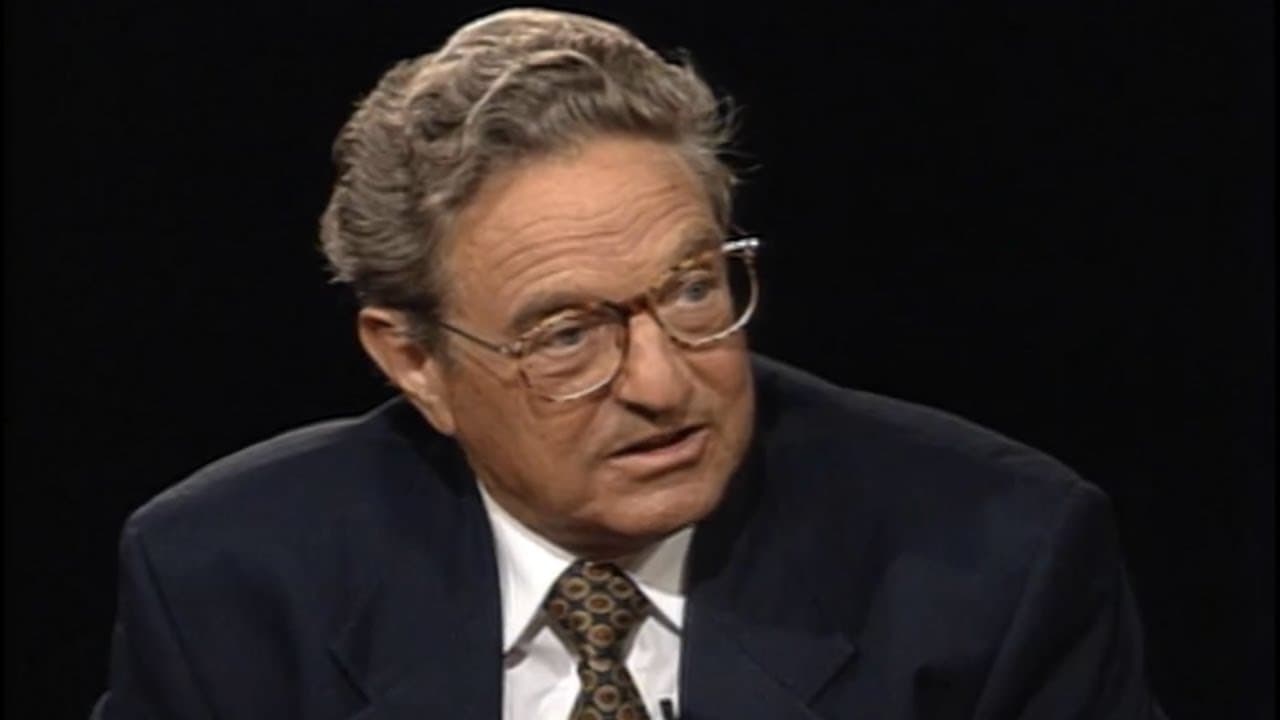
George Soros | Charlie Rose | 1994 #2
TL;DR
Western governments missed a brief opportunity to shape open societies after communism collapsed because they lacked a coherent foreign-policy vision, according to George Soros. He argues that prosperity and political freedom require law, order, security, and investment, while nationalism, weak institutions, and the privatization of public safety can produce closed societies and unstable forms of capitalism.
Transcript
welcome to our broadcast tonight philanthropist and founder of the world's most successful hedge fund george soros joins us we'll also have some novel ideas and interesting ideas on revitalizing the inner cities hugh price will be here he is the new president of the urban league we begin with george soros he calls himself a statesman without a stat... Read More
Key Insights
- The West missed a historic opportunity after communism collapsed because it failed to understand the revolutionary moment or respond with sufficient imagination. Soros says possibilities available during a revolution disappear as conditions cool, institutions harden, and political patterns become established.
- Communism as a governing dogma is dead, according to Soros, but regimes resembling communist systems can still emerge. He defines these as closed societies in which the state dominates society, a party dominates the state, law is weak, and political freedoms are suppressed.
- Nationalism and ethnic identity are major threats to open societies because they can supply the ideology for authoritarian political organization. Soros sees these forces, rather than renewed communist doctrine, as the central danger across Eastern Europe and the former Soviet Union.
- Free markets require law, order, secure borders, and physical safety because investors need predictable conditions. When security deteriorates, capital leaves, investment declines, and economies can be destroyed much more quickly than stable political and economic institutions can be built.
- Yugoslavia demonstrates how reform can collapse after political interference damages monetary stability. Soros says Yugoslavia and Poland began reform on January 1, 1990, but Milosevic raided the treasury during elections, undermined stability, and helped end both reform and the former Yugoslavia.
- American foreign policy lacked a clear concept of what it supported in the post-communist world. Soros argues that the United States should explicitly support open society, especially across the former Soviet empire, because emerging governments will influence future history and American security.
- Partnership for Peace is insufficient without a partnership for prosperity. Soros supports the security initiative's underlying idea but considers its implementation an empty gesture, arguing that economic advancement would strongly influence whether post-communist countries developed stable and open political systems.
- Russia's emerging order is a mafia-like system created by the breakdown and privatization of public safety. Soros says private interests, enforcers, and territorial control are forming a recognizable system that resembles robber capitalism and incorporates features of the former Soviet nomenklatura.
Install to Summarize YouTube Videos and Get Transcripts
Explore YouTube Video Summarizer or Get YouTube Transcript Extractor
Questions & Answers
Q: Why did the West miss the post-communist opportunity?
Soros attributes the missed opportunity to a failure of imagination, understanding, leadership, and followership. He argues that Western ideas about freedom had weakened since the Second World War and the Marshall Plan. Geopolitical thinking and laissez-faire assumptions encouraged the belief that individual self-interest would automatically produce good outcomes, leaving governments without a strong collective response when communism collapsed.
Q: What is a closed society in George Soros's analysis?
A closed society is a political system in which the state dominates society, a party dominates the state, the rule of law is absent or weak, and freedoms are suppressed. Soros says such regimes may resemble communism without restoring communist doctrine. Their organizing ideology is more likely to be nationalism or a shared national or ethnic identity.
Q: Why are law and security necessary for free markets?
Law, order, defined borders, and security provide the predictable environment required for investment and economic development. Soros argues that insecurity creates an unequal struggle because destructive forces can rapidly break down institutions and drive away capital. Prosperity is difficult to build when investors cannot depend on public safety, enforceable rules, monetary stability, or protection for their interests.
Q: How did Yugoslavia's economic reform break down?
Soros says Yugoslavia began a reform program on January 1, 1990, at the same time as Poland. By May 1990, Yugoslavia appeared to be progressing faster and had well-trained people managing a favorable situation. Milosevic then raided the treasury around the elections, undermining monetary stability. Soros identifies that action as the end of reform and the beginning of Yugoslavia's collapse.
Q: When was the best opportunity to support post-communist reform?
Soros identifies the period around the revolutions beginning in 1989 as the crucial opening, with the process culminating in Russia in 1991. He believes the strongest opportunity existed during the Bush administration. Revolutionary moments temporarily make radical alternatives possible, but those possibilities narrow as events cool down. By 1994, he believed political patterns were already becoming established.
Q: What foreign policy does George Soros recommend?
Soros recommends a clear foreign-policy concept centered on support for open society, particularly in the former Soviet empire. He argues that the collapsed system was being replaced by new forms of government whose character would shape history and affect American security. His proposal goes beyond geopolitical calculation by linking political freedom, institutional development, security, and economic prosperity.
Q: Why does Soros propose a partnership for prosperity?
Soros supports the idea behind Partnership for Peace but considers the resulting policy a weak and largely empty gesture. He argues that it should be accompanied by a partnership for prosperity because economic progress can strongly influence political development. Greater vision and generosity toward post-communist economies could help create conditions favorable to investment, stability, freedom, and open government.
Q: What investment opportunities and risks existed in Eastern Europe and Russia?
Soros says Poland, Hungary, and the Czech Republic were making sufficient progress to become suitable investment locations. Russia was far more turbulent, so investors faced what he called 100 percent risk. However, its shortage of capital made company prices extremely low by Western standards, and emerging large companies could become valuable if a capitalist system successfully took hold.
Summary
In this video interview, George Soros, a philanthropist and founder of a successful hedge fund, discusses various topics including the missed opportunities in the Soviet Union and Eastern Europe, the rise of closed societies, the power of global markets, the role of governments in regulation, and his own public persona. He also talks about the economy, leadership, and the failures of open societies in addressing conflicts like Bosnia and Rwanda.
Questions & Answers
Q: How does George Soros feel about the missed opportunities in the Soviet Union and Eastern Europe?
Soros believes that there was a historic opportunity that was missed due to a lack of imagination and understanding of the revolution taking place. He thinks that the return of communism is not a concern, but closed societies that suppress freedoms based on ideologies like nationalism are the real danger.
Q: Are the forces for closed societies more powerful than the forces for freedom and free markets?
Soros explains that it is an unequal battle because free markets require law and order, well-defined borders, and security. Insecure situations lead to a breakdown of law and order, capital flight, and the destruction of economies. He cites the example of Yugoslavia, which was making progress in reforms but was derailed by political instability.
Q: Why did the West miss the opportunity to respond to the collapse of communism?
Soros believes that the West lost its moorings and its concept of freedom has eroded over the years. He mentions the concept of geopolitics and laissez-faire, which have incapacitated the proper response.
Q: What does Soros want the Clinton administration to do in response to the missed opportunities?
Soros wants the Clinton administration to develop a concept about foreign policy and to stand for an open society in the former Soviet empire. He also supports the idea of a partnership for prosperity in addition to the partnership for peace.
Q: Does Soros encourage investment in Eastern Europe and Russia?
Soros initially stayed out of investing in Eastern Europe due to concerns about mixing his influence with his foundations. However, he now sees enormous opportunities, especially in Poland, Hungary, and the Czech Republic. He mentions the turbulence and high risk associated with investing in Russia.
Q: Do global markets have more influence than national governments?
Soros believes that the power of national governments has declined due to the internationalization of financial markets. He argues that financial markets need international regulations and supervision as they are inherently unstable.
Q: Are global markets accountable? How can they be regulated?
Soros mentions the beginnings of international regulation, such as the bank standards established by the Bank of International Settlements. He thinks that central banks should be concerned about markets, but regulations should be international to be effective.
Q: Does Soros have influence on markets? What is his public persona?
Soros acknowledges that he is seen as a guru and an influential figure in markets, but he believes that he does not have the capacity to move markets with his predictions. He wants to avoid making predictions that could influence markets. He also clarifies that his public persona is distinct from who he really is, describing himself as a self-centered person.
Q: How has Soros' public persona changed due to his investments and public influence?
Soros discusses two major changes in his public persona. In 1989, he sought publicity to influence Western reaction to the revolution in Eastern Europe. Later, his role in the sterling crisis made him a mysterious figure who can supposedly move markets. He expresses discomfort with the myth around him, which does not correspond to reality.
Q: Does Soros believe in the strength of the United States economy and the leadership of the country?
Soros acknowledges that the U.S. economy is strong with considerable resilience, but he expresses concerns about the potential for inflation and the depreciation of the currency. He believes that presidents do not manage economies, and he gives credit to President Clinton for some aspects of managing the economy.
Q: How is the United States perceived internationally in terms of leadership?
Soros believes that the U.S. is not well respected given its position as the remaining superpower. He criticizes the handling of negotiations in Bosnia, comparing them to Munich appeasement. He sees a failure of open societies in addressing conflicts and a lack of leadership from the United States and Europe.
Takeaways
George Soros believes that there were missed opportunities in the Soviet Union and Eastern Europe due to a lack of imagination and understanding. He sees closed societies, rather than communism, as a real danger. Soros thinks that global markets have more influence than national governments but need international regulation. He expresses concerns about the failures of open societies in addressing conflicts and the lack of leadership from the United States and Europe. Despite the myth around him, Soros believes that he does not have the capacity to move markets with his predictions. He calls for a concept in foreign policy and emphasizes the importance of an open society.
Summary & Key Takeaways
-
George Soros argues that the West missed a historic opportunity after communism collapsed. The revolutionary opening began in 1989, culminated in Russia in 1991, and had largely passed by 1994. He attributes the failure to limited imagination, weak leadership and followership, laissez-faire thinking, and the absence of a coherent foreign-policy concept.
-
The primary danger is not a revival of communist doctrine, which Soros considers dead, but the emergence of closed societies. Such systems feature state domination, party control, weak rule of law, suppressed freedoms, and nationalist or ethnic ideology. Insecurity then damages economies by discouraging investment and driving away scarce capital.
-
Soros supports the idea behind Partnership for Peace but calls its implementation an empty gesture without an economic counterpart. He proposes a partnership for prosperity to strengthen political development through economic progress. Poland, Hungary, and the Czech Republic appear suitable for investment, while Russia offers inexpensive opportunities accompanied by total risk and turbulence.
Read in Other Languages (beta)
Share This Summary 📚
Summarize YouTube Videos and Get Video Transcripts with 1-Click
Try YouTube Summary with ChatGPT & Claude or YouTube Transcript Generator
Explore More Summaries from Investor Archive 📚
Summarize YouTube Videos and Get Video Transcripts with 1-Click
Try YouTube Summary with ChatGPT & Claude or YouTube Transcript Generator