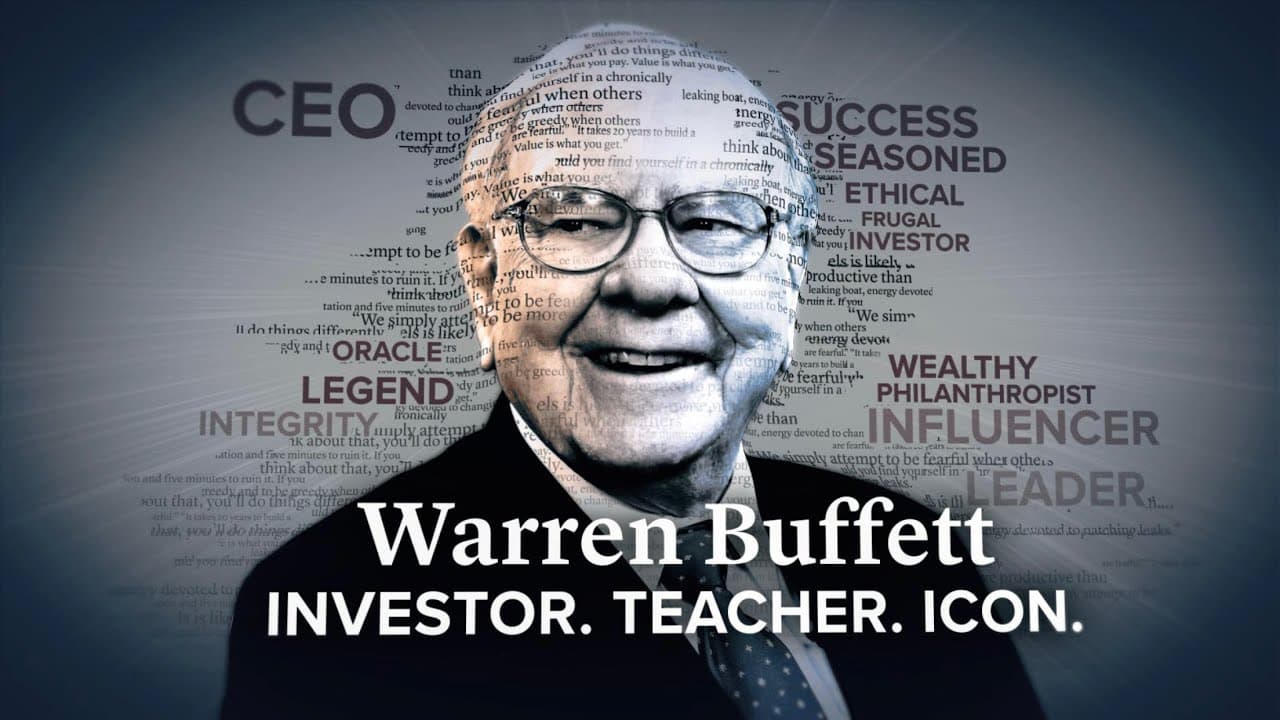
Warren Buffett | CNBC Documentary
TL;DR
Warren Buffett invests by treating each stock as ownership in a real business and asking whether he would be comfortable holding it if the market closed for five years. In this CNBC documentary, Buffett and Charlie Munger also discuss integrity, humility, meaningful work, and finding one good investment idea every year or two. Read on for their practical lessons about investing and living well.
Transcript
it's 5 30 a.m in omaha nebraska we've driven eight hours to get here super excited and something special is about to happen you can feel the energy through the crowd you only have to stand here thousands of people the faithful from around the world i'm coming from shanghai we're from belgium ontario canada every year they come here to see the star ... Read More
Key Insights
- A stock is ownership in a business, not merely an instrument for making a quick profit. Buffett suggests asking whether you would remain happy with the purchase if the market closed for five years, because that test directs attention toward the underlying company and long-term value.
- Successful investing does not require being correct about every company. Buffett says an investor does not need to understand 20 companies, 10 percent of companies, or even 5 percent, because one strong idea every year or two can be sufficient.
- The Berkshire Hathaway annual meeting is built around a partnership feeling with shareholders. Buffett and Charlie Munger accept unscreened questions and generally allow any subject except information about what Berkshire is currently buying or selling, creating discussions that extend beyond financial statements.
- Acknowledging failures is a valuable habit. Buffett advises people to trumpet their failures and remain quiet about their successes, a humorous but substantive expression of the humility and honest self-assessment that appear throughout his teaching.
- Personal growth can begin by identifying admirable qualities in other people. Buffett recommends deciding which traits deserve admiration, adopting those traits, and working toward becoming someone you would personally admire rather than merely praising those qualities from a distance.
- Integrity and ethical conduct are choices available to anyone, although they can be difficult. Bobby Laughlin used these principles, which he associated with Buffett, to help guide his recovery after becoming addicted to painkillers prescribed following wisdom-teeth surgery.
- A fulfilling career begins with actively seeking work that inspires genuine interest. Buffett urges people not to sleepwalk through life and to keep searching for their passion, recognizing that they may not discover it on their first attempt.
- Knowledge becomes more valuable when it is shared with others. After studying Buffett during the 2008 financial crisis while serving in Afghanistan, Preston Pish began a weekly investing podcast with his friend Stig Brodersen and eventually became a mentor and Buffett authority for listeners.
Install to Summarize YouTube Videos and Get Transcripts
Explore YouTube Video Summarizer or Get YouTube Transcript Extractor
Questions & Answers
Q: How does Warren Buffett evaluate a stock purchase?
Warren Buffett treats a stock as an ownership interest in a real business. He suggests asking whether you would remain happy owning it if the stock market closed for five years. This test shifts attention from making a quick profit to the underlying company and its long-term prospects.
Q: Why does Warren Buffett favor long-term investing?
Buffett’s approach begins with the idea that buying a share means owning part of a business. The five-year market-closure test helps investors look beyond short-term price movements and judge whether they truly trust the business they purchased.
Q: How many good investment ideas does Warren Buffett say an investor needs?
Buffett says investors do not need to understand 20 companies, 10 percent of companies, or even 5 percent. They may need only one good idea every year or two. His advice emphasizes patience and selectivity rather than trying to master every opportunity.
Q: What happens at the Berkshire Hathaway annual shareholder meeting?
Thousands of visitors from around the world gather in Omaha for Berkshire Hathaway’s annual meeting. Its main attraction is a five-hour session in which Warren Buffett and longtime partner Charlie Munger answer unscreened questions. The wider gathering also showcases more than 60 companies Berkshire owns and dozens more in which it invests.
Q: Why does Warren Buffett answer questions about life as well as investing?
Buffett says Berkshire has a partnership feeling toward the people who entrusted it with their money. Shareholders may ask about almost anything, although he will not reveal what Berkshire is buying or selling. He considers these broad discussions more interesting than simply reading numbers from a 10-K.
Q: What does Warren Buffett teach about finding meaningful work?
Buffett advises people to find their passion and avoid sleepwalking through life. He acknowledges that they may not find it on the first attempt, but encourages them to keep seeking work they genuinely enjoy doing.
Q: How did Warren Buffett’s principles help Bobby Laughlin?
Bobby Laughlin became addicted to painkillers prescribed after wisdom-teeth surgery and later entered rehabilitation. He followed the idea of emulating people he admired, adopting qualities he associated with Buffett such as honesty, integrity, and ethical behavior. Laughlin said Buffett’s example helped guide his recovery, and he had been clean for five years when profiled.
Q: How did Preston Pish apply Warren Buffett’s investing lessons?
While serving in Afghanistan during the 2008 financial crisis, Preston Pish studied Buffett after asking who the world’s best investor was and how he invested. Buffett’s principle of treating stocks as business ownership transformed Pish’s approach. He later created the weekly show The Investors Podcast with Stig Brodersen, producing more than 180 episodes and sharing value-investing principles.
Summary
This video highlights the impact of Warren Buffett's teachings on people from various walks of life. From investors and football players to camp organizers and cleaning service owners, Buffett's philosophy on finance and life has left a lasting impression on all of them. The video emphasizes Buffett's message of frugality, learning from mistakes, and the importance of surrounding oneself with knowledgeable and ethical individuals.
Questions & Answers
Q: How did Warren Buffett get his start?
Warren Buffett started by delivering newspapers when he was young, gradually accumulating wealth and learning about investing along the way. Despite his current fortune, he still participates in an annual newspaper delivery contest at the Berkshire Hathaway shareholders meeting.
Q: What is the significance of the Berkshire Hathaway shareholders meeting?
The Berkshire Hathaway shareholders meeting is an annual event where thousands of people gather to discuss investments and hear from Warren Buffett and his longtime partner, Charlie Munger. The meeting showcases the various companies owned or invested in by Berkshire Hathaway and offers attendees a unique opportunity to learn from Buffett himself.
Q: How did Warren Buffett's teachings influence a military veteran?
A military veteran named Preston Pish was inspired by Warren Buffett's investment prowess and sought to understand his methods. Through his study of Buffett's principles, Pish gained a better understanding of long-term investing and began sharing this knowledge with others through a podcast called "The Investors Podcast."
Q: How did Warren Buffett's teachings impact a camp organizer in Detroit?
Gail Perry Mason, a camp organizer in Detroit, was inspired by Warren Buffett's philanthropic nature and desire to educate others about investing. She started a summer camp called "Money Matters for Youth" to teach children from disadvantaged backgrounds about money management and investing. Buffett's emphasis on ethical business practices and giving back to the community has influenced Mason's approach to teaching financial literacy.
Q: How did Warren Buffett's teachings influence a cleaning service owner?
Ron Holt, the owner of a cleaning service called "Two Maids and a Mop," was motivated by Warren Buffett's philosophy of seeking unglamorous and less competitive business ventures. Inspired by Buffett's frugality and preference for simple, successful businesses, Holt built a successful franchise based on these principles. He credits Buffett's teachings for his company's profitability and growth.
Q: How has Warren Buffett impacted NFL player Ndamukong Suh?
NFL player Ndamukong Suh, known for both his on-field aggression and financial acumen, became interested in finance while in college. After hearing that Warren Buffett wanted to meet him, Suh reached out and established a mentorship with Buffett. Suh has used Buffett's guidance to make savvy investments, including real estate and technology.
Q: How has Warren Buffett's influence been seen in classrooms in Detroit?
Gail Perry Mason's summer camp, "Money Matters for Youth," introduces children in Detroit to Warren Buffett's investment principles and financial literacy. By teaching concepts like budgeting, saving, and investing, Mason and her campers exemplify Buffett's emphasis on building successful financial habits from a young age.
Q: How did Warren Buffett's teachings impact a cleaning service owner in Alabama?
Ron Holt, the owner of "Two Maids and a Mop," applied Warren Buffett's philosophy of pursuing unglamorous, low-competition businesses. Holt saved money early on and used Buffett's principles to build a successful franchise with over 60 locations. He believes that following Buffett's teachings about frugality and simplicity has contributed to his company's growth and profitability.
Q: How did Warren Buffett's teachings influence a camp organizer in Alabama?
Ron Holt's cleaning service company, "Two Maids and a Mop," is heavily influenced by Warren Buffett's principles of frugality, simplicity, and ethical business practices. Holt emphasizes these teachings to his employees and franchisees, teaching them to provide quality service at a fair price. He considers Buffett his mentor and strives to embody the values that have made Buffett successful.
Q: How did Warren Buffett impact a group of children from Detroit attending the Berkshire Hathaway shareholders meeting?
Gail Perry Mason, the camp organizer from Detroit, used her winnings from a charity event to fund a trip for 28 children from her camp to attend the Berkshire Hathaway shareholders meeting in Omaha. The children were ecstatic to meet Warren Buffett and learn more about his investment strategies. The opportunity allowed them to see firsthand the impact of Buffett's teachings and learn about investment opportunities.
Summary & Key Takeaways
-
Warren Buffett’s Berkshire Hathaway shareholder meeting attracts thousands of visitors from around the world. Its central event features Buffett and longtime partner Charlie Munger answering unscreened questions for five hours. Beyond financial results, the gathering gives shareholders direct access to their views on investing, ethics, work, relationships, and personal development.
-
Buffett teaches investors to view a share of stock as partial ownership of a real business. A useful test is whether the buyer would remain comfortable owning it if the market closed for five years. He also argues that success does not require understanding every company, only finding occasional ideas within one’s competence.
-
Buffett’s influence extends beyond investing. Bobby Laughlin used qualities he admired in Buffett, particularly integrity and ethical conduct, as guides during recovery from opioid addiction. Afghanistan veteran Preston Pish applied Buffett’s long-term business-owner mindset to investing, then shared those principles through a weekly podcast that grew beyond 180 episodes.
Read in Other Languages (beta)
Share This Summary 📚
Summarize YouTube Videos and Get Video Transcripts with 1-Click
Try YouTube Summary with ChatGPT & Claude or YouTube Transcript Generator
Explore More Summaries from Investor Archive 📚


Summarize YouTube Videos and Get Video Transcripts with 1-Click
Try YouTube Summary with ChatGPT & Claude or YouTube Transcript Generator