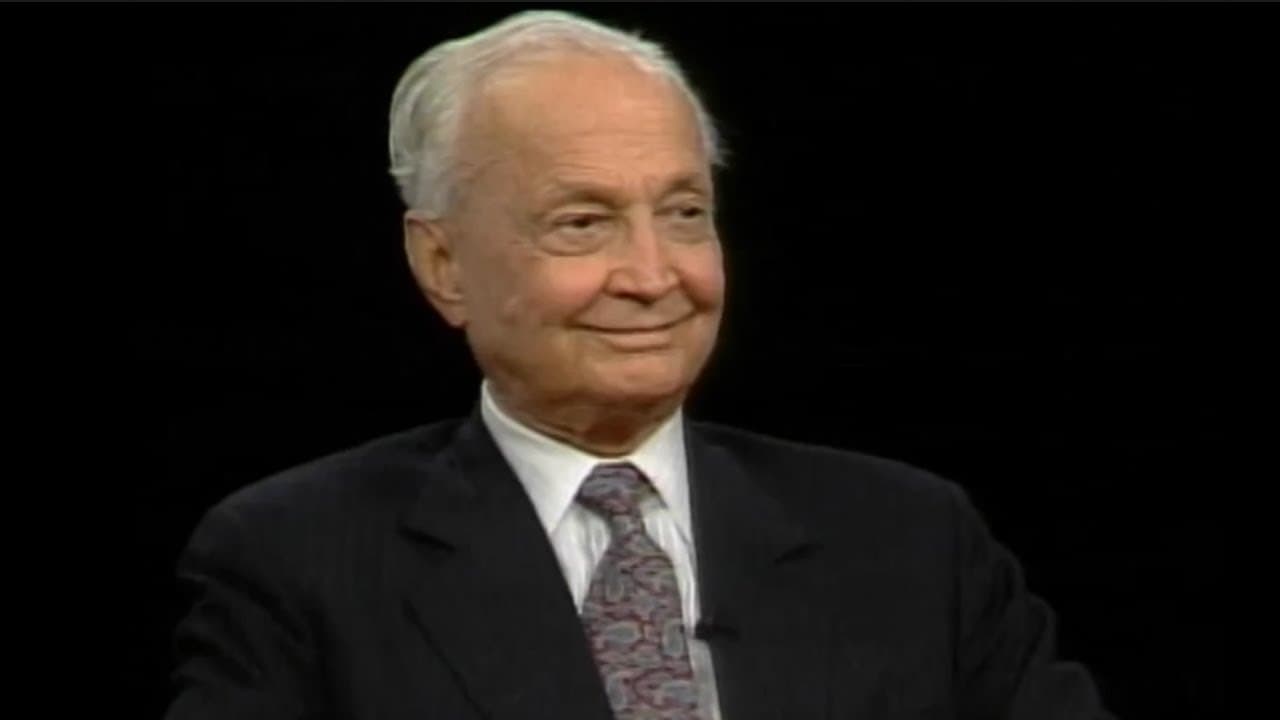
John Templeton | Charlie Rose | 1997
TL;DR
John Templeton, a pioneer in global investing, founded the Templeton Growth Fund and later focused on philanthropy and spirituality. He believed in the importance of investing worldwide and finding bargains. Templeton emphasized spiritual growth over wealth, establishing the Templeton Prize for progress in religion and advocating for spiritual healing.
Transcript
Sir John Templeton is one of the early pioneers of global investing he founded the Templeton growth fund in 1954 it grew into one of the most successful mutual fund groups and international investing it built its reputation by venturing into Uncharted territories and finding Bargains that would later reap huge returns in 1992 he sold his financial ... Read More
Key Insights
- John Templeton founded the Templeton Growth Fund, pioneering global investing by seeking undervalued opportunities worldwide.
- Templeton sold his financial empire in 1992 to focus on philanthropy and spirituality, emphasizing spiritual growth over material wealth.
- He established the Templeton Prize to encourage progress in religion, making it monetarily more significant than the Nobel Prize.
- Templeton believed in the potential of spiritual healing and funded scientific studies to explore its effectiveness.
- He argued that real wealth lies in spiritual growth, not in material accumulation, and advocated for giving over receiving.
- Templeton's investment philosophy focused on buying bargains, diversification, and maintaining flexibility and patience.
- Despite his success, Templeton considered himself industrious rather than innately bright, constantly adapting his investment strategies.
- Templeton became a Bahamian citizen, valuing the lifestyle and opportunities it offered over remaining an American citizen.
Install to Summarize YouTube Videos and Get Transcripts
Explore YouTube Video Summarizer or Get YouTube Transcript Extractor
Questions & Answers
Q: How did John Templeton revolutionize global investing?
John Templeton revolutionized global investing by founding the Templeton Growth Fund, which sought undervalued opportunities in international markets. He believed in investing worldwide, finding bargains in regions like Japan post-World War II, where assets were significantly undervalued. His approach encouraged American investors to diversify beyond domestic markets, ultimately transforming the landscape of mutual fund investing.
Q: What was the Templeton Prize, and why was it established?
The Templeton Prize was established by John Templeton in 1972 to encourage progress in religion, offering a monetary award greater than the Nobel Prize to emphasize its importance. The prize recognizes individuals who contribute new insights or advancements in spiritual understanding, aiming to inspire innovation and progress across all major religions. It reflects Templeton's belief in the significance of spiritual growth.
Q: Why did John Templeton emphasize spiritual growth over material wealth?
John Templeton emphasized spiritual growth over material wealth because he believed that true happiness and fulfillment come from spiritual development rather than financial accumulation. He observed that wealth did not necessarily lead to happiness and dedicated his later years to philanthropy and promoting spiritual principles. Templeton advocated for giving over receiving, asserting that generosity brings lasting joy and fulfillment.
Q: What was John Templeton's investment philosophy?
John Templeton's investment philosophy focused on finding bargains, maintaining diversification, and being flexible and patient. He believed in buying undervalued assets, particularly in international markets, and adapting strategies to changing conditions. Templeton emphasized the importance of thorough analytical research and positive thinking, considering these elements crucial for successful investing. His approach was characterized by a willingness to explore uncharted territories.
Q: How did John Templeton view the role of spiritual healing?
John Templeton viewed spiritual healing as a potential complement to medical science, believing in its ability to contribute to physical well-being. He supported scientific studies to explore the effectiveness of prayer and spiritual practices in healing, aiming to provide evidence-based insights. Templeton's interest in spiritual healing was part of his broader commitment to promoting spiritual growth and understanding.
Q: Why did John Templeton become a Bahamian citizen?
John Templeton became a Bahamian citizen because he valued the lifestyle and opportunities it offered, preferring the Bahamas' centrality, English language, and cultural background. He wanted to fully participate in the community where he chose to live, despite losing his American citizenship. Templeton emphasized that his decision was not motivated by tax reasons, as taxes in the Bahamas were not necessarily lower than in the U.S.
Q: What impact did John Templeton have on philanthropy?
John Templeton had a significant impact on philanthropy by dedicating a substantial portion of his wealth to promoting spiritual growth and understanding. He established the Templeton Prize to encourage progress in religion and funded research into spiritual healing. Templeton's philanthropic efforts were driven by his belief that spiritual development is crucial for individual and societal well-being, and he aimed to inspire innovation and progress in this area.
Q: How did John Templeton's early life influence his career?
John Templeton's early life in a small Tennessee town and his education at Yale and Oxford shaped his career by instilling a strong work ethic and a global perspective. Encouraged by his father's incentive for academic excellence, Templeton excelled in his studies and developed an interest in economics and investing. His experiences abroad highlighted the potential of international markets, leading him to pioneer global investing strategies.
Summary
In this interview, Sir John Templeton discusses his journey from being a pioneer of global investing to his transition into philanthropy and spirituality. He shares insights on his upbringing, education, and career in finance, as well as his perspective on economics and Wall Street. Templeton also emphasizes the importance of spiritual growth, the principles outlined in his book "Worldwide Laws of Life," and his philanthropic endeavors, including the establishment of the Templeton Prize. The interview concludes with Templeton's thoughts on the stock market and the current state of the economy.
Questions & Answers
Q: How did Sir John Templeton end up at Yale University?
Templeton shared that a farmer who lived nearby his hometown in Tennessee told him that Yale was the best university on earth, which sparked his interest. He decided to go there despite not knowing much about other prestigious universities.
Q: What did Templeton major in at Yale and Oxford?
At Yale, Templeton majored in economics with the intention of becoming a foreign missionary. However, he changed his plans after realizing that he could make a difference in the investment field. At Oxford, he initially wanted to major in business management but was encouraged to pursue a degree in law instead.
Q: How did Templeton's experience at Oxford shape his perspective on investing?
Templeton shares that his time at Oxford, where he had the opportunity to travel and observe different cultures and markets, opened his mind to the idea that Americans were missing out on international investment opportunities. He became determined to help Americans invest globally and saw that there were bargains to be found in markets around the world.
Q: Was Templeton successful in his global investment approach?
Yes, Templeton was successful in finding bargains and investing globally. He took advantage of the post-World War II market conditions and invested in countries like Japan, which he believed had a great future. Templeton recounts a story where he instructed a broker to buy almost everything on the market, including shares of bankrupt companies, with remarkable returns.
Q: Why did Templeton retire from the finance industry in 1992?
Templeton explains that while he was successful in helping people accumulate wealth through investments, he observed that wealth did not necessarily lead to happiness. He wanted to focus on spiritual growth and helping people find lasting happiness, which he believed came from giving rather than receiving. Therefore, he sold his financial empire and dedicated his time to philanthropic activities.
Q: What is the Templeton Prize?
The Templeton Prize is an annual award established by Sir John Templeton in 1972. It recognizes individuals who have made significant contributions to the field of spiritual progress. The recipient of the prize is selected by a committee of distinguished individuals from various religions and is awarded for bringing new positive ideas to their respective fields.
Q: Was Templeton religious throughout his life?
Yes, Templeton always had a religious inclination and even considered becoming a foreign missionary during his time at Yale. He believes that true wealth is not in money but in spiritual growth, and his desire to help people become happier led him to focus more on spirituality in his later years.
Q: What is Templeton's view on the nature of God?
Templeton believes that the proper way to define God is as the only reality, the ultimate creative and purposeful entity. He sees God as the source of all existence and believes that spirituality gives meaning to life.
Q: What are Templeton's thoughts on the current state of the stock market?
Templeton states that we are living in a period of rapid progress and growth, including in investments. He highlights that more people own shares now than ever before and that there are immense opportunities in the market. He believes that progress is speeding up and that people need to be more grateful for the blessings they have.
Q: If Templeton had his life to live over, would he do anything differently?
Templeton admits that there are many things he would have done differently, particularly regarding focusing more on the important things in life like spiritual growth at a younger age. However, he also acknowledges that he was given talents in the field of investing and believes he did what he was built to do.
Q: Who has been the most influential person in Templeton's life?
Templeton mentions Benjamin Franklin, who he admires for his simple yet impactful principles. He also mentions a friend who is the president of Notre Dame University and compares the principles discussed in the interview to Benjamin Franklin's almanac.
Takeaways
Sir John Templeton's interview provides insight into his upbringing, education, and career in global investing. His shift into philanthropy and spirituality sheds light on his belief that true wealth lies in spiritual growth and giving. Templeton's focus on progress and spirituality is reflected in his philanthropic activities and the establishment of the Templeton Prize. His perspective on the stock market highlights the opportunities and blessings of our current era. Overall, Templeton's journey serves as a reminder of the importance of both financial and spiritual well-being.
Summary & Key Takeaways
-
John Templeton is renowned for founding the Templeton Growth Fund, which revolutionized global investing by seeking undervalued opportunities in international markets. In 1992, he shifted focus from finance to philanthropy, emphasizing spiritual growth over material wealth. Templeton established the Templeton Prize to promote progress in religion and funded studies on spiritual healing, advocating for the importance of giving over receiving.
-
Templeton's investment philosophy centered on finding bargains and maintaining flexibility, patience, and diversification. Despite his success, he viewed himself as industrious rather than inherently bright, constantly adapting his strategies. He became a Bahamian citizen, appreciating the lifestyle and opportunities it provided, and believed that true wealth lies in spiritual growth rather than financial accumulation.
-
Templeton encouraged progress in religion through the Templeton Prize, making it more monetarily significant than the Nobel Prize to highlight its importance. He believed in the potential of spiritual healing and supported scientific studies to explore its effectiveness. Throughout his life, Templeton emphasized the significance of spiritual growth, advocating for giving over receiving as a path to lasting happiness.
Read in Other Languages (beta)
Share This Summary 📚
Summarize YouTube Videos and Get Video Transcripts with 1-Click
Try YouTube Summary with ChatGPT & Claude or YouTube Transcript Generator
Explore More Summaries from Investor Archive 📚






Summarize YouTube Videos and Get Video Transcripts with 1-Click
Try YouTube Summary with ChatGPT & Claude or YouTube Transcript Generator