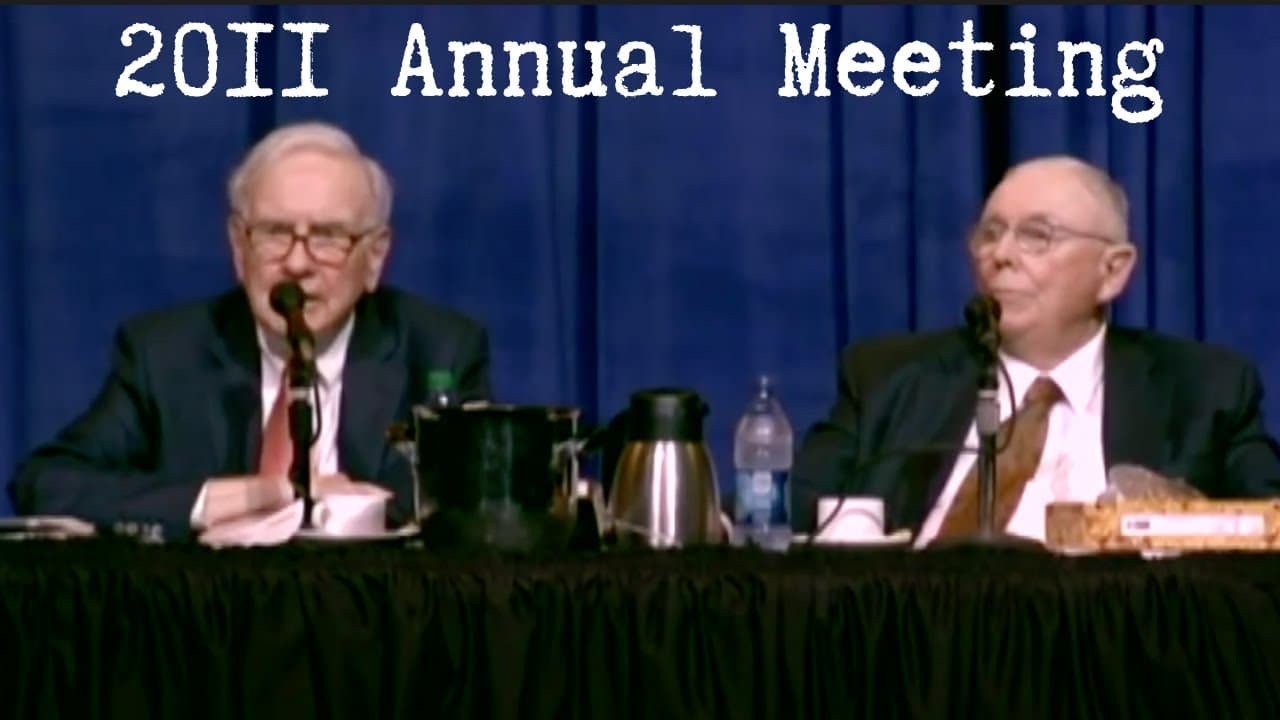
2011 Berkshire Hathaway Annual Meeting (Full Version)
TL;DR
Insurance underwriting faced a large loss in early 2011 due to catastrophes, while float and stock holdings helped Berkshire offset part of the damage. Geico growth and rising goodwill value contributed to earnings, and the Swiss Re contract renewal issue was noted. Overall, the quarter showed mixed results with significant underwriting challenges but strong equity and operating potential.
Transcript
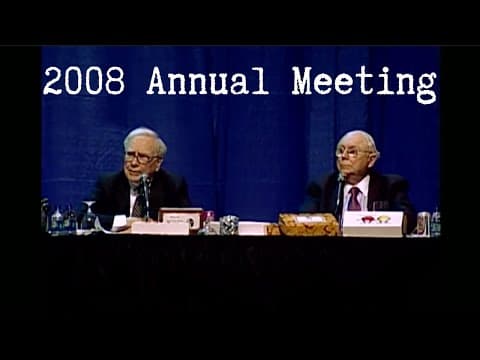
good morning i'm warren he's shirley i can see he can hear that's why we work together have trouble remembering each other's names from time to time we're going to uh i'm going to introduce the directors we're going to give you some uh information on the first quarter earnings we're going to talk briefly about the david sokol lubrizol situation and... Read More
Key Insights
- Catastrophe events in the first quarter produced a combined pre tax loss of 1,673 million for Berkshire’s underwriting segment.
- The underwriting loss makes an insurance profit unlikely for 2011, though float and other investment income still add value over time.
- Three major catastrophe events are identified as driving the losses, with a notable contract with Swiss Re contributing to the underwriting loss.
- The company notes that Swiss Re will not renew a specific five year contract, affecting expected future results.
- Geico shows policy growth month by month, and Berkshire estimates the growing value of Geico’s goodwill on the books despite static accounting.
- BNSF ownership contributes to earnings and is cited as a significant positive factor in railroad profitability, alongside broader railroad industry gains.
- The presentation discusses the impact of external factors such as elevated US hurricane activity and international catastrophe events on the reinsurers, signaling potential year end variability.
- The overall earnings narrative contrasts strong non insurance operations with challenging underwriting results, highlighting the strategic importance of float and diversified holdings.
Install to Summarize YouTube Videos and Get Transcripts
Explore YouTube Video Summarizer or Get YouTube Transcript Extractor
Questions & Answers
Q: What was Berkshire’s after tax underwriting loss in the first quarter, and what does it imply for 2011 profitability?
Berkshire reported an after tax underwriting loss of 821 million dollars in the first quarter. This loss is part of a broader underwriting catastrophe impact totaling 1,673 million pre tax, and it strongly implies that achieving underwriting profits in 2011 will be unlikely. The speaker notes that only if catastrophe events are remarkably absent would the company possibly break even, but that is considered improbable.
Q: Which event caused a significant portion of the underwriting losses, and why is it notable?
A notable portion of the losses comes from a contract with Swiss Re where Berkshire receives 20 percent of their business. This contract is in its fourth of five years, and Swiss Re indicated it will not renew it, contributing to the elevated underwriting losses and affecting Berkshire’s exposure to catastrophe risk and premium income.
Q: How does Berkshire view the value of its Geico business beyond underwriting and investment income?
Berkshire emphasizes the goodwill value of Geico, which is carried on the books at about a billion dollars. They believe the goodwill value is growing, potentially to around 14 billion, driven by policyholder value and policy growth. This value is not reflected in underwriting or investment income but is treated as a real asset with substantial long term significance.
Q: What role does BNSF play in Berkshire’s recent earnings?
BNSF is highlighted as a significant contributor to earnings due to Berkshire’s full ownership from February of the previous year. The railroad segment is described as likely to have a very good year, with the broader rail industry also benefiting from competitive efficiency and fuel price dynamics that favor rail transport over road transport.
Q: What external catastrophe factors are discussed as impacting the reinsurers, and how might they influence Berkshire?
The discussion mentions major catastrophes in the Pacific and Asian regions that hit the reinsurance industry hard, with potential insured losses in the tens of billions. These events, along with notable earthquakes like the New Zealand event, influence reinsurers substantially and create variability in Berkshire’s insurance investment income and overall earnings.
Q: What is Berkshire’s longer term expectation for insurance float and its use?
Despite current underwriting losses, Berkshire reaffirms that the float remains enormously valuable. The company expects that if insurance underwriting can eventually break even, the use of float will continue to contribute to Berkshire’s financial strength and capital allocation, supporting broader growth and investment strategy.
Q: How does Berkshire describe Geico’s policy growth progress during the year?
Berkshire presents a positive picture of Geico’s policy growth month by month versus the prior year, indicating sustained expansion. This growth supports earnings and enhances the long term value of Geico, contributing to the overall improvement in Berkshire’s non insurance operations.
Q: What broader market conditions are referenced as affecting the outlook for the insurance business?
The narrative references a pattern where the third quarter is typically the worst for catastrophe events, but in this year, catastrophic activity occurred earlier, altering the usual cycle. The firm also notes the weather and earthquake activity that influence insurance losses and the profitability of reinsurance during the year.
Summary
This video features Warren Buffett and Shirley Munger introducing the directors of Berkshire Hathaway, discussing the first quarter earnings, and addressing the David Sokol Lubrizol situation. Buffett mentions that most of their businesses, except those related to residential housing, are improving quarter by quarter. However, the first quarter saw a rise in catastrophes that hit the reinsurance industry hard. Buffett also talks about the earnings, including the insurance underwriting loss and the impact of lost investments. Munger adds that it's a mistake to assume perfect rationality and that hubris can contribute to irrational behavior. They address the Sokol situation, highlighting that Sokol's actions were inexcusable but not illegal. The press release may not have conveyed enough anger, but it was important to include Sokol's good contributions to the company.
Questions & Answers
Q: What was the overall trend of Berkshire Hathaway's businesses in the first quarter?
Most of Berkshire Hathaway's businesses, except those related to residential housing, showed improvement quarter by quarter.
Q: How did the insurance industry perform in the first quarter?
The insurance industry had a tough quarter due to major catastrophes, particularly in the Pacific Asian region. The estimated cost of these catastrophes to the reinsurance industry was around $50 billion.
Q: What was the impact of the catastrophes on Berkshire Hathaway's insurance underwriting?
Berkshire Hathaway's insurance underwriting suffered an after-tax loss of $821 million in the first quarter. This made it unlikely for them to have an underwriting profit for the year.
Q: How did Berkshire Hathaway's insurance investment income perform in the first quarter?
Berkshire Hathaway's insurance investment income saw a slight dip due to certain investments being called in, such as Goldman Sachs and General Electric. However, the overall expectation is that the investment income will grow in the future.
Q: What was the performance of BNSF, Berkshire Hathaway's railroad business, in the first quarter?
BNSF had a significant gain in earnings, contributing to the overall growth in earnings for Berkshire Hathaway. The railroad business is expected to have a good year.
Q: What were the major catastrophes in the first quarter?
The major catastrophes in the first quarter were in the Pacific Asian region. These catastrophes cost the reinsurance industry an estimated $50 billion.
Q: How did GEICO, Berkshire Hathaway's insurance subsidiary, perform in the first quarter?
GEICO gained market share and saw growth in policies month by month compared to the previous year. The value of GEICO policyholders to Berkshire Hathaway is estimated to be significant.
Q: How did Berkshire Hathaway handle the David Sokol Lubrizol situation?
Berkshire Hathaway promptly addressed the situation by delivering a letter to the Securities and Exchange Commission, conducting interviews with Sokol, and releasing a press statement. The press release may not have expressed enough anger, but it aimed to present both Sokol's good contributions and his questionable actions.
Q: Why wasn't there a sense of outrage in the press release regarding Sokol's actions?
Buffett explains that Sokol had made significant contributions to Berkshire Hathaway over the years, and it was important to acknowledge that. The press release aimed to provide the facts and actions involved without adding unnecessary anger to the situation.
Q: How did Buffett and Munger handle disagreements in their long-standing partnership?
Buffett and Munger have worked together for 52 years and have never had an argument. They approach decisions with rationality and focus on the facts rather than getting angry.
Q: What are the potential effects of the government ending the POMO program?
The impact of the government ending the Permanent Open Market Operation program (POMO) is uncertain. However, since the program's end has been widely anticipated and advertised, its effects on the stock market and the economy may already be priced in.
Summary & Key Takeaways
-
Berkshire describes a rough quarter for insurance with a pre tax loss of 1,673 million from catastrophes and notes that it is unlikely to have underwriting profit for 2011.
-
The firm highlights the value of float and the impact of investments like the Goldman Sachs and Swiss Re situation, while emphasizing the positive earnings from railroads including BNSF after acquiring full ownership.
-
Geico, policy growth, and rising goodwill value are presented as key non insurance drivers of value, with the goodwill potentially representing substantial long term value from policyholders and underwriting profits in other years.
Read in Other Languages (beta)
Share This Summary 📚
Summarize YouTube Videos and Get Video Transcripts with 1-Click
Try YouTube Summary with ChatGPT & Claude or YouTube Transcript Generator
Explore More Summaries from Investor Archive 📚
Summarize YouTube Videos and Get Video Transcripts with 1-Click
Try YouTube Summary with ChatGPT & Claude or YouTube Transcript Generator