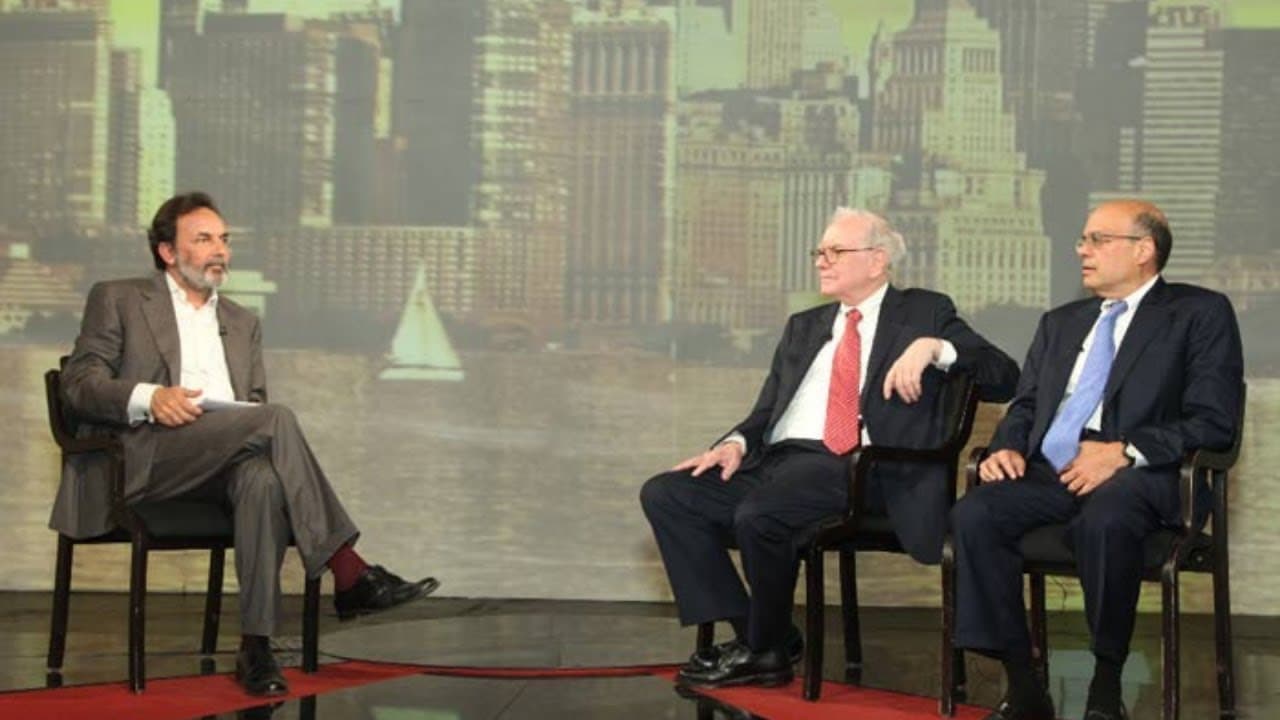
Warren Buffett | India Interview | April 15, 2011
TL;DR
Warren Buffett emphasizes the importance of valuing businesses independently of market noise and highlights the role of temperament in successful investing. He shares insights on wealth creation, personal values, and the importance of maintaining a positive outlook on life. Buffett also discusses the significance of enduring moats in business and his philanthropic approach to wealth distribution.
Transcript
for the first time in India and exclusively in NDTV Studios the man who is better than any other at making money and giving it away business school students please welcome Warren [Applause] Buffett well there are times in your life when you are really happy to get to work and tap dance to work like uh the gentleman I have here and I'm this is one o... Read More
Key Insights
- Valuing a business independently is crucial, focusing on its fundamentals rather than market prices.
- Temperament, not IQ, is key to successful investing; detachment from market noise is essential.
- Wealth creation is a byproduct of doing what you love; substantial wealth should be used for philanthropy.
- A strong economic moat protects a business from competitors and ensures long-term success.
- Personal relationships and trust are central to business and personal life success.
- Volatility in markets can be an opportunity if approached with a long-term perspective.
- Family businesses can be successful if they maintain unity and clear succession plans.
- Philanthropy should be approached with the same diligence and strategy as business investments.
Install to Summarize YouTube Videos and Get Transcripts
Explore YouTube Video Summarizer or Get YouTube Transcript Extractor
Questions & Answers
Q: How does Warren Buffett value businesses?
Warren Buffett values businesses by focusing on their fundamentals rather than market prices. He assesses a company's economic moat, management quality, and future potential before considering its stock price. This approach helps him make independent investment decisions, unaffected by market fluctuations or external opinions.
Q: What role does temperament play in investing according to Buffett?
According to Warren Buffett, temperament is more important than IQ in investing. Successful investors need to remain detached from market noise and not be swayed by the opinions of others. This ability to independently analyze facts and make decisions based on long-term perspectives is crucial for achieving investment success.
Q: Why does Buffett emphasize the importance of economic moats?
Buffett emphasizes economic moats because they protect a business from competition, ensuring its long-term success. A strong moat, such as brand reputation or customer loyalty, creates a durable competitive advantage. This allows a company to maintain profitability and market share, making it an attractive investment.
Q: How does Buffett approach philanthropy?
Buffett approaches philanthropy with the same strategic mindset as business investments. He believes that surplus wealth should be used to benefit others and prefers to give through established foundations. Buffett's philanthropic efforts aim to address significant societal issues, leveraging his resources for maximum impact.
Q: What is Buffett's view on market volatility?
Buffett views market volatility as an opportunity for investors with a long-term perspective. He believes that price fluctuations can create opportunities to buy undervalued stocks. By focusing on a company's intrinsic value rather than short-term market movements, investors can capitalize on volatility to achieve substantial returns.
Q: How does Buffett view family businesses?
Buffett sees family businesses as potentially successful if they maintain unity and have clear succession plans. He has observed both successful and dysfunctional family-run companies. The key to success lies in effective management and the ability to leverage the unique strengths of family dynamics while avoiding conflicts.
Q: What advice does Buffett give to young investors?
Buffett advises young investors to focus on valuing businesses and making independent decisions. He encourages them to develop a strong understanding of industries and companies, ignoring market noise. Buffett also highlights the importance of patience, discipline, and a long-term perspective in achieving investment success.
Q: How does Buffett balance personal relationships and business?
Buffett believes in the importance of personal relationships and trust in both business and life. He values working with people he likes and respects, which enhances his personal and professional life. This approach fosters a positive work environment and contributes to the success of his business endeavors.
Summary
This video features an interview with Warren Buffett and Ajit Jain, where they discuss a range of topics including their impressions of India, the qualities of successful investors, the importance of having the right temperament, and the role of discipline in investing. Buffett also explains why he has not invested much in IT companies and discusses the potential impact of rising commodity prices.
Questions & Answers
Q: What are Warren Buffett's impressions of India?
Warren Buffet expected to see a booming economy in India, and his visit confirmed his expectations. He visited a plant in Bangalore that was expanding rapidly and had the chance to meet many people and make some new friends. He even invited a few of them to his annual meeting in Omaha, jokingly telling them to vote for him if they come. Overall, his visit has been nothing but fun so far.
Q: How does Warren Buffett value businesses before looking at their prices?
Warren Buffett cares more about valuing the business itself rather than the price of the stock. He likes to go in without knowing the stock's price and looks at it as a piece of a business. He values the business based on its future prospects, the quality of its management, and whether it is selling at the right price. He believes that the stock market innovations and options do not impact his approach as he focuses on buying businesses for the long term.
Q: How often does Warren Buffett look at the price of shares?
Warren Buffett looks at the price of Berkshire (his company's stock) once every two weeks. However, he emphasizes that the stock price doesn't matter much to him because he hasn't bought or sold any shares for 40 years. He actually prefers the stock prices to go down because it allows him to buy more at a cheaper price. He forms his own independent judgment of the value of the stocks he owns and believes that the cheaper they are, the better it is for his investment strategy.
Q: How does Warren Buffett identify businesses with a strong moat?
Warren Buffett looks for businesses with a durable and wide moat, which refers to the competitive advantages that protect a company from its competitors. He uses Coca-Cola as an example, explaining that a moat can be created not only by the taste of the product but also by the positive association consumers have with it. He also mentions See's Candies, a product that has a moat because it creates memorable moments for customers. Buffett believes that the moat of a business can widen or narrow based on various factors like service, product design, or consumer perception. He advises his managers to think about how to protect and widen the moat of their businesses.
Q: Does Warren Buffett advise his managers on protecting the moat of their businesses?
Yes, Warren Buffett sends letters to his managers and talks to them about the importance of widening the moat of their businesses. He believes that a great business is like an economic castle that attracts competitors. Therefore, he wants his managers to act as knights protecting the castle and making sure the moat keeps widening. He encourages them to focus on making their businesses great over the long term and to consider what actions will make them successful for the next hundred years.
Q: Does Warren Buffett think there is a contradiction in investing in private equity firms despite being critical of them?
Warren Buffett clarifies that he has not invested in private equity firms. Though Berkshire Hathaway did invest in Goldman Sachs, he does not consider it a private equity investment. He explains that private equity firms usually take companies private with a fair amount of leverage and then resell them to the public later. He emphasizes that Berkshire Hathaway's strategy is different as they focus on businesses they can buy and hold, not with the intention of reselling. Therefore, he believes there is no contradiction in being critical of traditional private equity firms while not investing in them.
Q: Why hasn't Warren Buffett invested much in IT companies despite being friends with Bill Gates?
Warren Buffett explains that he doesn't invest in IT companies because he doesn't have enough knowledge to predict which ones will be successful in the future. He mentions meeting Bill Gates in 1991 and acknowledging his success, but he didn't know how Microsoft or other IT companies would evolve. He admits that he made a mistake by not investigating companies outside the United States more thoroughly, but he focuses on investing in businesses he understands well. He believes in making big bets when he knows he's right, rather than investing in areas he has limited knowledge about.
Q: What qualities does Warren Buffett believe are important for successful investing?
According to Warren Buffett, successful investing requires the right temperament more than a high IQ. He believes that one must have the discipline to detach themselves from others' opinions and evaluate businesses based on their own understanding and the available facts. Being able to say no to opportunities that don't meet one's requirements is also crucial. He advises individuals to focus on businesses they understand and not follow the herd mentality. Buffett also emphasizes the importance of being a person that others want to work with, as it can lead to better opportunities and relationships in the long term.
Q: What is Warren Buffett's greatest regret in life?
Warren Buffett states that he doesn't have any particular regrets in life. He considers himself extremely lucky to have been born in the United States and have the opportunities he has had. He believes that his life has been a result of winning the "ovarian lottery" and being wired for capital allocation. Buffett is grateful for his life, marriage, and the people he has been able to associate with. He focuses on looking forward to the future and doesn't dwell on regrets or what could have been different.
Q: How does Warren Buffett view rising commodity prices and their potential impact?
Warren Buffett acknowledges that commodity prices, including oil, have been rising. He mentions that eventually there will be a peak in oil production as it is a finite resource. He believes that the world needs to recognize and prepare for this fact. Buffett also mentions that rising commodity prices, such as copper, cotton, and soybeans, may lead to significant inflationary pressures. He attributes this to the monetary and fiscal policies implemented post the 2008 financial crisis. He suggests that heavy doses of medicine can have consequences and believes that the aftereffects could still be felt.
Takeaways
Warren Buffett's interview highlights the importance of having the right temperament and discipline in investing. He emphasizes the need to detach oneself from the opinions and views of others and evaluate businesses based on available facts. Buffett advises individuals to focus on businesses they understand well and to be patient in finding attractive opportunities. He also stresses the significance of being a person that others want to work with and the value of long-term relationships and associations. Additionally, Buffett discusses his impressions of India, the importance of widening the moat for businesses, and the potential impact of rising commodity prices.
Summary & Key Takeaways
-
Warren Buffett highlights that successful investing requires valuing businesses based on their fundamentals, not market prices. He emphasizes the importance of temperament over IQ in making investment decisions, advising investors to remain detached from market noise. Buffett believes that wealth creation stems from doing what one loves and that surplus wealth should be used philanthropically.
-
Buffett discusses the concept of economic moats, which protect businesses from competition and ensure long-term success. He stresses the importance of personal relationships and trust in both business and life, sharing his experiences with family businesses and the challenges they can face.
-
Buffett views market volatility as an opportunity for investors with a long-term perspective. He shares his approach to philanthropy, treating it with the same strategic mindset as business investments. His insights offer valuable lessons on investing, life, and the responsible use of wealth.
Read in Other Languages (beta)
Share This Summary 📚
Summarize YouTube Videos and Get Video Transcripts with 1-Click
Try YouTube Summary with ChatGPT & Claude or YouTube Transcript Generator
Explore More Summaries from Investor Archive 📚
Summarize YouTube Videos and Get Video Transcripts with 1-Click
Try YouTube Summary with ChatGPT & Claude or YouTube Transcript Generator