How to Land a Software Developer Job Faster
TL;DR
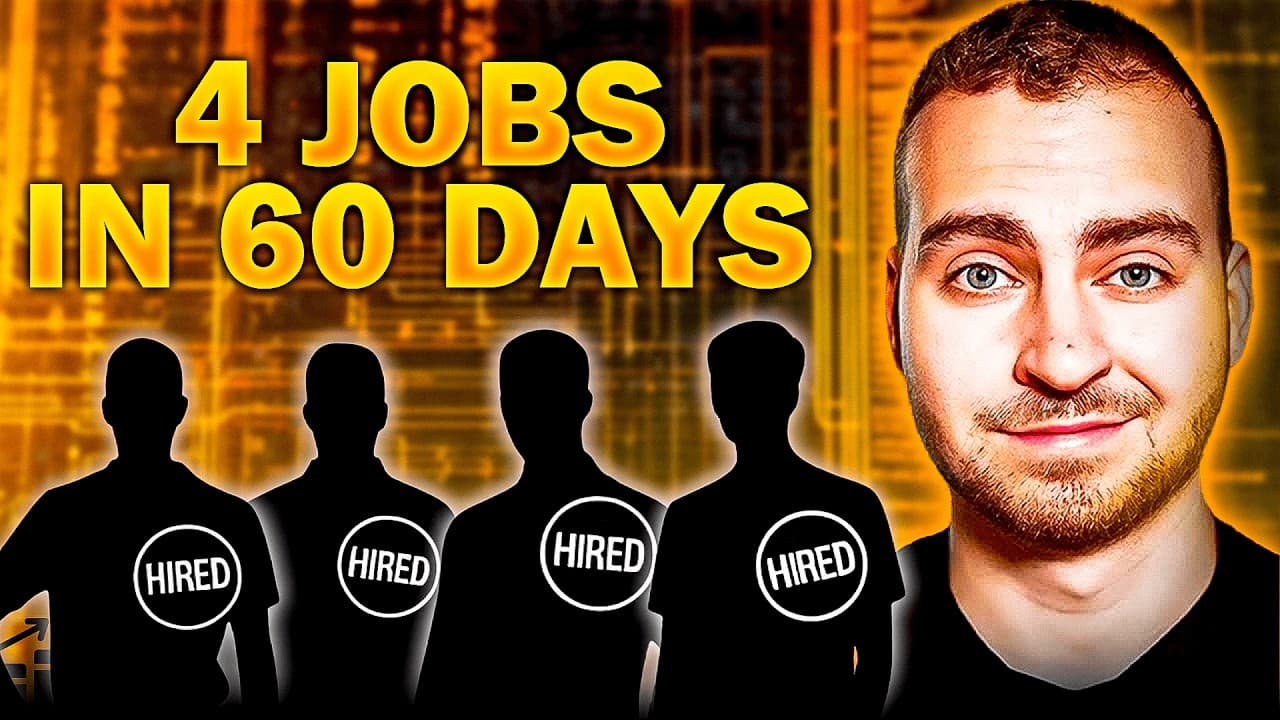
Focus on getting more interviews, passing more interviews, and generating more offers, because job-search skills differ from everyday software engineering skills. Choose a clear specialty, align your LinkedIn profile and resume with matching roles, begin applying immediately, and devote focused daily effort to interview preparation, including data structures, algorithms, mock interviews, communication, and complexity analysis.
Transcript
This video is going to be a little bit different. I'm going to cut through all of the crap. I'm not going to give you any bullshit, and I'm just going to be brutally honest with you about the job market in 2025 and likely going forward, and what you need to do if you want to land a job. Now, if you're someone who's going to watch this video and you... Read More
Key Insights
- Job-search ability is a separate skill set from everyday software engineering ability. Clean code, system design, languages, and frameworks support performance at work, while algorithms, mock interviews, communication, common interview questions, and complexity analysis help candidates pass hiring assessments.
- The highest-leverage job-search goals are getting more interviews, passing more interviews, and receiving more offers. The presented system prioritizes these outcomes over additional portfolio work or obscure technologies once a candidate already possesses the foundational skills needed to qualify for relevant positions.
- Clear specialization strengthens a developer's market positioning. Instead of presenting as a general software engineer who fits many unrelated roles, a candidate should identify a credible niche, such as Python development, web frameworks, or React, and consistently communicate that expertise.
- Narrow positioning can reduce the number of theoretically suitable vacancies while improving relevance for the remaining opportunities. Eric was positioned to qualify for roughly 5% or fewer developer roles, but he became substantially more qualified for the roles that matched his selected niche.
- LinkedIn profiles and resumes should emphasize the skills sought by employers in the chosen niche. The process described involved revising Eric's headline and presenting his genuine experience through the lens of relevant skills, without making his background inaccurate.
- Applications should begin as soon as essential positioning materials are ready. The system did not postpone applications until every preparation task was complete, because early applications could create interview opportunities while technical and behavioral preparation continued in parallel.
- Focused interview preparation should replace low-impact learning during an active job search. Eric stopped prioritizing portfolio work, obscure frameworks, and unrelated technologies, then refreshed data structures and algorithms through a defined daily roadmap designed around hiring assessments.
- Accountability supports consistent execution of a preparation roadmap. Eric regularly reported what he completed to a coach, creating external pressure to follow through on daily work that could otherwise be postponed when nobody was checking his progress.
Install to Summarize YouTube Videos and Get Transcripts
Explore YouTube Video Summarizer or Get YouTube Transcript Extractor
Questions & Answers
Q: How can software developers improve their chances of getting hired?
Software developers can improve their chances by treating job searching as a distinct discipline. They should choose a credible specialty, align their LinkedIn profile and resume with that niche, start applying once those materials are ready, and practice the tasks used in interviews. The stated priorities are to obtain more interviews, pass more interviews, and create more offers.
Q: Why are strong software engineering skills not enough to get a job?
Strong engineering skills and strong hiring skills belong to different categories. System design, clean code, languages, and frameworks help someone perform as a developer, but they do not automatically produce successful interviews. Hiring also requires data structures and algorithms, mock technical interviews, clear solution explanations, time-complexity analysis, preparation for common questions, branding, positioning, and effective self-presentation.
Q: Should a developer specialize or apply as a generalist?
The recommended approach is to select a clear niche based on genuine strengths and present that specialty consistently. A candidate might identify as a Python developer or emphasize expertise in web frameworks or React. This means fitting fewer openings, but it can make the candidate much more relevant to matching employers than someone who claims to suit every kind of development role.
Q: How should developers improve their LinkedIn profiles and resumes?
A developer should first decide which type of role to target, then center the LinkedIn headline, experience descriptions, and resume around the skills employers request for that role. Existing experience should be emphasized selectively but accurately. The resume should also follow an appropriate template and scanning considerations, while every major element reinforces the same professional niche.
Q: When should a developer start applying for jobs?
Applications should begin quickly after the essential LinkedIn and resume changes are complete. The system described did not require candidates to finish all interview preparation before entering the market. Applying immediately creates opportunities and feedback while the candidate continues studying. Interview preparation, including algorithms and mock practice, can proceed alongside the active application process.
Q: What should developers study for technical interviews?
Technical interview preparation should include data structures and algorithms, relevant theory, common interview questions, and repeated mock interviews. Candidates should practice developing a solution while explaining their reasoning, then evaluate time complexity. The roadmap described assigns specific daily work so preparation is structured, measurable, and directed toward passing actual hiring assessments rather than accumulating unrelated technical knowledge.
Q: What changed in Eric's job search before he joined Microsoft?
Eric had spent about six months searching after a layoff, submitted many applications, received roughly three or four interviews, and did not secure an offer. His new process narrowed his niche, rebuilt his LinkedIn positioning and resume around matching skills, started applications promptly, and concentrated on accountable interview preparation. Within seven weeks, he accepted a Microsoft contract position.
Q: Why does accountability matter during interview preparation?
Accountability makes daily preparation harder to postpone. In the described mentorship process, a coach regularly asked Eric what he had completed, and Eric reported his progress. That oversight supported consistent execution of a defined roadmap for refreshing theory, data structures, and algorithms. The underlying point is that candidates may skip difficult practice when nobody expects a progress update.
Summary & Key Takeaways
-
The software engineering job market described for 2025 is difficult, but developers can still improve their chances through deliberate job-search preparation. The central argument is that technical competence alone is insufficient. Candidates must also develop branding, positioning, application, interviewing, and communication skills that directly influence whether they receive strong offers.
-
Developers should select a specific professional niche and present relevant experience around the skills employers seek for that niche. This narrower positioning reduces the number of suitable openings, but makes the candidate more qualified for each matching role. LinkedIn profiles and resumes should consistently support that positioning without inaccurately representing prior experience.
-
Eric spent about six months searching unsuccessfully after a layoff, receiving only a handful of interviews and no offer. After narrowing his niche, revising his LinkedIn profile and resume, applying immediately, and following an accountable interview-preparation roadmap, he accepted a Microsoft contract position paying about $115,000 per year within seven weeks.
Read in Other Languages (beta)
Share This Summary 📚
Summarize YouTube Videos and Get Video Transcripts with 1-Click
Try YouTube Summary with ChatGPT & Claude or YouTube Transcript Generator
Explore More Summaries from Tech With Tim 📚






Summarize YouTube Videos and Get Video Transcripts with 1-Click
Try YouTube Summary with ChatGPT & Claude or YouTube Transcript Generator