How Do You Prepare for a Python Interview? A Complete Guide
TL;DR
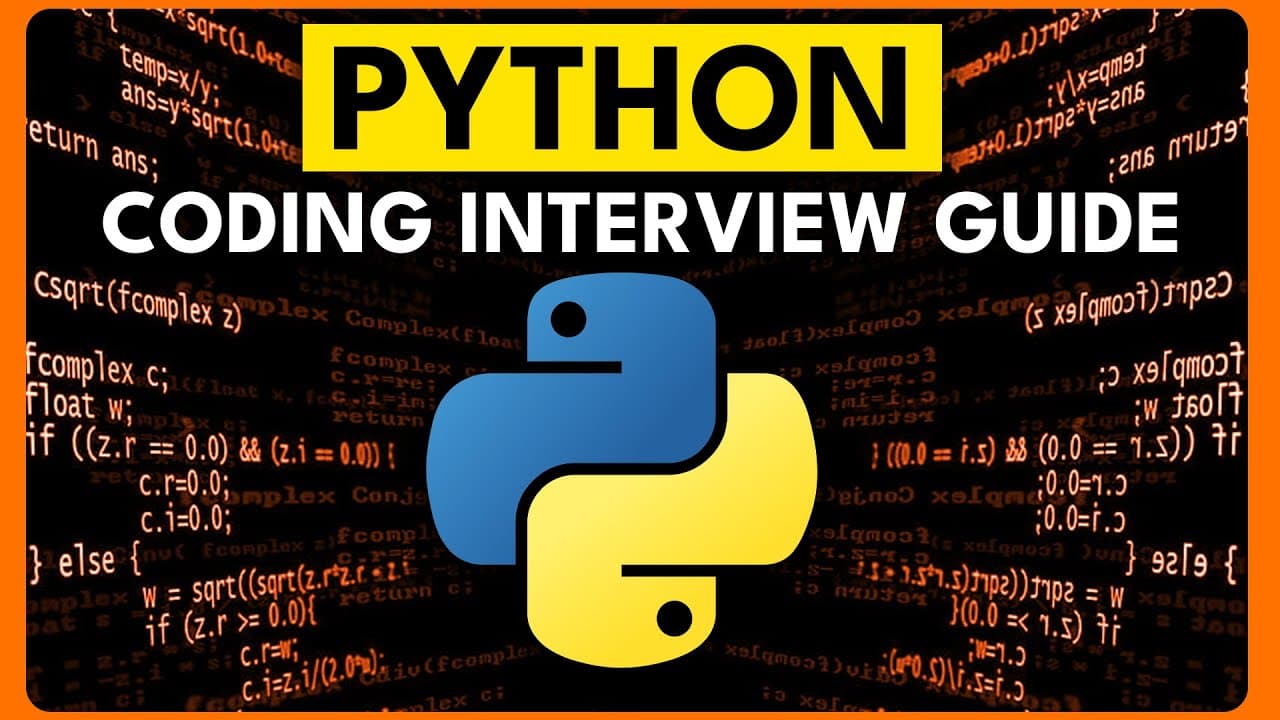
Prepare for a Python interview by practicing both knowledge-based questions and hands-on coding while strengthening your ability to explain technical decisions clearly. The guide identifies four common mistakes, including weak Python fluency and limited understanding of the consequences behind high-level features. Read on for a structured review of core concepts, Python-specific topics, role-based preparation, coding practice, and spoken-answer evaluation.
Transcript
This is the most in-depth Python interview guide that you're going to find on YouTube. I've been writing Python code for over ten years. I've passed many interviews, failed a few, and even given interviews to other people. I know exactly what a Python interview is like and how you can prepare for it so that you succeed. In this video, I'm going to ... Read More
Key Insights
- Prepare for both formats: Knowledge-based questioning and hands-on coding test different abilities. One asks candidates to articulate what they understand, while the other requires them to apply that understanding to a practical problem. Because the speaker describes receiving both styles as typical, studying definitions without coding, or coding without practicing explanations, leaves a significant preparation gap.
- Fluency affects interview performance: The first highlighted mistake is not being fluent in writing Python. Familiarity with concepts is not enough if producing ordinary syntax feels slow or uncertain during a coding task. Regularly writing conditionals, loops, functions, and common data structures helps candidates demonstrate knowledge without allowing basic language mechanics to consume their attention.
- High-level tools have consequences: The second mistake is using Python's convenient features without understanding their lower-level implementation or consequences. Interview preparation should therefore move beyond memorized syntax. For each familiar feature, candidates should be ready to discuss how it behaves, what properties it has, and why it is appropriate for a particular problem rather than merely naming it.
- Explanations make knowledge visible: The third mistake is failing to communicate a thought process. An interviewer cannot evaluate reasoning that remains unspoken, even when the candidate privately understands the problem. Candidates should practice explaining choices, assumptions, and solution steps aloud so that their technical knowledge is presented in a form the interviewer can actually assess.
- Core knowledge prevents gaps: The fourth mistake is lacking a firm understanding of core Python. The guide places basic syntax, functions, data types, object-oriented programming, file handling, error handling, and memory management within this foundation. Reviewing these areas systematically reduces the chance that a familiar but insufficiently understood subject becomes an obstacle during questioning.
- Data structures require precision: Candidates should know the exact names, properties, and appropriate uses of lists, tuples, sets, dictionaries, named tuples, and default dictionaries. Some of these structures are specific to Python or may have different names in other languages. Interview readiness means being able to choose among them and explain the basis for that choice.
- Python features deserve focused study: Decorators, generators, context managers, list comprehensions, and dunder methods form a distinct area of Python-specific preparation. Candidates should understand what each feature does and how it fits Python's style. Treating them as isolated syntax patterns is weaker than being able to explain their behavior and appropriate application.
- Concurrency topics broaden preparation: Threading, multiprocessing, and asynchronous programming are included among the areas candidates may need to discuss. These topics connect to concurrency and parallelism, as well as to questions about Python's programming paradigm. Preparation should support clear comparisons among these approaches without confusing their terminology or intended uses.
- Confidence must match knowledge: An accurate answer can create a poor impression if it is delivered with unnecessary uncertainty. The guide recommends being honest when an answer is unknown, but speaking decisively when the material is understood. This distinction prevents nervous delivery from obscuring real knowledge while preserving honesty about genuine gaps.
- Job descriptions guide priorities: Specialized preparation should reflect the actual position rather than an undirected list of libraries. If the role involves Django, questions about the Django web framework are likely to be relevant. Extracting technologies and responsibilities from the job description helps candidates combine a general Python review with focused preparation for that particular opportunity.
- AI can generate practice questions: A candidate can give ChatGPT the role description and request questions that might appear in the interview. The useful part is not simply receiving a list. Each question becomes a spoken rehearsal prompt that tests relevant knowledge, reveals weak areas, and connects practice to both Python fundamentals and position-specific expectations.
- Recordings reveal delivery problems: Reviewing a recording exposes qualities that silent study cannot show, including filler words, hesitation, stuttering, distracting mannerisms, excessive length, and unclear phrasing. Repeated evaluation helps candidates make answers more concise and confident. It also tests whether an explanation communicates the intended knowledge to someone who cannot see the candidate's internal reasoning.
Install to Summarize YouTube Videos and Get Transcripts
Explore YouTube Video Summarizer or Get YouTube Transcript Extractor
Questions & Answers
Q: How should I prepare for a Python technical interview?
Prepare for both knowledge-based questions and hands-on coding because a Python interview may include either format or both. Review core syntax, data types, object-oriented programming, file and error handling, memory management, concurrency, parallelism, and Python-specific features. Practice LeetCode-style problems on an interview-like surface such as a whiteboard, computer, or shared IDE while explaining your reasoning aloud. Use the job description to identify relevant frameworks, generate possible questions with ChatGPT, and record your answers so you can evaluate accuracy, clarity, confidence, and concision.
Q: What are the four common Python interview mistakes?
The four mistakes are weak fluency when writing Python, limited understanding of the lower-level implementation or consequences of high-level features, inability to communicate a thought process, and gaps in core Python knowledge. Together, they cover language use, conceptual depth, communication, and foundational understanding. A candidate can therefore struggle even after solving practice problems if the solution is difficult to write or explain. Preparation should test each weakness separately and then combine fluent coding with confident spoken reasoning.
Q: What Python topics should I study for knowledge questions?
Start with if statements, loops, while loops, functions, and the terminology and properties of common data types. Review lists, tuples, sets, dictionaries, named tuples, and default dictionaries, including when each should be used. Continue with object-oriented programming, classes, dunder methods, file and JSON handling, exceptions, finally statements, and memory management. The wider review should also include language paradigms, threading, multiprocessing, asynchronous programming, decorators, generators, context managers, list comprehensions, and role-relevant libraries or frameworks.
Q: How do knowledge and coding interviews differ?
Knowledge-based interviews ask candidates to articulate their understanding through conceptual questions, such as explaining Python's global interpreter lock. Hands-on interviews ask candidates to solve a practical problem, usually in a LeetCode-style format. The solution may be written on a whiteboard, computer, or shared IDE, which requires active fluency rather than recognition alone. Since an interview may include one or both formats, candidates need both clear conceptual explanations and practiced problem-solving ability.
Q: How can I answer Python questions confidently?
If you know an answer, state it clearly instead of weakening a correct response with unnecessary uncertainty. If you genuinely do not know, be upfront and honest rather than pretending. Practice answering questions aloud because silent recognition does not reproduce the communication demands of an interview. Recording and reviewing repeated attempts helps remove hesitation, filler words, and rambling while making explanations clearer and more concise.
Q: How can ChatGPT help with Python interview preparation?
Give ChatGPT the job description and ask it to generate questions that could appear in the interview. The role description helps the questions reflect both general Python knowledge and the libraries or frameworks relevant to the position. Answer every generated question aloud so the exercise tests retrieval and communication rather than passive reading. Record the session and assess confidence, clarity, concision, filler words, mannerisms, stuttering, and any knowledge gaps revealed by the answers.
Q: Why should I record practice interview answers?
A recording shows how an interviewer would actually experience an answer rather than how the answer sounded internally. Reviewing it can reveal stuttering, filler words, distracting mannerisms, hesitation, rambling, and explanations that are less clear than expected. These observations matter because the interviewer cannot read the candidate's mind and must judge the knowledge that is communicated. Repeating the process helps make answers more accurate, direct, confident, concise, and understandable.
Q: Which Python-specific features are important to review?
The guide highlights decorators, generators, context managers, list comprehensions, and dunder methods as Python-specific areas worth reviewing. Candidates should know what these features do, how they behave, and where they fit within Python's programming style. They should also connect this knowledge to the broader requirement of understanding the consequences behind high-level features. This preparation supports answers that explain both how a feature is used and why it is appropriate in a given situation.
Summary & Key Takeaways
-
Understanding the interview structure: Python interviews can combine knowledge-based questioning with hands-on coding. Knowledge questions require candidates to articulate concepts, while coding tasks commonly involve a LeetCode-style problem solved on a whiteboard, computer, or shared IDE. A candidate may encounter only one format, but receiving both is described as typical. Behavioral questions may also appear, although they are outside this guide. Effective preparation must therefore address conceptual knowledge, practical coding fluency, and clear communication of the reasoning behind an answer.
-
Recognizing four common mistakes: Candidates often struggle because they are not fluent in writing Python, do not understand the lower-level implementation or consequences of high-level features, cannot communicate their thought process, or lack core Python understanding. These weaknesses can reinforce one another during an interview. Someone may know a feature but use it awkwardly, produce a correct solution without explaining it, or rely on convenient syntax without understanding its behavior. Preparation should deliberately test all four areas instead of focusing exclusively on solving problems.
-
Reviewing knowledge-based topics: Preparation begins with core syntax, including if statements, loops, while loops, and functions. Candidates should also understand Python data types and know when to use lists, tuples, sets, dictionaries, named tuples, and default dictionaries. The broader study list includes object-oriented programming, file and JSON handling, errors and exceptions, finally statements, memory management, language paradigms, concurrency, parallelism, and Python-specific features. Exact terminology, properties, appropriate use cases, and implementation consequences all matter.
-
Matching preparation to roles: General Python knowledge should be combined with the libraries and frameworks relevant to the position. A Django role, for example, is likely to involve questions about the Django web framework. The job description can therefore serve as a practical guide for deciding which specialized subjects deserve attention. An AI tool such as ChatGPT can receive that description and generate possible interview questions. This creates a practice set shaped by both general Python expectations and the requirements stated or implied by the role.
-
Practicing answers under pressure: Candidates should answer generated questions aloud rather than merely reading or reviewing them silently. Recording those responses makes hesitation, filler words, stuttering, distracting mannerisms, rambling, and unclear explanations easier to identify. Review should focus on whether each answer is accurate, clear, confident, and concise. The same communication discipline applies during coding, where the interviewer must be able to follow the candidate's thought process. Real Python quizzes and Python-focused videos can supplement this repeated practice.
Read in Other Languages (beta)
Share This Summary 📚
Summarize YouTube Videos and Get Video Transcripts with 1-Click
Try YouTube Summary with ChatGPT & Claude or YouTube Transcript Generator
Explore More Summaries from Tech With Tim 📚

Summarize YouTube Videos and Get Video Transcripts with 1-Click
Try YouTube Summary with ChatGPT & Claude or YouTube Transcript Generator