How Figma Grew: Claire Butler on Bottom-Up GTM
TL;DR
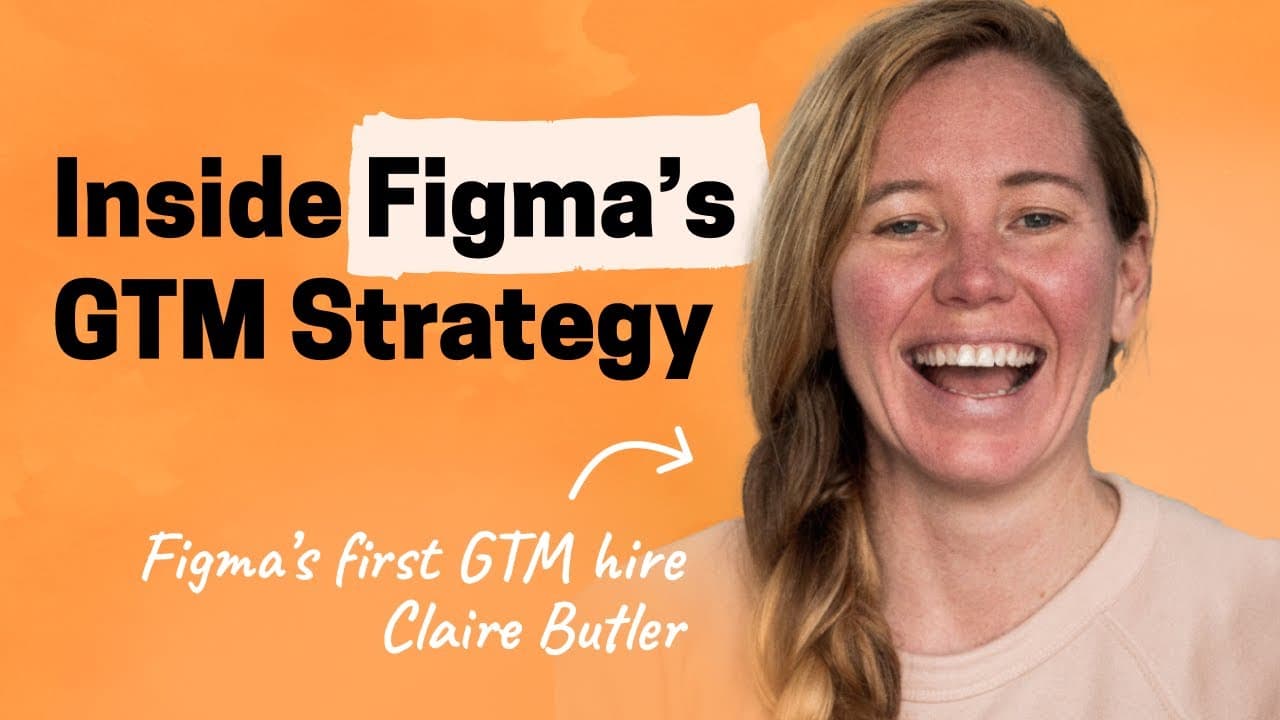
Figma's go-to-market strategy is two-part: get individual contributors at a company to love the product, then enable them to spread it inside their organization. First GTM hire Claire Butler joined as the 10th employee, killed the original 'Summit' product name on day one, and led the launch out of stealth.
Transcript
We had Coda. They were our first user, and they were based in Palo Alto. Dylan and I drove down and demoed the product to them, and they were the first ones. Their designer, Jeremy was like, "Yes, we'll take this on full time." And I remember we were both like, "What? Really? You will?" That was the first person who said yes to us. And so, we... Read More
Key Insights
- Figma's go-to-market strategy is two-part: first get individual contributors (ICs) at a company to love the product, then enable them to spread it within the organization.
- Claire Butler was Figma's 10th employee and first marketing hire, joining while the company was still in stealth and before the product launched, later becoming Senior Director of Marketing.
- The Figma product was originally going to be named 'Summit' while the company was called Figma, but Butler argued you can't build brand equity in two places and recommended killing Summit on her first day.
- The name change decision moved extremely fast: Butler made the recommendation on day one, presented it the next day, and the team decided to go with Figma for the product name.
- Early startup work oscillates between high-level strategic decisions and total grunt work, like Butler both killing a product name and personally carrying four heavy bags of ice three blocks for a 10-person meetup.
- Launching out of stealth was the most stressful moment because it forced Figma to finalize messaging and positioning, with Dylan and the team agreeing on it word for word on a big screen.
- The hardest part of being an early solo marketer is having no one to check decisions with, requiring immense self-confidence when you lack the experience cycles to know your choices are right.
- Coda was Figma's first user; Dylan and Claire drove to Palo Alto to demo it, and the team dropped everything and even drove down to fix an engineer's MacBook just to get them to use the product.
Install to Summarize YouTube Videos and Get Transcripts
Explore YouTube Video Summarizer or Get YouTube Transcript Extractor
Questions & Answers
Q: What is Figma's go-to-market strategy?
Figma's go-to-market strategy is two-part. First, you get individual contributors (ICs) at a company to love the product. Second, you enable those ICs to spread the product within their organization. Claire Butler, Figma's first GTM hire, developed and led this bottom-up motion, sharing stories and examples of how the Figma team executed it so others can apply the same approach to their own products.
Q: Who is Claire Butler and what was her role at Figma?
Claire Butler started at Figma while it was still in stealth as their 10th employee and their first ever marketing hire. She led their original launch and go-to-market work, along with branding, positioning, and messaging. Eight years in, as Senior Director of Marketing, she continues to lead Figma's go-to-market and bottom-up growth motion, along with community events, social advocacy, and Figma for education teams.
Q: Why was Figma's product not named Summit?
Figma's product was originally going to be called Summit, with the company named Figma and the idea of building a suite of future tools under mountain-themed names. On her first day, Butler reacted that they could not build brand equity in two places and that Summit was not ownable. She argued they should stick with one name, Figma, which was ownable and made sense, so the team killed Summit.
Q: How fast did decisions get made in Figma's early days?
Decisions moved extremely fast. Butler recommended killing the Summit product name on her very first day. Dylan asked her to make a presentation and present it to everyone the next day, so on her second day she gave the presentation and the decision to go with Figma was made. This speed illustrated how much early employees ran with ideas and took ownership at the young company.
Q: What was the most stressful part of launching Figma out of stealth?
Launching out of stealth was the most stressful moment because it forced Figma to finalize its messaging and positioning, something they had never done before. Butler locked the team in a conference room and made Dylan and others agree on the positioning word for word on a big screen. She also had to run press and PR for the first time, with no one to talk to and not enough experience to feel confident her decisions were right.
Q: How did Claire Butler handle being the only marketer at a startup?
Being the only go-to-market person meant Butler had no one to check her decisions with, which made it hard not to second-guess herself. She tried to get the VCs to help, and found Greylock helpful, but they did not know the business as intimately as she did. Ultimately she and Dylan just did it. She notes Dylan is good at trusting his intuition and gut, and that you have to have immense confidence in yourself and go for it.
Q: How did Figma win over its first user, Coda?
Coda was Figma's first user, based in Palo Alto. Dylan and Claire drove down and demoed the product, and Coda's designer Jeremy agreed to take it on full time, which felt like a huge milestone. But then Jeremy's engineer Philippe could not open the shared file. The team dropped everything, found nothing wrong with the servers, and traced the issue to Philippe's MacBook. Dylan drove Evan down to Palo Alto to fix the MacBook just to get them using the product.
Q: What was it like to work at Figma in the early days?
Early Figma was about 10 people in an office downtown on New Montgomery and Minna. Work oscillated between high-level strategic decisions and total grunt work. Butler both killed a product name and personally hauled four heavy bags of ice three blocks for a small meetup after forgetting to buy it. She describes the experience as a constant swing between making big strategic calls and doing the manual tasks like buying the ice.
Summary & Key Takeaways
-
Claire Butler joined Figma as its 10th employee and first GTM/marketing hire while the company was still in stealth, before the product launched. Eight years later she continues to lead Figma's bottom-up growth motion along with community, events, social advocacy, and Figma for education teams.
-
Figma's go-to-market strategy has two parts: getting individual contributors at a company to love the product, then enabling those ICs to spread adoption within their organization. Butler shares stories and lessons from executing this strategy that others can apply to their own products.
-
Early days at Figma meant oscillating between high-level strategic decisions and manual grunt work. Butler killed the 'Summit' product name on her first day and also personally hauled bags of ice for a small meetup, illustrating the range of ownership required at a startup.
Read in Other Languages (beta)
Share This Summary 📚
Summarize YouTube Videos and Get Video Transcripts with 1-Click
Try YouTube Summary with ChatGPT & Claude or YouTube Transcript Generator
Explore More Summaries from Lenny's Podcast 📚




Summarize YouTube Videos and Get Video Transcripts with 1-Click
Try YouTube Summary with ChatGPT & Claude or YouTube Transcript Generator