How to Make Your Brand the Trusted Answer Everywhere
TL;DR
Build one authoritative answer to a buyer’s question, then adapt it consistently for Google, social media, YouTube, Reddit, and AI platforms. Buyers now move across several discovery and verification channels, so success depends on answering specific questions deeply, earning third-party mentions, measuring visibility, and presenting one coherent message everywhere.
Transcript
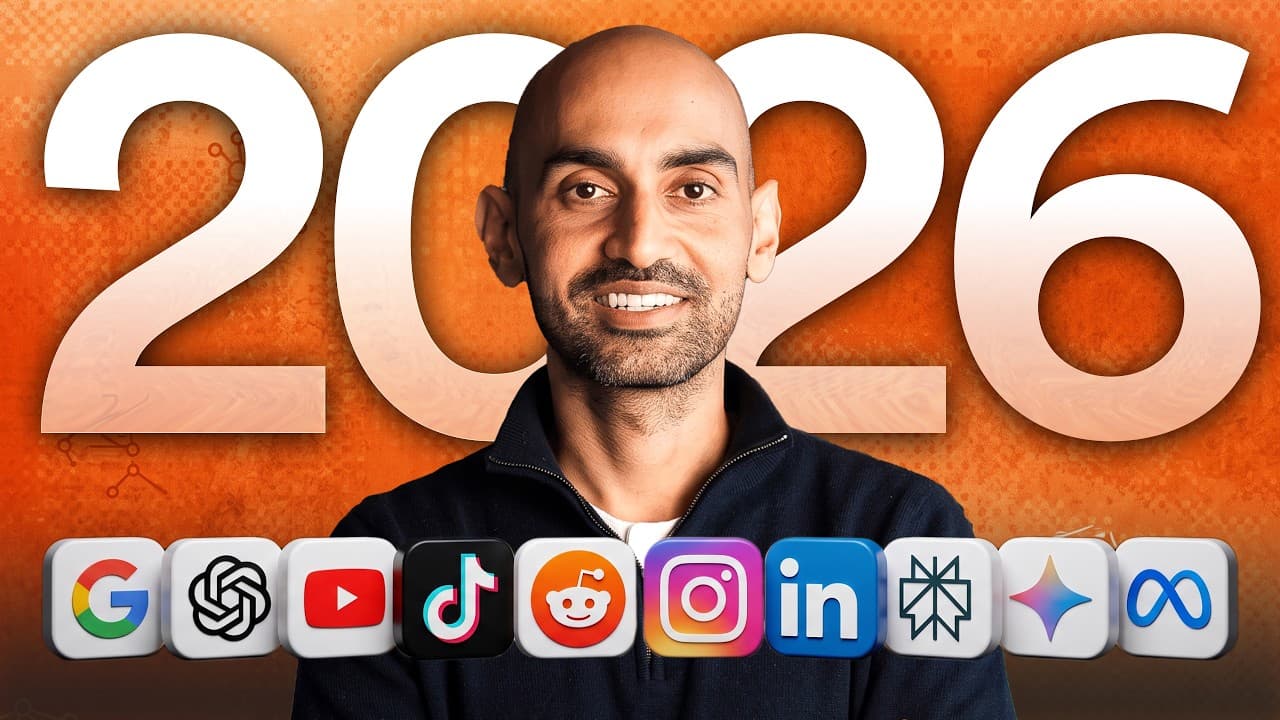
People don't search because they want more information. They search because they're trying to feel certain enough to make a decision. And in 2026, that decision is no longer made on one platform. Your customers may discover you on Tik Tok, research you on Google, verify you on Reddit, and ask Chat GBT what they should choose. That means the winning... Read More
Key Insights
- Search behavior is distributed across Google, TikTok, YouTube, Reddit, and AI assistants. A buyer can discover, research, verify, and choose through different platforms, so concentrating the entire marketing strategy on one search destination leaves important decision points uncovered.
- The strategic starting point is mapping every place where buyers ask questions. This reframes channel selection around the customer’s actual decision journey and helps a company identify where it must provide credible answers without creating separate, disconnected marketing operations.
- Google’s Platform Properties provides reporting about which Google queries surface connected Instagram, TikTok, X, and YouTube content. The feature does not alter rankings, but it allows marketers to measure impressions and clicks generated by social posts appearing in Google search.
- Search-oriented social content is built around questions buyers genuinely type. Posts answering queries such as how to solve a problem, which product is best, or whether something is worthwhile have a clearer opportunity to appear in search than content designed only for scrolling.
- AI-referred visitors convert around eight times more than traditional traffic according to the team’s measurements. The proposed explanation is that an AI system has already compared, vetted, and recommended the business, so referred visitors arrive with unusually strong intent.
- AI recommendation visibility depends heavily on relevance and brand mentions across sites a company does not own. The analysis of 82 ranking factors placed relevance first, while backlinks scored 1.9 out of five and appeared near the bottom for ChatGPT recommendations.
- Authoritative content is clear, deep, specific, evidence-backed, and connected to real authors, original data, and third-party mentions. The transcript argues that one substantial resource is more likely to earn citations than ten shallow, AI-written posts published merely to increase volume.
- Search everywhere optimization uses one core answer across every relevant surface. Research can become a blog post, the post can become a YouTube video, and the video can become short social answers, while the central message remains aligned for customers and machines.
- More videos from this channel:
- More from this channel: Neil Patel
Install to Summarize YouTube Videos and Get Transcripts
Explore YouTube Video Summarizer or Get YouTube Transcript Extractor
Questions & Answers
Q: How should brands adapt their marketing strategy for search in 2026?
Brands should identify every place where their buyers ask questions, including Google, TikTok, YouTube, Reddit, and AI assistants. They should then develop one clear, authoritative answer to an important customer question and adapt it for each surface. The format can change by platform, but the underlying position, evidence, and message should remain consistent.
Q: What is search everywhere optimization?
Search everywhere optimization is the strategy of becoming the same trusted answer across every platform where buyers search, research, or verify a decision. It uses one deep core asset and translates it into suitable formats, such as a blog post, YouTube video, and short social posts, instead of operating multiple disconnected marketing strategies.
Q: How can social media posts appear in Google search?
Google can surface content from platforms such as Instagram, TikTok, X, and YouTube in its search results. Platform Properties in Search Console lets marketers connect those accounts and view the queries, impressions, and clicks associated with surfaced posts. The feature is a reporting tool and does not itself change how the content ranks.
Q: How do you create social content that can earn search visibility?
Create posts that directly answer questions buyers would type into a search box. The transcript recommends using AnswerThePublic to identify the wording of real searches, then turning each relevant question into a social post. After publishing, connect the platform account in Search Console and check which posts receive Google impressions and clicks.
Q: Why can AI referral traffic convert better than traditional traffic?
The team reports that visitors referred by AI convert around eight times more than traditional traffic. Its explanation is that the AI has already compared available choices, evaluated the business, and made a recommendation before the visitor reaches the website. The resulting audience may be smaller, but visitors arrive better informed and closer to choosing.
Q: What factors help a brand get recommended by ChatGPT?
The analysis described in the transcript examined 82 ranking factors and placed relevance first. Content should completely answer the specific question being asked. Brand mentions across third-party sites were second, showing that AI systems also consider what the wider internet says about a company. Clear evidence, original data, real authors, and depth support credibility.
Q: Are backlinks the main factor in AI search recommendations?
Backlinks were not presented as the main factor for ChatGPT recommendations. In the team’s analysis, they scored 1.9 out of five and ranked near the bottom. The transcript instead emphasizes relevance, third-party brand mentions, specific answers, supporting evidence, original data, and identifiable authors as stronger priorities for earning AI citations and recommendations.
Q: Why must brand messaging remain consistent across platforms?
AI systems can read a company’s website, social content, press coverage, and reviews as parts of one combined document. Contradictory claims can confuse customers and make the recommendation system treat the brand as a risk. A consistent central answer, adapted to each platform without changing its meaning, strengthens trust and supports better conversion.
Summary & Key Takeaways
-
Search has multiplied beyond Google into social platforms, YouTube, Reddit, and AI assistants. Buyers may discover a company on one surface, research it elsewhere, and seek final verification on another. Marketing strategy should therefore begin by mapping every place customers ask questions instead of selecting one supposedly dominant channel.
-
Google’s Platform Properties in Search Console lets marketers connect social accounts and view the Google queries, impressions, and clicks associated with their posts. This reporting does not change rankings, but it reveals that question-focused social content can earn search visibility. Brands should create posts around the exact questions buyers type.
-
AI engines often provide a small number of recommendations rather than a page of links. The proposed strategy is to create one deep, evidence-backed core asset, then translate it into blog posts, YouTube videos, and short social answers. Consistent messaging helps people and recommendation systems interpret the brand as trustworthy.
Read in Other Languages (beta)
Share This Summary 📚
Summarize YouTube Videos and Get Video Transcripts with 1-Click
Try YouTube Summary with ChatGPT & Claude or YouTube Transcript Generator
Explore More Summaries from Neil Patel 📚

Summarize YouTube Videos and Get Video Transcripts with 1-Click
Try YouTube Summary with ChatGPT & Claude or YouTube Transcript Generator