How to Train Google's AI to Cite Your Brand
TL;DR
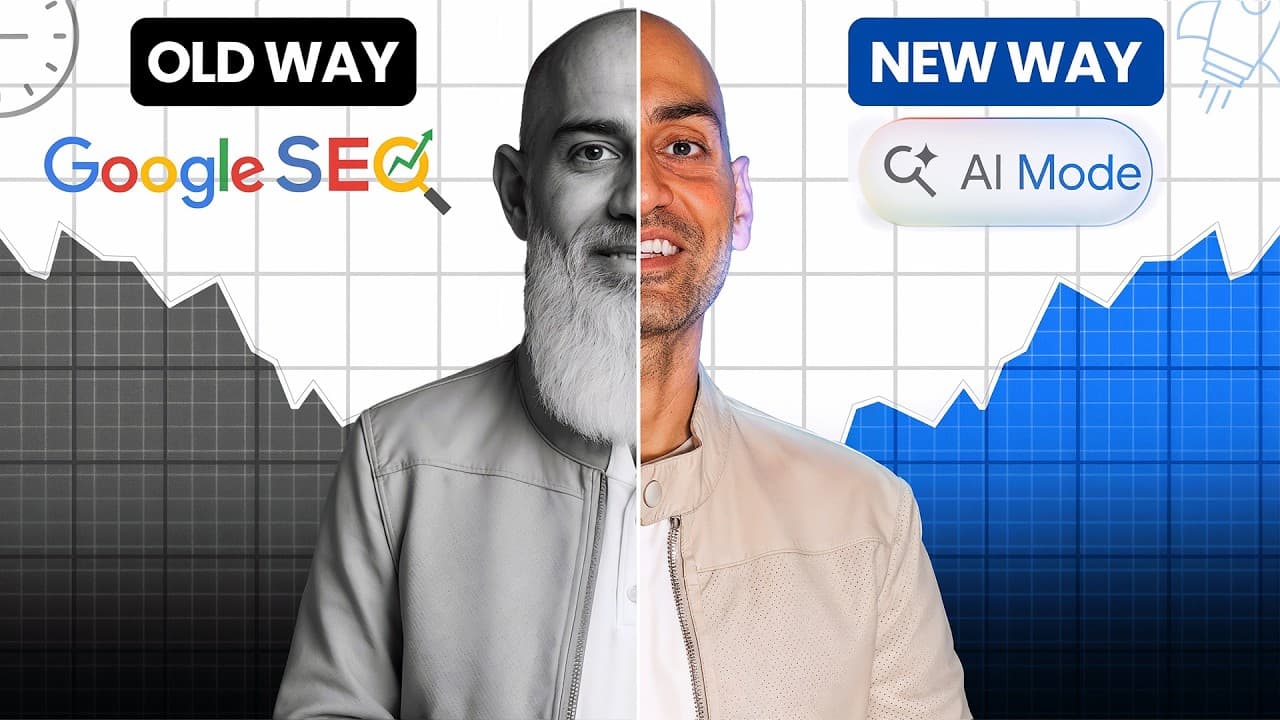
Cite your brand by reverse engineering where Google's AI already trusts competitors. Build credible, multi format content and optimize for AI overviews and AI mode so your brand is referenced in the AI generated answers, not just ranked on search pages. This shifts focus from clicks to trusted brand presence.
Transcript
Google's new AI features are quietly stealing the most valuable moment in search right when customers are ready to decide. Here's what no one's saying. You can rank on page one and still lose. Why? Because if your brand isn't being cited in those AI generated results, you're invisible. You're not in the conversation. Google is no longer just a list... Read More
Key Insights
- AI overviews show up on 17.8% of commercial searches, indicating a targeted opportunity to be cited in high intent moments.
- Informational searches constitute nearly 50% of Google activity, so content must be broadly credible to influence AI summaries.
- Daily Google search volume rose from 8.5B to 13.7B, illustrating growing overall search activity and more opportunities for AI driven visibility.
- AI mode replaces the results page with an AI conversation, using query fan out to run dozens of sub searches behind the scenes.
- Brands gain visibility by being cited in AI answers, which positions them as trusted sources without requiring a click.
- Reverse engineering involves analyzing top competitor pages to identify content that Google already trusts, then creating superior, linked, and multimedia content.
- Keyword gaps reveal opportunities where competitors rank but you do not, guiding targeted topic creation that supports AI overviews.
- Content strategy should focus on clarity, credibility, and relevance across formats, not just publishing more text.
- More videos from this channel:
- More from this channel: Neil Patel
Install to Summarize YouTube Videos and Get Transcripts
Explore YouTube Video Summarizer or Get YouTube Transcript Extractor
Questions & Answers
Q: How can I start getting my brand cited in Google's AI overviews?
Begin by identifying who Google already trusts in your niche. Use competitor analysis to find top pages, their traffic, and the keywords driving that traffic. Then build a plan to create comparable or better content, include multimedia formats, and ensure your content clearly demonstrates expertise and credibility to become a trusted source in AI summaries.
Q: What is the difference between AI overviews and AI mode for SEO?
AI overviews are short summaries pulled into results that influence visibility for certain queries, while AI mode is a full conversational experience replacing traditional search results. AI mode uses multiple hidden sub searches to assemble a detailed answer, making it essential to be referenced as a credible source across many related topics.
Q: Why are brand citations more valuable than clicks in this new AI era?
Citations indicate trust and authority, which AI systems rely on when assembling answers. When your brand is cited, it gains mind share and credibility that persists beyond a single click. This can drive long term brand equity and future conversions even if immediate traffic isn’t the primary outcome.
Q: How do I identify which topics to optimize for AI in my niche?
Use keyword gap analysis to find terms your competitors rank for that you do not. Focus on those pre validated topics that already drive traffic and are likely to appear in AI overviews. Then create deeper, more authoritative content around those topics, including multimedia elements.
Q: What kind of content should I create to be cited by Google's AI?
Content should be multi format and multi layered, not just plain text. Look at current search results to see patterns, and include videos, images, and well-structured written content. The goal is to provide clear, complete, and credible material that AI can reference across related queries.
Q: How does the query fan out concept affect content creation?
Query fan out means one user question triggers many micro searches behind the scenes. Your content should anticipate related subqueries and provide integrated, authoritative answers that cover those paths, making it more likely your pages are included when AI builds its final response.
Q: Can ranking alone guarantee AI citations?
No, ranking alone does not guarantee citations. AI looks at trust, credibility, and relevance across related topics. You must be cited by AI inferences, meaning your brand needs to be recognized as a trusted source and referenceable across multiple related queries.
Q: What practical steps can I take this week to start reverse engineering for AI citations?
Start by visiting competitor domains and mapping their top pages and traffic sources. Gather target keywords and topics, then create or optimize content to match or surpass their authority with clearer, more authoritative media. Build internal and external signals that demonstrate credibility and make your content a natural source for AI summaries.
Summary & Key Takeaways
-
You learn that AI overviews appear in about 17.8 percent of commercial search results, indicating where your content needs to earn recognition. The video explains reversing engineer content from trusted sources to win AI citations.
-
Content must be multi format and credible to be cited by Google AI, not just keyword stuffing. The method emphasizes clarity and completeness to establish long term brand authority.
-
The speaker compares modern SEO to a billboard and a sponsor, arguing more brand mentions lead to trust and future conversions, even if immediate clicks are not the primary outcome.
Read in Other Languages (beta)
Share This Summary 📚
Summarize YouTube Videos and Get Video Transcripts with 1-Click
Try YouTube Summary with ChatGPT & Claude or YouTube Transcript Generator
Explore More Summaries from Neil Patel 📚

Summarize YouTube Videos and Get Video Transcripts with 1-Click
Try YouTube Summary with ChatGPT & Claude or YouTube Transcript Generator