How to win 2026 marketing with eight trends that matter
TL;DR
Adopt on platform lead captures, use search everywhere optimization, and manage AI slop with quality checks. The video outlines eight trends shaping visibility in 2026 and shows practical steps like keeping leads on platform, creating topic clusters, and building digital PR.
Transcript
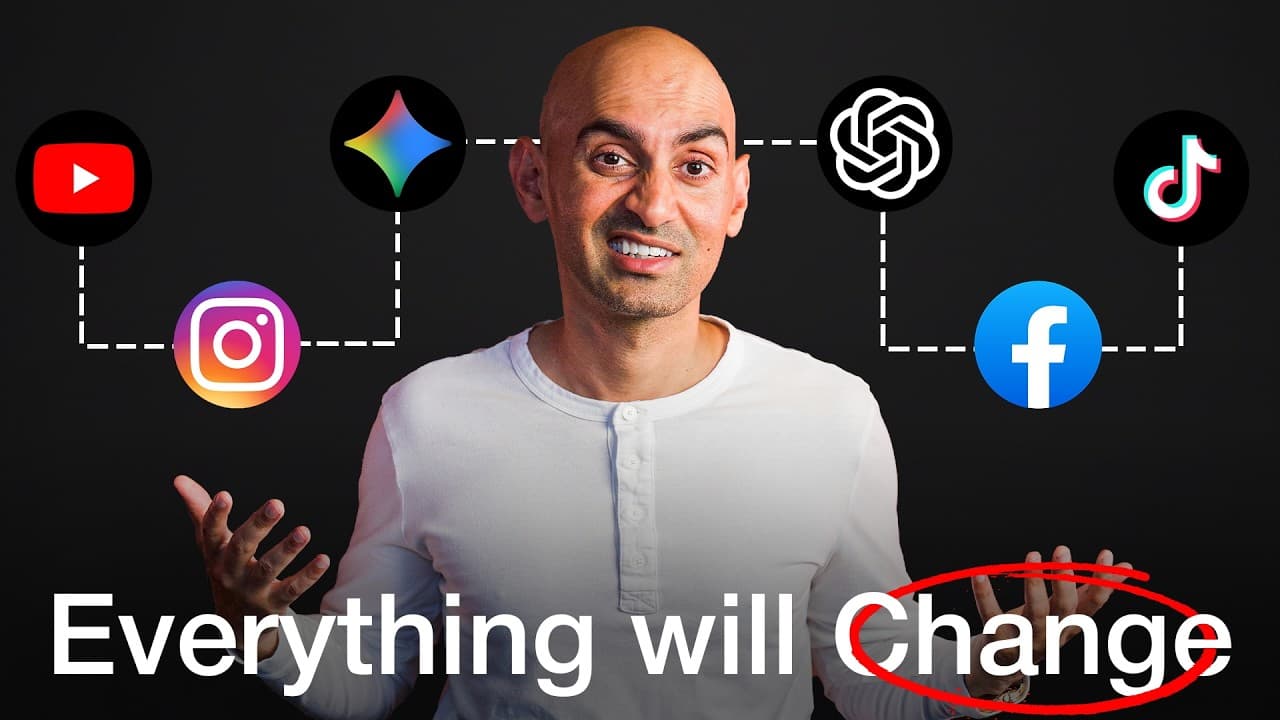
Your customers aren't finding you the way they used to. 26% of searches now end without a click. Instagram alone sees over 6.5 billion searches every day. And Chad GPT is about to launch ads that behave like Facebook, not Google. So if you're still marketing like 2024, you're already behind. I'm Neil Patel, co-founder of NP Digital. My team works w... Read More
Key Insights
- Traffic sovereignty matters: off platform traffic hurts reach and costs rise due to platform throttling and slow mobile experiences.
- Search moves everywhere: content must rank across Instagram, YouTube, TikTok, ChatGPT, and browsers through a strategy called search everywhere optimization.
- AI slop is real: faster AI does not guarantee quality, and unvalidated AI output causes wasted time and incorrect conclusions.
- AI as discovery engines: ChatGPT, Perplexity and Gemini are evolving to be discovery platforms that cite trusted sources and rank content.
- Digital PR is the new SEO: external validation from credible sources improves AI and search rankings more than on-site content alone.
- Topical authority beats keywords: building niche subcategories and consistent content improves AI platform citations and authority.
- AI ads will blend intent and identity: ads will target based on full search history and long term patterns, not just typed queries.
- Browsers become AI platforms: browsers will increasingly serve as discovery environments, influencing visibility and click patterns.
- Live content becomes a competitive asset: real time, engaging content can outperform static assets in ads and discovery.
- More videos from this channel:
- More from this channel: Neil Patel
Install to Summarize YouTube Videos and Get Transcripts
Explore YouTube Video Summarizer or Get YouTube Transcript Extractor
Questions & Answers
Q: A real search query question about the video (e.g. 'How to...', 'What is...', 'Why does...', 'When should...'). Question 1
How can a marketer start implementing on platform lead capture and reduce drop offs when visitors first engage with a post. The video recommends keeping the entire lead capture process inside the platform, using automation to respond to comments with keywords, and capturing information without leaving the platform. This approach reduces friction, improves engagement signals to the algorithm, and yields higher quality leads because it tracks behavioral intent rather than relying solely on form fields.
Q: Question 2
What is meant by search everywhere optimization and why is it important. The speaker explains that search now happens across multiple surfaces beyond Google including Instagram, YouTube, Tik Tok, ChatGPT, and browsers. The strategy involves weaving targeted keywords into all content elements, creating topic clusters, and optimizing for conversational search so content is discoverable across surfaces.
Q: Question 3
Why is there concern about AI slop and how should teams respond. The talk notes that AI can speed work but often produces hallucinations or incorrect outputs. Companies should validate AI results, cross reference stats and sources, and use AI for ideation rather than execution, with human oversight for strategic decisions.
Q: Question 4
How do discovery engines change content strategy. AI driven discovery engines like ChatGPT and Perplexity increasingly cite trusted sources, and top lists or structured pages are more likely to be cited. The strategy is to publish niche top 10 lists and get external authorities to cite your content to build recognition within AI platforms.
Q: Question 5
What role does digital PR play in AI ranking and SEO. The video argues digital PR is now the main SEO lever, helping content be cited by credible sources, which improves AI and search rankings. It also suggests using external citations and outreach to diversify sources rather than relying only on on site optimization.
Q: Question 6
How will AI ads function with advanced targeting. The speaker explains that AI ads will target based on full search histories and long term patterns, combining identity based targeting with intent based signals. Brands should define their category early to become a default recommendation inside AI platforms.
Q: Question 7
What should be done to build topical authority in the age of AI discovery. The guidance is to create content in very specific niches and micro categories, ensuring consistent publication to be cited as an authority by AI tools. Additionally, work with other trusted sources to build credible mentions and avoid self citations.
Q: Question 8
What practical steps improve content formatting for AI engines. The advice includes using clear headers, bullet points, and tables, keeping content updated with last updated dates, and applying schema markup so search engines can accurately understand the content and cite it more reliably.
Summary & Key Takeaways
-
The video emphasizes keeping lead capture within platforms to avoid throttling and higher costs, advocating tools that automate conversations so leads stay on social channels. It also stresses that discovery now happens across multiple surfaces, not just Google, and outlines a strategy to rank across these surfaces.
-
A key message is that AI can speed work but often introduces hallucinations; teams must validate AI output, use AI for ideation, and rely on human oversight for decisions.
-
The talk argues that digital PR is essential for AI ranking systems and that being cited by trusted sources will improve long term visibility on AI platforms and search surfaces.
Read in Other Languages (beta)
Share This Summary 📚
Summarize YouTube Videos and Get Video Transcripts with 1-Click
Try YouTube Summary with ChatGPT & Claude or YouTube Transcript Generator
Explore More Summaries from Neil Patel 📚
Summarize YouTube Videos and Get Video Transcripts with 1-Click
Try YouTube Summary with ChatGPT & Claude or YouTube Transcript Generator