How to shift from traffic to revenue in marketing reporting
TL;DR
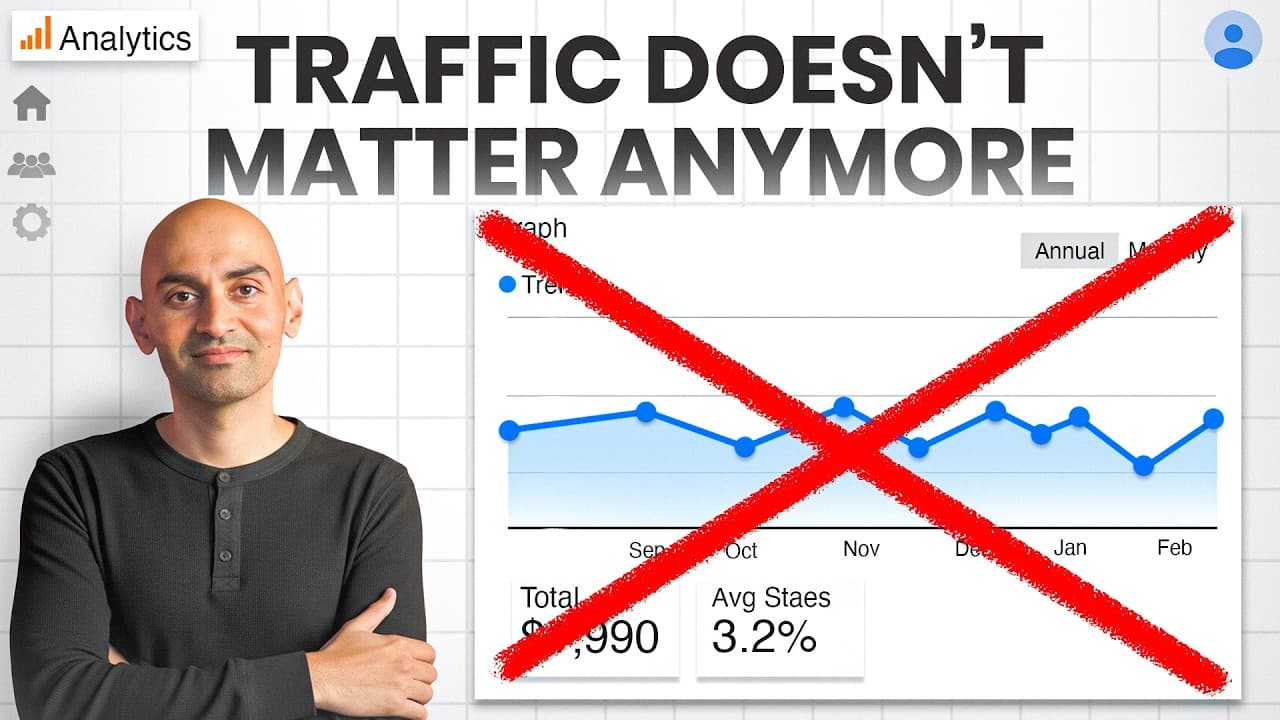
Lead with revenue impact, not traffic or rankings. Build an outcomes-first measurement stack covering revenue, lifetime value, retention, and profit, then layer demand signals and visibility metrics. Use incrementality, media mix modeling, and attribution to prove true lift and protect budgets.
Transcript
The CMO is the most fired executive in business, shorter tenure than any other seuite role. And it's not because marketing stopped working. It's because of how marketers report on their work. If you run marketing for a company, an agency, or a client, the metrics you're presenting right now might be the thing that gets you replaced. I'm Neil Patel ... Read More
Key Insights
- Traffic is a diagnostic metric, not the primary headline, and should not drive budget decisions. The key to job security is leading with revenue, profitability, and retention when reporting.
- The outcomes-first measurement stack starts with business outcomes like revenue and LTV, then adds demand signals and finally visibility metrics to support the story with grounding in leadership concerns.
- Incrementality testing is essential to prove true lift and should be used alongside controlled experiments to separate new revenue from existing demand.
- Media mix modeling requires historical data and shows which channels drove results over time, helping identify where investments actually worked and where returns decline.
- Attribution modeling is useful for day-to-day insights but should not be treated as the sole decision-maker; it fills gaps and supports rapid pattern detection.
- Brand demand growth and share of voice are valuable metrics to track because rising interest in a brand predicts future revenue and direct traffic.
- Conversion quality matters more than raw lead volume; tracking the right conversions prevents misleading green dashboards and hidden erosion of profitability.
- Velocity measures how fast leads close, improving cash flow and reducing working capital, and should be monitored alongside other metrics to understand overall impact.
- More videos from this channel:
- More from this channel: Neil Patel
Install to Summarize YouTube Videos and Get Transcripts
Explore YouTube Video Summarizer or Get YouTube Transcript Extractor
Questions & Answers
Q: How can you prove marketing created new revenue rather than just taking credit
Proving new revenue requires incrementality testing to show true lift from specific campaigns, supported by controlled experiments, geo holdouts, and lift studies. This approach creates proof rather than relying on correlation. When you demonstrate that removing a campaign reduces revenue or that a campaign generates revenue beyond existing demand, you secure budget and credibility.
Q: What is the proper ordering of marketing metrics in reporting
Start with revenue, lifetime value, and retention as the top line to align with leadership priorities. Then present demand signals such as conversion velocity and pipeline quality, followed by visibility metrics like brand search interest and share of voice. This outcomes-first structure makes the impact clear and tangible.
Q: Why is traffic no longer the headline metric in marketing reports
Traffic often rises or falls without a corresponding change in revenue or conversions. The speaker argues that many brands see declining traffic yet stable or rising revenue, indicating that more sessions do not guarantee buying intent. Focusing on revenue and quality conversions provides a truer picture of impact.
Q: How can brands measure brand demand growth effectively
Brand demand growth can be tracked by monitoring how many people are actively searching for the brand and observing direct traffic trends. Google Trends offers a free way to compare brand search volume with competitors, helping predict future revenue and signal growing brand preference.
Q: What is conversion quality and why does it matter
Conversion quality looks at whether the right people are converting, not just how many leads are generated. High lead volume with low close rates or shrinking deal sizes can mask underlying issues. Focusing on conversion quality helps prevent misleading dashboards and protects long-term profitability.
Q: What role does velocity play in marketing metrics
Velocity measures how quickly leads close, which affects cash flow and acquisition cost. Faster sales cycles reduce working capital and improve payback. Tracking velocity alongside volume ensures a complete view of how marketing moves the business, not just how many leads are created.
Q: How should dashboards be structured to protect a marketer’s job
Dashboards should flip from a traffic-first view to an outcomes-first view, with revenue impact, LTV, and conversion quality at the core. Use traffic and rankings as supporting details rather than headlines. Audit reports to remove vanity metrics and keep leadership-focused metrics front and center.
Q: What is incrementality and how does it relate to marketing impact
Incrementality identifies whether marketing campaigns create new revenue rather than capturing existing demand. It answers the crucial question executives ask: if marketing were turned off, would revenue drop? This metric is the gold standard for proving true impact and justifying budgets.
Summary & Key Takeaways
-
The video argues that traffic and rankings are now diagnostic rather than headline metrics and that marketers should lead with revenue and outcomes to stay relevant.
-
It introduces an outcomes-first measurement stack with three layers: outcomes, demand signals, and visibility, to align reporting with leadership concerns.
-
Incrementality, MMM, and attribution are recommended as a triad of methods to prove marketing impact and avoid misattributing credit to channels.
Read in Other Languages (beta)
Share This Summary 📚
Summarize YouTube Videos and Get Video Transcripts with 1-Click
Try YouTube Summary with ChatGPT & Claude or YouTube Transcript Generator
Explore More Summaries from Neil Patel 📚




Summarize YouTube Videos and Get Video Transcripts with 1-Click
Try YouTube Summary with ChatGPT & Claude or YouTube Transcript Generator