How to Build an AI-Ready Content Strategy
TL;DR
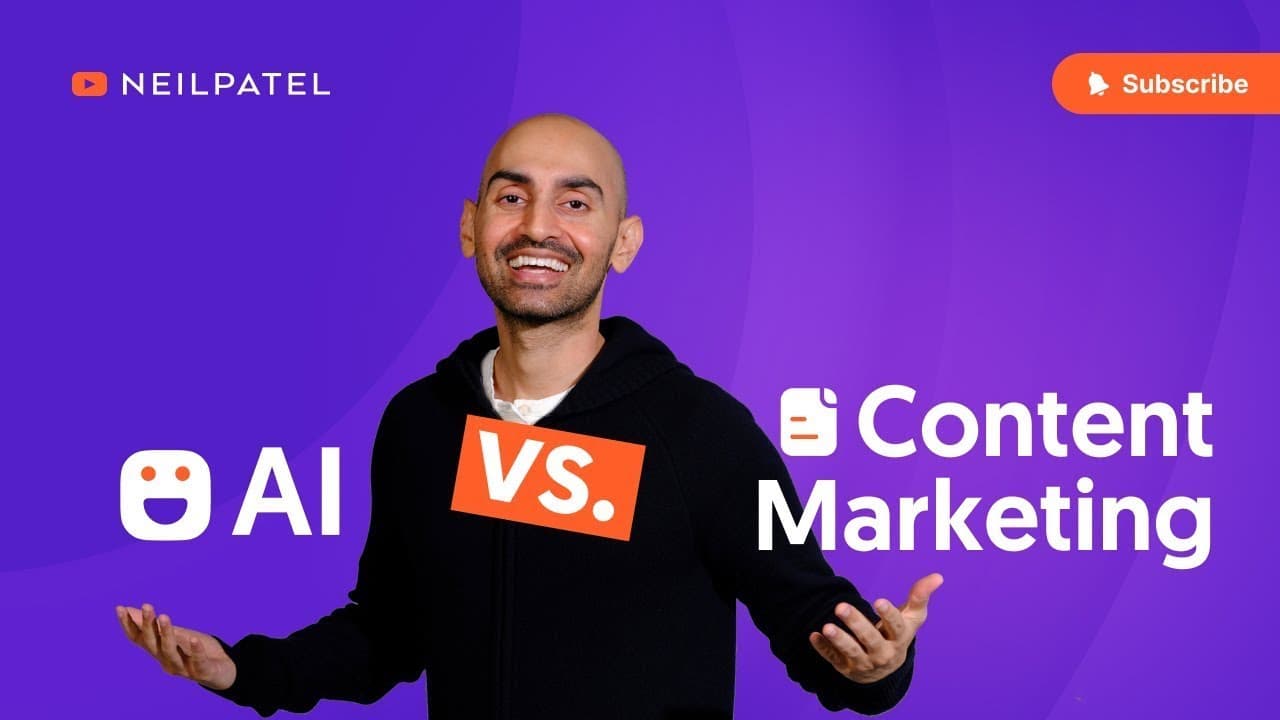
Build an AI-ready content strategy by using AI to generate ideas and drafts, then checking accuracy, correcting problems, and adding your own experience, expertise, and voice before publishing. Pair quality content with a large total addressable market, a disruptive offer, and an omnichannel strategy spanning platforms such as TikTok, Instagram, Facebook, and Google. Read on for eight practical answers about responsible AI use and sustainable marketing growth.
Transcript
- With the trend we're seeing right now is people are using chat GPT after a month or so, lose this novelty and then it slows down. So how do you actually get it integrated in people's daily lives? Just like how Alexa is in our daily lives or Siri is in our daily lives, you'll start seeing AI more integrated. - Thanks for being here, ladies and gen... Read More
Key Insights
- A strong marketing formula combines a large total addressable market, a disruptive offer, and an omnichannel strategy. Execution and patience remain necessary because each element requires additional work, and relying indefinitely on only one acquisition channel limits the potential to build a highly successful business.
- A large total addressable market offers more room for growth than a narrow niche. Marketing a small niche can require nearly as much effort as marketing a large category, while capturing a tiny fraction of a hundred-billion-dollar market may be easier than dominating a limited market completely.
- A disruptive offer can give customers something they normally pay for at little or no charge, then generate revenue from a more valuable related product. The example presented is free payroll software that attracts employers who may also purchase employee health insurance.
- AI is still in its first inning, and technological progress is expected to accelerate as later stages become shorter. Significant problems remain, and many will not be resolved within the current or following year, although the technology is expected to improve substantially over the next few years.
- The next stage of AI is deeper integration into daily work rather than continued dependence on standalone prompts. Examples include improving assembly-line speed and safety, analyzing marketing data from the previous 24 hours, producing daily reports, and recommending actions based on recent performance.
- The largest AI opportunity described is streamlining organizational processes and operations. The emphasis is on routine, less glamorous work rather than content creation, because operational systems can use AI to improve how recurring tasks and decisions are handled across an organization.
- AI-generated content requires human review because current tools can produce inaccuracies and plagiarism. Businesses can use AI to develop concepts, titles, blog drafts, and social posts, but each output must be checked, modified, and aligned with the company or creator before publication.
- High-quality content must demonstrate experience, expertise, authority, and trust, which Google calls EEAT in the interview. Creating more pages does not guarantee traffic because search engines and social platforms already filter mediocre material, so marketers should spend more time promoting strong content than producing it.
Install to Summarize YouTube Videos and Get Transcripts
Explore YouTube Video Summarizer or Get YouTube Transcript Extractor
Questions & Answers
Q: How should small businesses use AI for content marketing?
Small businesses should treat AI as an assistant rather than expect it to automate marketing completely. It can generate concepts, titles, blog drafts, and social content, but a person should verify the information, revise the language, and ensure the finished work reflects the business and its voice.
Q: What makes a content strategy ready for the age of AI?
An AI-ready strategy uses AI to support content creation while retaining human review and judgment. Every output should be checked for inaccuracies and plagiarism, personalized, and strengthened with experience, expertise, authority, and trust before publication.
Q: What is the three-part marketing formula described in the interview?
The three main elements are targeting a large total addressable market, creating an offer that disrupts established expectations, and expanding into an omnichannel strategy. Businesses must also execute consistently and give the approach enough time to work.
Q: Why should a business pursue a large total addressable market?
Marketing a small niche can require almost as much work as marketing within a much larger category. The interview argues that capturing a fraction of a percent of a hundred-billion-dollar market can be easier than capturing an entire narrow niche.
Q: How can a free product create a disruptive marketing offer?
A company can give away something customers normally purchase, then earn money from a more valuable related service. The example is free payroll software for employers who may also purchase employee health insurance, which becomes the larger revenue opportunity.
Q: Why is an omnichannel marketing strategy important?
Individual channels become crowded and competitive, so a business should eventually use multiple platforms rather than depend indefinitely on one. The interview specifically names TikTok, Instagram, Facebook, and Google, while noting that a company can begin with a single channel before expanding.
Q: What could the next stage of AI adoption look like?
The next stage is described as deeper integration into everyday work rather than isolated prompt sessions. AI could improve assembly-line speed and safety or analyze marketing activity from the previous 24 hours, produce a daily report, and recommend actions.
Q: Why does publishing more AI-generated content not guarantee traffic?
Search engines and social platforms can filter mediocre material, regardless of whether AI or a person created it. Publishing large volumes of weak content may reduce traffic, engagement, followers, and audience trust, so marketers should prioritize strong content and spend more time promoting it than producing additional mediocre pieces.
Summary & Key Takeaways
-
The marketing formula begins with selecting a large total addressable market, creating an offer that disrupts established expectations, and eventually expanding across multiple channels. A company can give away a low-cost product that customers normally purchase, then earn revenue from a more valuable related service that those same customers need.
-
AI remains in an early stage, and its next phase will involve deeper integration into everyday work. Rather than functioning only as a prompt-based novelty, AI could analyze recent marketing performance, recommend daily actions, improve assembly-line processes, reduce risks, and help organizations streamline routine systems and operations.
-
Small businesses should use AI as an assistant rather than expect complete automation. It can generate concepts, titles, blog drafts, and social content, but people must check accuracy, revise the material, and add their own voice. Publishing large volumes of mediocre content can reduce traffic, engagement, followers, and audience trust.
Read in Other Languages (beta)
Share This Summary 📚
Summarize YouTube Videos and Get Video Transcripts with 1-Click
Try YouTube Summary with ChatGPT & Claude or YouTube Transcript Generator
Explore More Summaries from Neil Patel 📚

Summarize YouTube Videos and Get Video Transcripts with 1-Click
Try YouTube Summary with ChatGPT & Claude or YouTube Transcript Generator