What is common knowledge and how does it shape cooperation
TL;DR
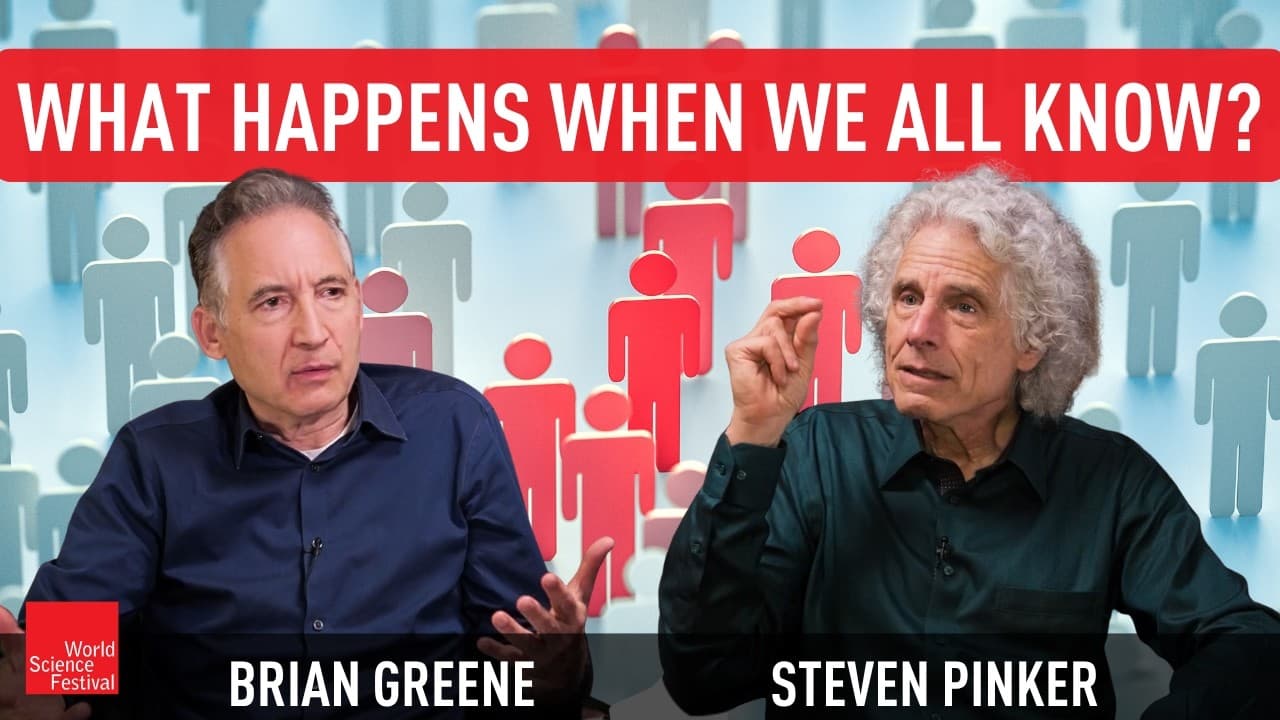
Common knowledge is crucial for coordination and cooperation, enabling people to act on shared expectations even without direct communication. The Monty Hall problem illustrates how awareness of others knowledge layers changes optimal decisions. Language and conventions generate common knowledge quickly, letting groups align actions without explicit, multi level reasoning.
Transcript
I don't think GPT-5 is conscious. I just don't. And there are people who do, of course. >> Yes. Yeah. And you know, I don't know if I have a good argument against them. >> Right. >> I just don't I don't think so. >> Do you have your bets on it? I do. Are you nice [clears throat] to GPT-5? You know, um Hey everyone. Today, I'm so pleased that my con... Read More
Key Insights
- Common knowledge is a key ingredient for coordination and is broader than mere knowledge about facts.
- Coordination improves when all parties understand that others know the same information and expect rational responses.
- Recursive mentalizing is the process of modeling what others know, know that you know, and so on, to solve problems.
- Common knowledge is often created by language and explicit communication, which reduces multi level uncertainty.
- Public cues and conventions can establish common knowledge without lengthy reasoning.
- In game theory, common knowledge about payoffs and possible moves enables coordinated strategies.
- Mutualistic cooperation benefits all parties, but the cognitive mechanism to align expectations is essential.
- Currency and social norms can function as public signals that establish shared expectations and trust.
- More videos from this channel:
- More from this channel: World Science Festival
Install to Summarize YouTube Videos and Get Transcripts
Explore YouTube Video Summarizer or Get YouTube Transcript Extractor
Questions & Answers
Q: What is common knowledge and why is it important for coordination
Common knowledge refers to information that is not only known but also recognized as known by all participants, and understood to be known by others in turn. It enables people to coordinate actions because everyone operates with the same expectations about others responses. The concept helps explain how groups can align on plans, goals, and social norms even without direct communication, making coordinated behavior more reliable.
Q: How does the Monty Hall problem relate to common knowledge
The Monty Hall problem demonstrates that when you know the host has private knowledge about where the prize is, your decision should reflect that layered information. This is an example of knowledge about knowledge, or recursive mentalizing, which is a precursor to true common knowledge. Recognizing these layers changes the optimal strategy and highlights why common knowledge matters for correct action.
Q: Why does language help create common knowledge quickly
Language acts as a direct channel to broadcast information that others can hear, process, and rely on. When someone says something, others know that it has been said, that it is heard, and that others know it too, creating a shared anchor. This rapid establishment of shared assumptions helps coordinate behavior across people without endless back and forth.
Q: What is recursive mentalizing and why is it important
Recursive mentalizing is the attempt to understand what another person knows, what they think you know, and so forth, ad infinitum. It is crucial for predicting others actions in social interactions and strategic decisions. While humans cannot infinite, even a few levels of recursive thinking improve coordination and decision making in complex social settings.
Q: How do conventions and public signals establish common knowledge
Conventions and public signals reduce uncertainty by providing widely recognized anchors. When everyone treats a signal as meaningful, it becomes common knowledge that others will act on similarly. This lowers the cognitive load required to predict others actions and facilitates smoother cooperation in society.
Q: What role do social emotions play in cooperative behavior
Emotions like gratitude, guilt, sympathy, anger, and forgiveness are cognitive mechanisms that support reciprocal cooperation. Recognizing individuals, remembering past actions, and tracking obligations help maintain trust and coordinated actions. These emotional tools reinforce the social rules that underpin shared knowledge and cooperative outcomes.
Q: Can you achieve coordination without language
Yes, coordination can occur through non linguistic means such as salient public events, tacit conventions, or observable patterns in the environment. These cues allow people to infer others likely actions and align behavior even without direct communication, though language generally makes it faster and more reliable.
Q: What is the broader significance of common knowledge beyond games
Beyond games, common knowledge underpins social norms, economic transactions like currency exchange, and large scale cooperation. It helps societies function by making predictable behavior possible, enabling economies to operate efficiently, legal and moral frameworks to hold, and cultures to maintain coherence across generations.
Summary & Key Takeaways
-
A broad discussion on how common knowledge underpins coordination and cooperation across human society, with examples from game theory and everyday language. The conversation links cognitive mechanisms to social norms, communication, and the evolution of language as a tool for shared understanding.
-
The dialogue connects the Monty Hall problem to recursive thinking and common knowledge, explaining why knowing that others know matters for rational choices and collaborative outcomes.
-
The discussion extends to how language, conventions, and public events create quick, tacit common knowledge that sustains coordination in large groups and complex social systems.
Read in Other Languages (beta)
Share This Summary 📚
Summarize YouTube Videos and Get Video Transcripts with 1-Click
Try YouTube Summary with ChatGPT & Claude or YouTube Transcript Generator
Explore More Summaries from World Science Festival 📚

Summarize YouTube Videos and Get Video Transcripts with 1-Click
Try YouTube Summary with ChatGPT & Claude or YouTube Transcript Generator