How Can Beginners Start Coding with AI? (Vibe Coding Starter Guide)
TL;DR
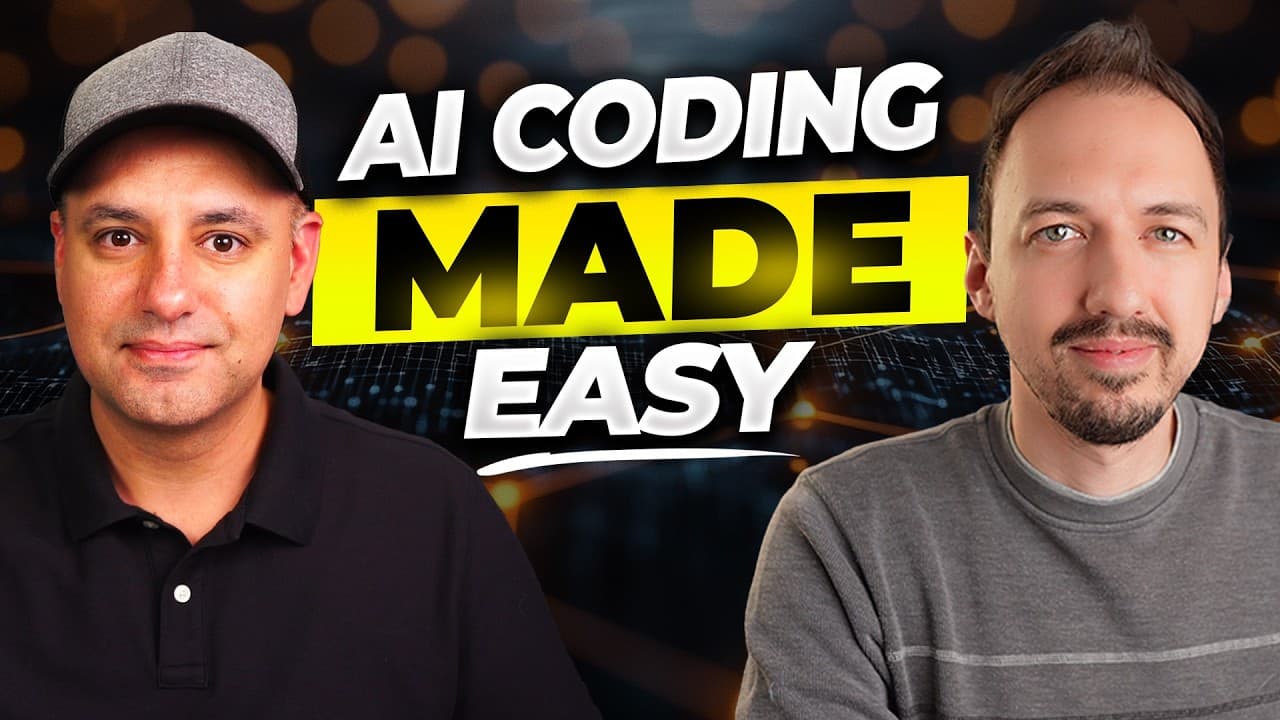
Beginners can start coding with AI by describing a simple tool in ChatGPT, testing it in Canvas, and requesting changes through conversation without writing code. The guide progresses through three categories, ChatGPT, Lovable, and Cursor, and demonstrates a production cost estimator with a production assistant billed at $25 per hour. Read on to choose the right tool and follow the demonstrated building, revision, sharing, and publishing workflows.
Transcript
I built a real life app using AI without writing a single line of code. And the way this came about is couple months ago I had an idea for an app that was going to be complicated to put together. But I tried all kinds of AI tools to do it right. I started with chat GPT then I got bunch of different standalone coding apps and I was getting really fr... Read More
Key Insights
- AI coding tools are divided into three categories in the guide: general chatbots such as ChatGPT, AI app builders such as Lovable, and advanced coding tools such as Cursor. Each category supports progressively more complicated requirements and demands a different level of technical knowledge.
- ChatGPT is suitable for simple internal tools because users can describe a business process, select the write or code option, and preview the generated result in Canvas. The user does not need to understand every line of generated code to test the tool.
- The production estimator is created from a plain-language request describing crew selection, editing time, screenwriting time, and cost calculation. Follow-up prompts can add roles, specify hourly rates, display existing rates, and revise the estimator without manually editing its underlying code.
- ChatGPT-generated tools are shareable through a created link, allowing an internal calculator to become a client-facing resource. The demonstrated estimator gives clients an idea of potential production costs based on selected roles and hours rather than requiring staff to maintain the process manually in Excel.
- Lovable is presented as a more software-focused app builder than ChatGPT, producing greater depth and detail from a prompt. A structured landing-page plan generated by ChatGPT can be pasted into Lovable to create the page's sections, interactive elements, and social proof.
- Lovable revisions work through continued conversation, including requests to center a single consultation call to action and open an email-capture popup when clicked. Changes must be published before they appear on the deployed site, and the resulting page can also be checked in a phone-sized view.
- Lovable supports direct text editing and integrations that extend the generated application. Supabase can be connected for collecting emails, while GitHub can provide version control, enable developer handoff, and make the generated code available in another code editor.
- Cursor is positioned as the most capable and technically demanding category in the progression. It can support projects beyond the limits of chatbots and app builders, including the full-featured prototype described as allowing clients to leave feedback on videos, while helping users build technical knowledge through use.
Install to Summarize YouTube Videos and Get Transcripts
Explore YouTube Video Summarizer or Get YouTube Transcript Extractor
Questions & Answers
Q: How can a beginner start coding with AI without experience?
Start by describing a simple, useful tool in plain language and asking ChatGPT to create it. Select the write or code option to enable Canvas, preview and test the result, and request revisions through the same conversation. As your requirements become more advanced, progress to Lovable and then Cursor.
Q: What are the three categories of AI coding tools in this guide?
The guide identifies general AI chatbots such as ChatGPT, AI app builders such as Lovable, and advanced coding tools such as Cursor. ChatGPT is useful for simple internal tools, Lovable can quickly build more detailed software, and Cursor provides greater flexibility while requiring more technical knowledge.
Q: How do you create a production cost estimator with ChatGPT?
Ask ChatGPT for an interactive tool that calculates video-production estimates based on the crew involved plus editing and screenwriting time. Select the write or code option, allow Canvas to generate the code, and open the preview. You can then enter roles and hours and calculate the estimated cost.
Q: How can you add roles and change rates in a ChatGPT-generated tool?
Continue the ChatGPT conversation and describe the exact role or rate change required. In the demonstration, the user adds a production assistant at $25 per hour and asks ChatGPT to show the rates configured for the other roles. ChatGPT updates the estimator without requiring manual code editing.
Q: Can a ChatGPT-generated estimator be shared with clients?
Yes. Use the share button to create a link, then send that link to clients or other users. The demonstrated estimator lets clients select roles and hours to get an idea of potential production costs.
Q: How do you build a landing page with Lovable?
First, ask ChatGPT to produce an optimized landing-page structure for the production company. Paste that structure into Lovable with the company name and request a page based on the proposed layout. Lovable generates an interactive, deployed page that can also be checked in a phone-sized view.
Q: How do you revise and publish a Lovable website?
Request changes by continuing the conversation in Lovable. The demonstration replaces multiple calls to action with one centered consultation button and adds an email-capture popup that opens when the button is clicked. Publish the changes before testing them on the deployed site.
Q: When should a beginner move from ChatGPT to Lovable or Cursor?
Move to Lovable when a simple ChatGPT tool is no longer enough and you need a more polished app or landing page with deployment, direct editing, and integrations. Move to Cursor when the project requires greater flexibility or complexity. The guide notes that Cursor requires more technical knowledge, which users can build while working with it.
Summary & Key Takeaways
-
AI coding tools fall into three practical categories. ChatGPT can create simple internal tools through Canvas, Lovable can produce polished software and landing pages from conversational prompts, and Cursor can support more complex projects. Beginners can move through these categories as their requirements and technical confidence grow.
-
The ChatGPT demonstration creates an interactive estimator for a video production company. The user describes required inputs, previews the generated tool, adds a production assistant at $25 per hour, reviews configured rates, and creates a shareable link that clients can use to estimate production costs.
-
The Lovable demonstration turns a ChatGPT-generated landing-page structure into a deployed, mobile-friendly website for New Slate Films. Conversational revisions simplify the call to action and add an email popup. Publishing applies changes, while Supabase and GitHub integrations can support email collection, version control, developer handoff, and external code editing.
Read in Other Languages (beta)
Share This Summary 📚
Summarize YouTube Videos and Get Video Transcripts with 1-Click
Try YouTube Summary with ChatGPT & Claude or YouTube Transcript Generator
Explore More Summaries from Skill Leap AI 📚


Summarize YouTube Videos and Get Video Transcripts with 1-Click
Try YouTube Summary with ChatGPT & Claude or YouTube Transcript Generator