How Does Fireworks Founder Lin Qiao Use Small Models to Democratize AI Use Cases?
TL;DR
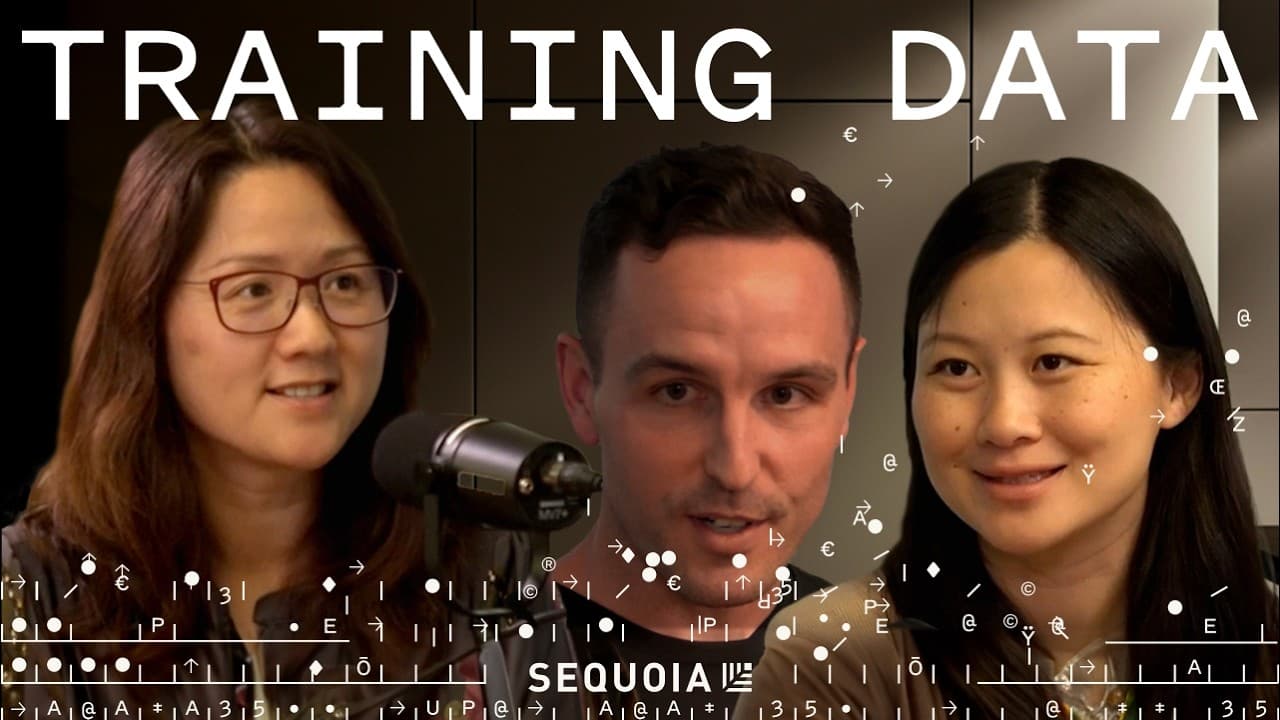
Fireworks founder Lin Qiao says small models can democratize generative AI use cases by delivering low latency, low cost, and automated customization for enterprise workloads. Fireworks offers inference and high-quality tuning through a simple API, while handling distributed execution and other backend complexity. Lin’s PyTorch experience explains how the platform aims to compress an infrastructure journey from five years to five weeks or even five days, so read on for the details.
Transcript
we thought replacing um other Frameworks as library with py Tores to be simple it's just swap the library how hard can that be um but we real realize it's we thought it's just a six-month project it turns out to be fiveyear project for us to support entire M's AI workload building on top of P because we have to rebuild the whole entire stack from s... Read More
Key Insights
- Fireworks is a software-as-a-service platform for generative AI inference and high-quality tuning. Its small-model stack is designed to provide low latency for real-time applications, lower costs for sustainable business growth, and automated customization for enterprise-specific quality requirements.
- PyTorch is described as a programming language for creating digital brains. Its simple interface helps researchers build and experiment with deep-learning models quickly, while the more difficult engineering challenge is making those models run fast and efficiently in large production environments.
- Simplicity is the central reason researchers adopted PyTorch. Lin Qiao argues that simplicity scales because users can focus on model creation while increasingly complicated backend behavior is hidden, automated, and improved without forcing researchers or application developers to manage the underlying infrastructure.
- Replacing multiple production frameworks with PyTorch became a five-year effort rather than the expected six-month project. The team had to rebuild data loading, distributed inference, scalable training, and other production capabilities from the ground up to support Meta’s complete AI workload.
- PyTorch’s research adoption created a funnel effect into production. Models created by researchers were difficult to rewrite in other frameworks, so PyTorch naturally moved downstream from experimentation into applied validation and production, including the generative AI models discussed in the interview.
- Fireworks is positioned as a complete system rather than only a library. It combines a simple developer API with automated workload tuning, allowing the platform to pursue lower latency, lower cost, and higher application quality without exposing every infrastructure decision to developers.
- Fireworks optimizes inference through handwritten CUDA kernels, distributed execution across nodes, disaggregated execution across GPUs, and semantic caching. The system can divide models into components, scale those components differently, and avoid recomputation when content and application workflow patterns permit reuse.
- Latency and total cost become critical after a generative AI product finds product-market fit. Consumer-facing and developer-facing applications require responsive interactions, while a product that loses money at small scale can become financially unsustainable much faster as usage grows.
- "Simplicity uh Simplicity scales and that's kind of lesson learn we um through the Journey of p and madok uh and also building out the community" (5:03)
- "it turns out to be fiveyear project for us to support entire M's AI workload building on top of P" (0:13)
- "we can get to very low literacy for real-time applications very low cost for sustainable business growth and customization automated customization for tailored high quality for Enterprises" (2:25)
- "when we left it was sustaining more than 5 trillion inference per day" (0:40)
- "we don't want to distract our to support other frames re researchers like it and it flows Downstream from there" (4:51)
Install to Summarize YouTube Videos and Get Transcripts
Explore YouTube Video Summarizer or Get YouTube Transcript Extractor
Questions & Answers
Q: What is Fireworks AI designed to provide?
Fireworks is a software-as-a-service platform for generative AI inference and high-quality tuning, especially through its small-model stack. It targets low latency for real-time applications, low cost for sustainable business growth, and automated customization for tailored enterprise quality.
Q: How can small models democratize AI use cases?
Small models can make generative AI applications faster, less expensive, and more closely tailored to particular workloads. Fireworks supports this through low-latency inference, lower operating costs, and automated customization for enterprises.
Q: Why did Fireworks build its platform around PyTorch?
Lin Qiao observed a funnel effect beginning with researchers who create models in PyTorch. Because rewriting those models in another framework for production is difficult, they naturally flow from research into applied testing and production.
Q: Why do researchers prefer PyTorch according to Lin Qiao?
Lin Qiao identifies simplicity as the central reason researchers prefer PyTorch. Its simple front end lets researchers create and experiment with deep-learning models while increasingly complicated implementation details remain hidden in the backend.
Q: Why did Meta’s PyTorch migration take five years?
The team initially expected replacing other frameworks with PyTorch to take six months, but the project required rebuilding the entire stack from the ground up. That included efficient data loading, distributed inference, scalable training, and complete inference and training systems for Meta’s AI workload.
Q: How quickly does Fireworks aim to bring AI products to market?
Fireworks aims to compress an infrastructure journey that previously took five years into five weeks or even five days. Lin Qiao describes significantly accelerating time to market for the entire industry as the company’s mission.
Q: How does Fireworks reduce generative AI inference latency?
Fireworks uses backend techniques including handwritten CUDA kernels, distributed inference across nodes, disaggregated inference across GPUs, and semantic caching. The platform hides these infrastructure decisions behind a simple API so developers can focus on their applications.
Q: What scale did the PyTorch inference stack reach?
Lin Qiao says the rebuilt stack was sustaining more than 5 trillion inferences per day when the team left. Reaching that scale followed five years of work rebuilding production capabilities on top of PyTorch.
Summary & Key Takeaways
-
Fireworks is a software-as-a-service platform for generative AI inference and high-quality tuning, particularly through its small-model stack. The platform targets low latency for real-time products, lower operating costs for sustainable growth, and automated customization that helps enterprises obtain output quality tailored to their particular applications and workloads.
-
Lin Qiao’s PyTorch experience showed that a simple research interface can become an industry foundation, but supporting production workloads requires extensive backend engineering. What initially appeared to be a six-month framework replacement became a five-year effort involving data loading, distributed inference, scalable training, and a rebuilt inference and training stack.
-
Fireworks differentiates itself by delivering a complete system rather than only an inference library. Its platform hides handwritten kernels, distributed and disaggregated inference, semantic caching, quantization choices, and quality optimization behind a simple API. These capabilities address the latency and cost problems that emerge when generative AI products begin scaling after finding product-market fit.
Read in Other Languages (beta)
Share This Summary 📚
Summarize YouTube Videos and Get Video Transcripts with 1-Click
Try YouTube Summary with ChatGPT & Claude or YouTube Transcript Generator
Explore More Summaries from Sequoia Capital 📚

Summarize YouTube Videos and Get Video Transcripts with 1-Click
Try YouTube Summary with ChatGPT & Claude or YouTube Transcript Generator