How Do Calm People Stay Composed Under Stress?
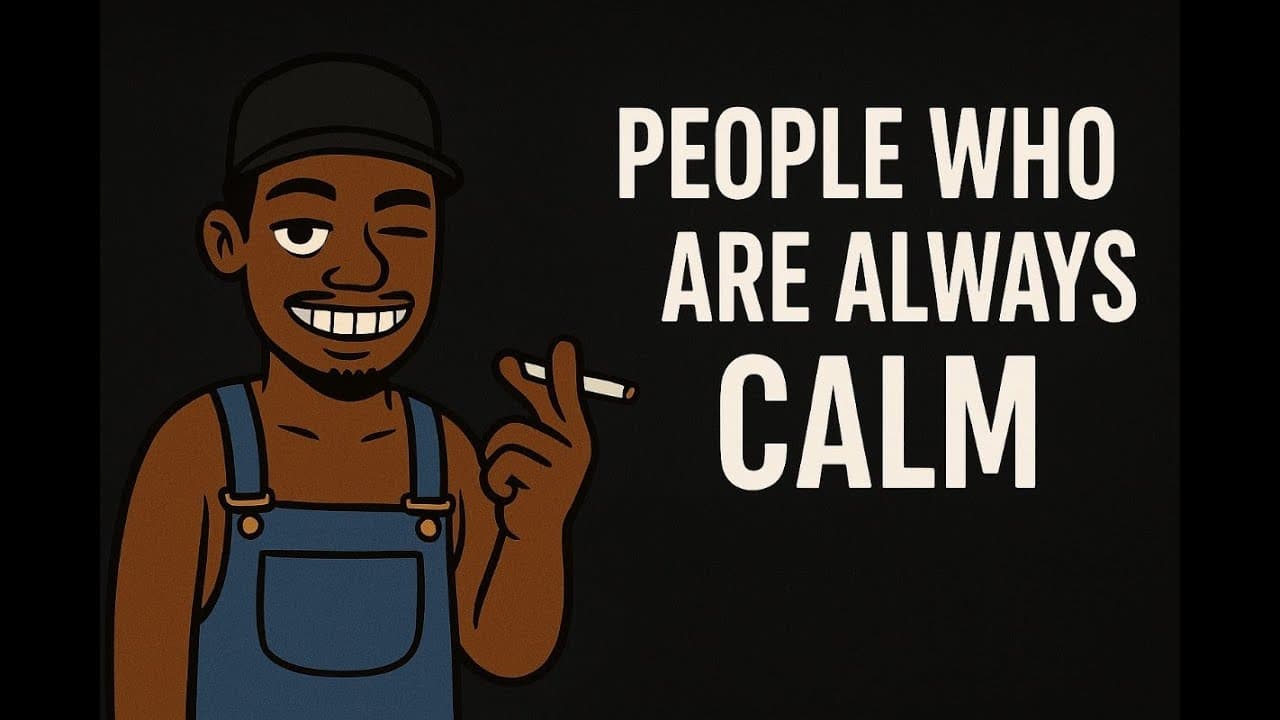
TL;DR
Calm people stay composed by pausing between emotion and action, accepting what they cannot control, and choosing responses based on perspective rather than impulse. Their calmness is not emotional absence or indifference. It is a practiced form of emotional fluency, response flexibility, restraint, and self-awareness, often developed through painful experiences and the recognition that panic rarely improves an outcome.
Transcript
There's a certain kind of person who doesn't raise their voice even when the world seems to be falling apart. They don't argue. They don't panic. They don't rush to prove themselves right. They just breathe. And while everyone else is trying to make sense of the chaos, they quietly watch. Like someone who's already been through this storm before. Y... Read More
Key Insights
- Real calmness is emotion combined with understanding, not the absence of feeling. Calm people experience anger, sadness, uncertainty, and pain, but they have learned to recognize these states without allowing them to dictate every thought, word, or immediate action.
- Calm people are often shaped by earlier periods of overthinking, excessive control, people pleasing, and emotional reactivity. Repeated disappointment teaches them that life will not always follow their wishes, so they replace attempts to control every outcome with acceptance and adaptability.
- The pause between feeling and reacting is the central strength of calm behavior. It creates enough space to hear hurtful words without striking back, tolerate uncertainty without filling the silence, and select a deliberate response instead of following an immediate emotional impulse.
- Response flexibility is the ability to choose a response instead of being controlled by it. Calm people channel emotional energy, recognize that acting and processing may require different moments, and sometimes postpone emotional release until a crisis has passed and action is no longer required.
- Perspective is what allows calm people to see beyond an intense moment. They zoom out, notice patterns and lessons, and remember that previous crises eventually faded. This outlook supports balance without requiring denial, blind optimism, or the belief that life will always be fair.
- Calmness can begin as self-protection when people learn that loud reactions do not change outcomes or that guarded emotions feel safer. What starts as armor can gradually develop into awareness, restraint, self-knowledge, and a stable source of personal peace.
- Emotional maturity is reflected in choosing what deserves attention, expression, and energy. Calm people understand that every insult does not require an answer, every thought does not deserve focus, and every conflict does not justify sacrificing their peace.
- Acceptance reduces the additional suffering created by resisting uncontrollable events. Calm people do not necessarily expect life to be easy or fair. They recognize that hardship happens to everyone and focus their energy on responding wisely rather than repeatedly asking why it happened.
Install to Summarize YouTube Videos and Get Transcripts
Explore YouTube Video Summarizer or Get YouTube Transcript Extractor
Questions & Answers
Q: How do calm people stay composed during stressful situations?
Calm people stay composed by creating a pause between what they feel and how they respond. They breathe, observe the situation, and avoid letting fear, anger, or uncertainty control their immediate behavior. Their perspective reminds them that panic does not solve problems or accelerate healing. Instead of trying to control every circumstance, they accept what cannot be controlled and choose the response that best protects their peace.
Q: Are calm people less emotional than other people?
Calm people are not necessarily less emotional. They can feel anger, sadness, fear, uncertainty, heartbreak, and disappointment deeply. Their distinguishing trait is emotional fluency, which means they understand their feelings without automatically expressing or obeying them. They can experience anger without exploding and sadness without becoming consumed by it. Their composure reflects regulation, perspective, and restraint rather than coldness, detachment, or a lack of care.
Q: What is the difference between calmness and emotional suppression?
Calmness involves understanding and channeling emotion, while suppression would mean merely hiding or denying it. Calm people allow emotional energy to move through them without letting it destroy their balance or determine their immediate actions. They recognize that there may be a time to act, a time to process, and a time to release. Their restraint is presented as an internal compass, not simply a performance that everything is fine.
Q: What is response flexibility in calm people?
Response flexibility is the ability to choose a response rather than letting an automatic reaction choose it. It appears when someone hears an insult but pauses before replying, experiences uncertainty without rushing to fill the silence, or decides that an argument does not deserve further energy. Calm people use this flexibility to channel emotions deliberately, avoid impulsive regret, and select behavior that aligns with peace, perspective, and the situation's actual needs.
Q: Why do difficult experiences sometimes make people calmer?
Difficult experiences can teach people that panic, overreaction, blame, and attempts to control everything often make situations worse. Heartbreak, disappointment, rejection, fear, and regret may show them that even moments that once felt unbearable eventually pass. After becoming tired of their own chaos, they may value peace more than being right. Their calmness is therefore hard earned, built from remembered survival and a changed relationship with uncertainty.
Q: How does acceptance help someone become calmer?
Acceptance helps by ending the exhausting effort to control events that cannot be controlled. Calm people recognize that life does not always bend to personal wishes and is not guaranteed to be easy or fair. Rather than resisting this reality and multiplying their suffering, they adapt to it. Acceptance creates mental space, and that space allows perspective, deliberate action, and peace to replace panic, resentment, or endless attempts to force a different outcome.
Q: Can calmness function as a defense mechanism?
Calmness can function as self-protection, especially when someone learned that reacting loudly did not improve outcomes or that visible emotion made them feel unsafe, misunderstood, or vulnerable to further hurt. In that setting, composure becomes armor and quiet becomes a shield. The account also suggests that this protective habit can evolve over time. Restraint may become awareness, emotional distance may become depth, and guarded behavior may become genuine peace.
Q: How can someone cultivate the mindset of a calm person?
A calmer mindset begins with pausing before reacting, observing personal triggers, and questioning whether a situation truly deserves attention or energy. It also requires accepting uncertainty, remembering that intense moments pass, and choosing understanding over the need to prove oneself right. Instead of matching surrounding noise, a person can breathe, widen their perspective, release what cannot be controlled, and treat peace as a discipline developed through repeated choices.
Summary & Key Takeaways
-
Calmness develops when people stop trying to control every event and begin accepting uncertainty. Calm individuals still experience anger, sadness, fear, and pain, but they understand that emotions and difficult moments pass. This perspective helps them preserve energy, avoid needless conflict, and remain grounded when circumstances become chaotic.
-
A defining ability of calm people is the pause between feeling and reacting. During that pause, they can consider whether an insult deserves a reply, whether an argument is worthwhile, or whether silence is wiser. This response flexibility allows them to channel emotions without letting immediate impulses determine their behavior.
-
Calmness is often earned through heartbreak, disappointment, overthinking, regret, and repeated attempts to control life. For some people, composure originally developed as protective armor because visible reactions felt unsafe or ineffective. Over time, restraint can become awareness, clarity, emotional maturity, and a disciplined commitment to inner peace.
Read in Other Languages (beta)
Share This Summary 📚
Summarize YouTube Videos and Get Video Transcripts with 1-Click
Try YouTube Summary with ChatGPT & Claude or YouTube Transcript Generator
Explore More Summaries from Kee 📚






Summarize YouTube Videos and Get Video Transcripts with 1-Click
Try YouTube Summary with ChatGPT & Claude or YouTube Transcript Generator