How to Make Decisions With Executive Dysfunction
TL;DR
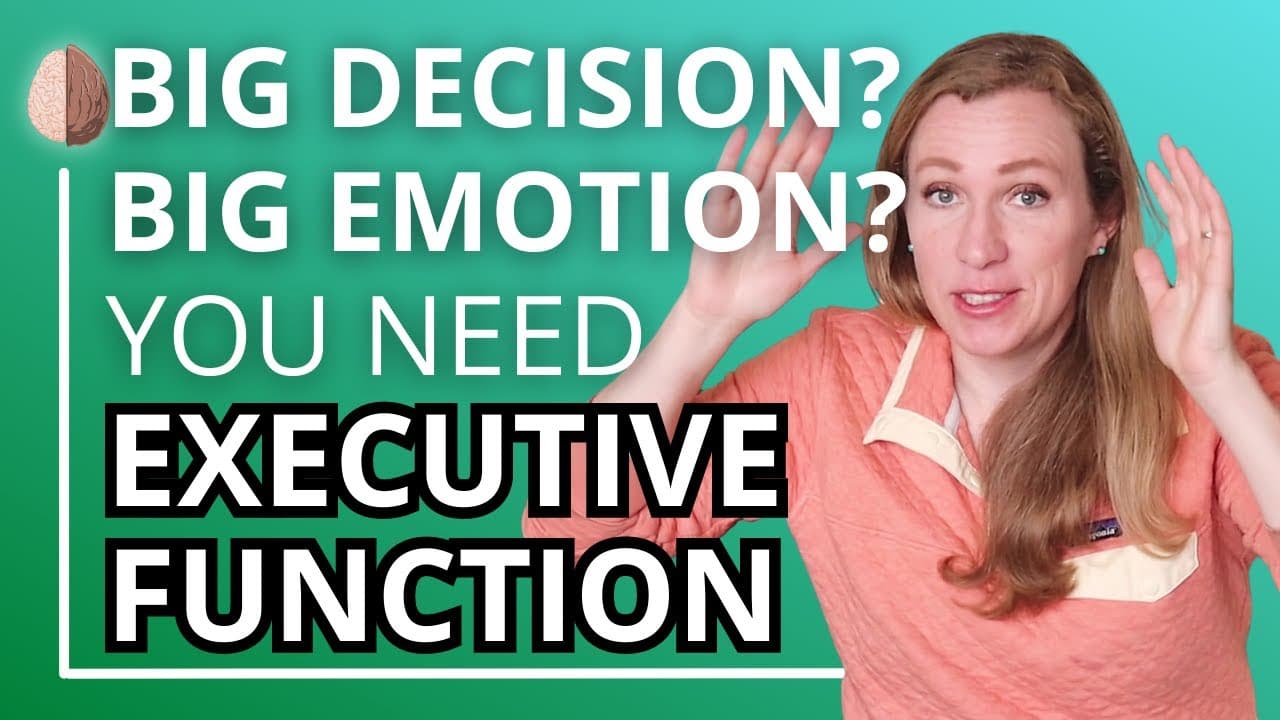
Reduce decision paralysis by limiting options, making information visual, breaking large choices into small actions, clarifying priorities, and setting deadlines. These structures support executive functions such as working memory, planning, organization, self-control, prioritization, time management, and flexibility, making overwhelming decisions easier to process and act on.
Transcript
Oh my goodness, I learned so much about decision paralysis when researching this video. So the topic of overthinking decisions has been on my to-do list for a long time, but I totally procrastinated writing this video. Um one because it usually takes me 10 to 20 hours to write each 15-minute video for my channel. And two I was kind of dreading ... Read More
Key Insights
- Executive function is the mental skill used to organize large amounts of information. It includes working memory, planning, organization, self-control, prioritization, time management, and flexibility, all of which help a person evaluate choices and translate intentions into action.
- Decision paralysis is often driven by both emotional regulation difficulties and executive-function overload. Fear of making the wrong choice can intensify avoidance, while too many options and moving parts can exceed the brain's capacity to organize and compare information effectively.
- Too many options can make choosing less likely. The transcript describes research in which employees offered more retirement-plan options were less likely to select one, potentially costing them hundreds of thousands of dollars across their lifetimes.
- Limiting options is a practical scaffold for decision-making. Predetermined rules, smaller menus, fewer possessions, or repeated routines reduce the number of comparisons required, although using them requires accepting that the selected option may be satisfactory rather than perfect.
- Visual organization supports working memory by moving information out of the mind. Flow charts, paper lists, movable index cards, physical reminders, and starred priorities allow choices and tasks to be seen, sorted, and addressed one or two at a time.
- Breaking a major decision into short-term experiments makes progress possible without demanding certainty. Someone considering a college major or career can try an entry-level job, take one or two classes, prepare a resume, or complete another small step before committing.
- Values clarification is a method for separating major priorities from minor demands. Scheduling weekly planning and spending 10 minutes each day identifying the most important tasks helps ensure that career, family, purpose, or other chosen priorities receive attention first.
- Deadlines are tools for interrupting prolonged organization and initiating action. A shortened list, a five-second countdown, or a one-hour Pomodoro session can create enough urgency to begin, after which the task may become clearer and easier to continue.
Install to Summarize YouTube Videos and Get Transcripts
Explore YouTube Video Summarizer or Get YouTube Transcript Extractor
Questions & Answers
Q: What is executive function in decision-making?
Executive function is the mental skill used to organize large pieces of information and guide action. It includes working memory, organization, planning, self-control, prioritizing, time management, and flexibility. These abilities help a person hold relevant ideas in mind, compare options, identify what matters, plan steps, and adjust when circumstances change during a complicated decision.
Q: Why does executive dysfunction cause decision paralysis?
Executive dysfunction can make a decision feel unmanageable because the person must hold many options, future consequences, priorities, and action steps in mind at once. When these demands overwhelm working memory and organization, the person may delay, avoid the task, or stay busy with less meaningful activities. Fear of choosing incorrectly can add further emotional pressure.
Q: How can limiting options improve decision-making?
Limiting options reduces the amount of information the brain must compare and organize. A person can remove unnecessary choices, use a predetermined rule, create a smaller list, or follow a repeated routine. The transcript's restaurant example shows how choosing locations in a fixed geographic sequence eliminated a stressful weekly debate and made the lunch date more enjoyable.
Q: How can visual tools support executive function?
Visual tools move ideas out of working memory and place them where they can be inspected and rearranged. Useful approaches include drawing a flow chart, writing options on index cards, creating a paper master list, starring priorities, and using physical reminders. Once tasks are visible, a person can select one or two actions instead of mentally managing everything simultaneously.
Q: How do you break a large decision into manageable steps?
Break a large decision into short-term actions or experiments that provide useful information. A person choosing a degree might identify several possible jobs, try an entry-level position, or take one or two relevant classes. A career change might begin with selecting a direction, opening a resume template, and completing the resume before researching every later requirement.
Q: Why is values clarification useful for prioritizing tasks?
Values clarification identifies what matters most in areas such as home, relationships, career, purpose, or service. Once these priorities are explicit, smaller demands become easier to evaluate or release. The suggested routine is to schedule a repeating weekly planning period and spend 10 minutes each day identifying the most important tasks, then arrange everything else around them.
Q: How can deadlines reduce overthinking and procrastination?
Deadlines create a boundary that prevents endless mental organization and pushes the decision toward action. The transcript recommends making and shortening a list, choosing within five seconds, using a countdown, or setting a focused timer. The creator used a one-hour Pomodoro session to begin research, then separated outlining into the next day's task, which enabled steady progress.
Q: When can a coach, accountability partner, or therapist help?
Outside support can help when a person understands the desired outcome but repeatedly becomes overwhelmed before starting. A coach, accountability partner, or therapist can help clarify goals, organize ideas, divide work into tiny steps, and provide immediate structure. In the transcript's career example, completing a resume together during a session succeeded after repeated independent homework attempts had stalled.
Summary & Key Takeaways
-
Executive function is the mental ability to organize complex information and manage working memory, planning, self-control, priorities, time, and flexibility. Large decisions can overload these abilities, especially when they involve numerous options, uncertain futures, and many steps. The resulting overwhelm often appears as avoidance, procrastination, or meaningless busywork.
-
External structures can reduce the mental load of decision-making. Useful methods include removing unnecessary options, writing choices on paper, using movable cards or flow charts, creating prioritized master lists, and turning major decisions into small experiments. These methods make information concrete and allow action without solving everything at once.
-
Values and deadlines help convert vague intentions into action. Regular planning identifies the few priorities that should receive attention before minor tasks fill the schedule. Short time limits, countdowns, and focused work sessions can interrupt overthinking. Coaches, accountability partners, or therapists may also provide structure when starting alone remains difficult.
Read in Other Languages (beta)
Share This Summary 📚
Summarize YouTube Videos and Get Video Transcripts with 1-Click
Try YouTube Summary with ChatGPT & Claude or YouTube Transcript Generator
Explore More Summaries from Therapy in a Nutshell 📚



Summarize YouTube Videos and Get Video Transcripts with 1-Click
Try YouTube Summary with ChatGPT & Claude or YouTube Transcript Generator