How Is AI Transforming Patient Care in Medicine?
TL;DR
AI has the potential to revolutionize patient care by making expert medical advice accessible worldwide, regardless of socioeconomic status. Current AI systems, such as GPT-4, show capabilities that match or exceed those of average physicians in various domains, enhancing decision-making for doctors. The integration of AI in healthcare not only aims to improve efficiency but also addresses regulatory and safety challenges.
Transcript
if you imagine that for your particular condition there's one doctor in the world who's like the world's expert on it that person should be available to you around the clock it's a little bit alarming to me that in 2023 as a patient I am still living in a world where it's like a couple of smart people sat down and talked it out as opposed to we've ... Read More
Key Insights
- AI can democratize medical expertise, providing access to top-tier medical advice globally, even in underserved regions.
- Current AI systems, like GPT-4, are already capable of performing at or above the level of average physicians in many areas.
- The integration of AI in medicine involves creating systems where AI assists doctors, enhancing efficiency and decision-making.
- The regulatory landscape for AI in medicine is evolving, with the need for oversight and safety measures being a priority.
- Countries with centralized healthcare systems may face challenges in rapidly adopting AI due to bureaucratic inertia.
- There is a moral imperative to deploy AI in healthcare, especially in regions with limited access to medical professionals.
- AI's role in medicine is not just about diagnosis but also involves managing patient interactions and ongoing care.
- The future of AI in medicine involves not only improving patient outcomes but also redefining how healthcare systems operate.
Install to Summarize YouTube Videos and Get Transcripts
Explore YouTube Video Summarizer or Get YouTube Transcript Extractor
Questions & Answers
Q: How does AI democratize access to medical expertise?
AI has the potential to democratize access to medical expertise by providing high-quality, expert-level medical advice to individuals worldwide, regardless of their location. By utilizing AI systems, patients can access top-tier medical knowledge and guidance at any time, breaking down geographical and economic barriers that traditionally limit access to healthcare.
Q: What is the current capability of AI systems like GPT-4 in medicine?
Current AI systems, such as GPT-4, have demonstrated the ability to perform at or above the level of average physicians in many areas. These systems can handle complex medical questions, provide accurate medical advice, and assist in diagnosing conditions, showcasing their potential to significantly enhance healthcare delivery.
Q: How are AI systems integrated into healthcare to assist doctors?
AI systems are integrated into healthcare by acting as decision-support tools for doctors. They assist in gathering patient information, analyzing data, and providing recommendations, allowing doctors to focus on patient care and decision-making. This integration aims to improve efficiency, accuracy, and patient outcomes in medical practice.
Q: What are the regulatory challenges of deploying AI in medicine?
Regulatory challenges in deploying AI in medicine include ensuring patient safety, data privacy, and maintaining trust in AI-driven healthcare. Regulators must develop frameworks that balance innovation with safety, ensuring AI systems are reliable and effective while protecting patient interests and adhering to legal standards.
Q: How can AI impact healthcare in developing countries?
AI can have a profound impact on healthcare in developing countries by providing access to medical expertise where there is a shortage of healthcare professionals. AI systems can offer medical advice and support remotely, helping to address healthcare disparities and improve health outcomes in underserved regions.
Q: What role does AI play in managing patient interactions and ongoing care?
AI plays a crucial role in managing patient interactions by providing continuous support and guidance, ensuring patients receive timely advice and follow-up care. AI systems can monitor patient progress, recommend interventions, and facilitate communication between patients and healthcare providers, enhancing the overall patient experience.
Q: What is the future vision for AI in medicine according to Neal Khosla?
Neal Khosla envisions a future where AI in medicine enhances patient care by providing personalized, expert-level medical advice accessible to everyone. AI will assist in diagnosing and managing health conditions, improving healthcare efficiency, and potentially transforming healthcare systems to be more patient-centered and proactive.
Q: Why is there a moral imperative to deploy AI in healthcare?
There is a moral imperative to deploy AI in healthcare because it can significantly improve access to medical expertise and care, especially in regions with limited healthcare resources. By leveraging AI, healthcare systems can address inequalities, enhance patient outcomes, and provide better care to underserved populations, fulfilling a crucial ethical responsibility.
Summary & Key Takeaways
-
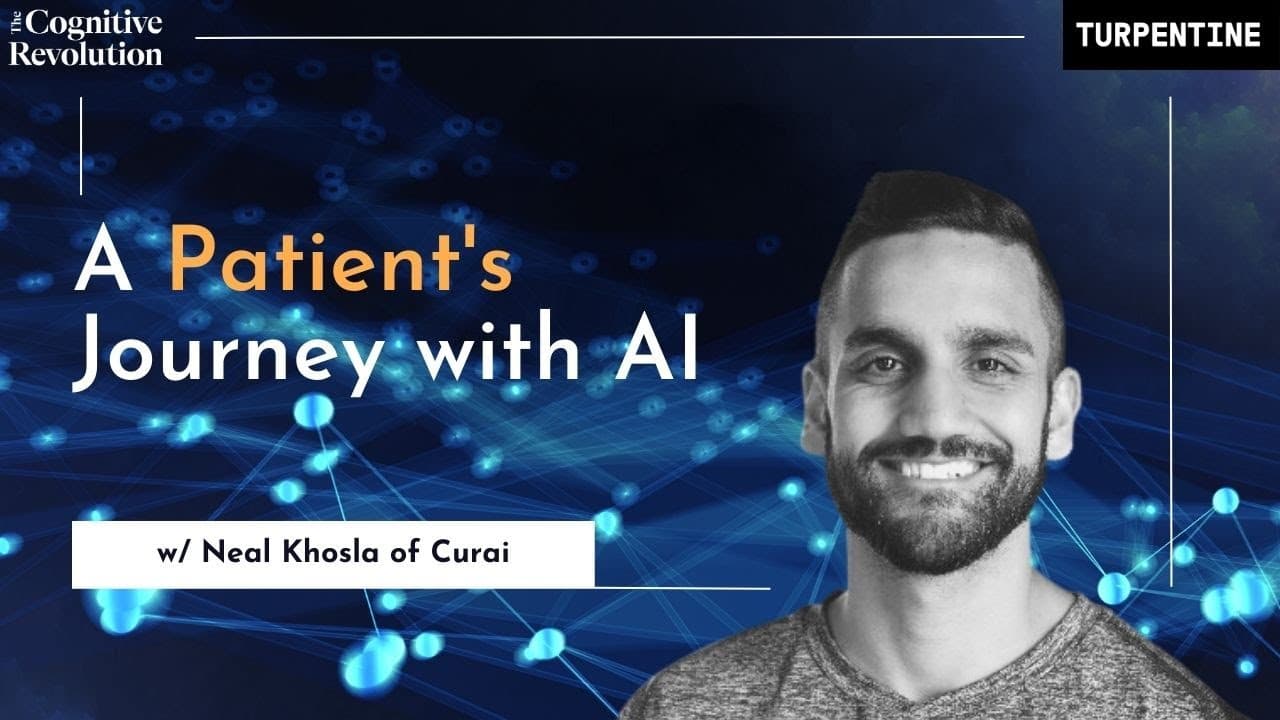
Neal Khosla discusses the transformative potential of AI in medicine, emphasizing its ability to make expert medical advice accessible worldwide. He highlights the current capabilities of AI, like GPT-4, in matching or surpassing average physician performance in certain tasks.
-
The conversation explores the integration of AI in healthcare systems, focusing on how AI can assist doctors rather than replace them, ensuring efficiency and better decision-making. Regulatory challenges and the need for safety measures are also discussed.
-
Khosla shares insights on the global impact of AI in medicine, noting the potential for leapfrogging in developing countries. He emphasizes the importance of deploying AI responsibly to enhance healthcare access and improve patient outcomes.
Read in Other Languages (beta)
Share This Summary 📚
Summarize YouTube Videos and Get Video Transcripts with 1-Click
Try YouTube Summary with ChatGPT & Claude or YouTube Transcript Generator
Explore More Summaries from Cognitive Revolution "How AI Changes Everything" 📚





Summarize YouTube Videos and Get Video Transcripts with 1-Click
Try YouTube Summary with ChatGPT & Claude or YouTube Transcript Generator