How Databricks turned open source into AI infrastructure success
TL;DR
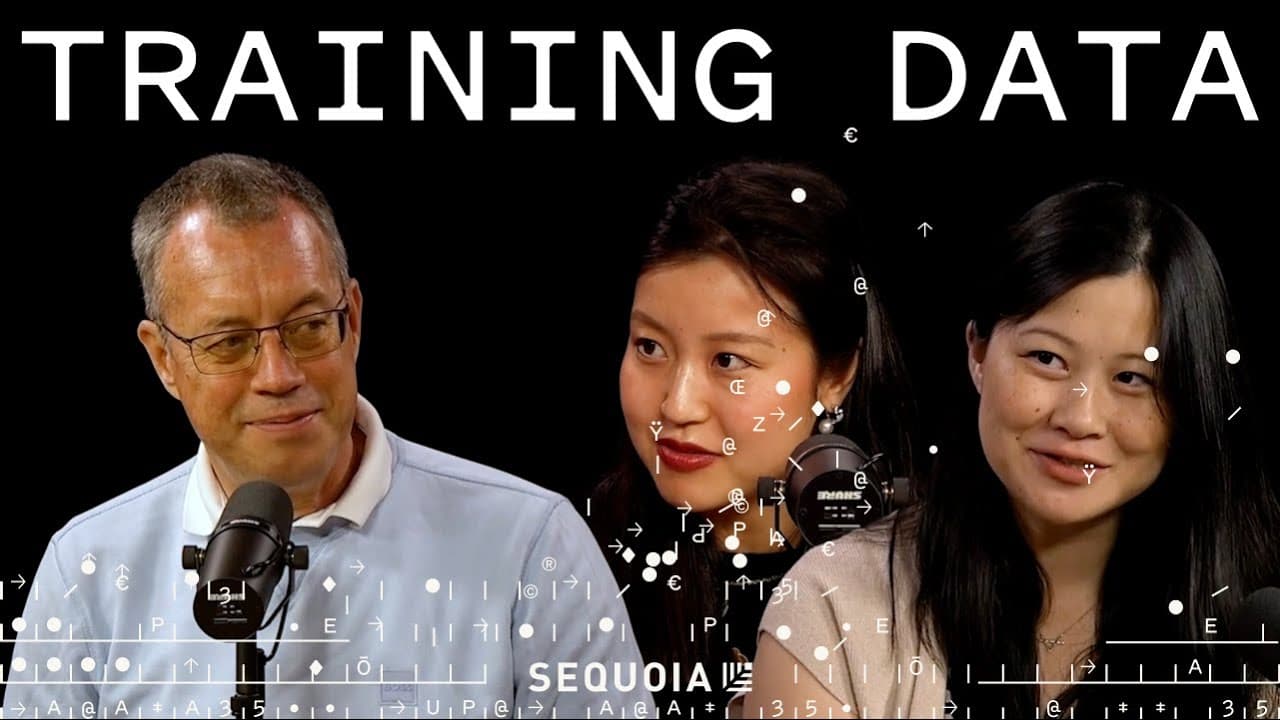
Databricks focuses on building the best Spark compatible platform to extract value from data and navigate the AI evolution. They emphasize turning demos into production products with reliability and privacy, and they stress open source models for enterprise control, plus Mosaic for scalable training and fine tuning. Enterprises want data control, security, and auditability to unlock AI value.
Transcript
in general this was our approach we are going to be aggressive also about Partnerships even though the partners could compete and overlap because you have to trust yourself that at least when it comes to spark you can build the best products who are you know kind of saying internally well you know if someone else is building a better product for sp... Read More
Key Insights
- Spark was created to speed up classical machine learning and scale them up, and this path comes full circle in AI today.
- Enterprise customers require data privacy, confidentiality, and auditability, which drives preference for open source models hosted in their own VPCs.
- Open source models with local hosting provide control and security that many enterprises prefer over fully closed systems.
- The AI market is driven by production readiness, not just impressive demos, and reliability is critical for enterprise deployment.
- Fine tuning on customer data is a common path to improve model value while preserving confidentiality.
- Mosaic and other acquisitions expand the training and deployment infrastructure to support scalable AI in enterprises.
- Open source does not have to be perfect for all use cases; it must be competitive for core enterprise needs and offer strong security guarantees.
- The path to responsible AI involves choosing workflows that minimize hallucinations, maximize value, and align with regulatory requirements.
- More videos from this channel:
- More from this channel: Sequoia Capital
Install to Summarize YouTube Videos and Get Transcripts
Explore YouTube Video Summarizer or Get YouTube Transcript Extractor
Questions & Answers
Q: How does Databricks view the AI moment compared to the early days of Spark and Ray?
Databricks sees the AI moment as a different level of momentum with many investments and a more complex ecosystem. The focus remains on turning AI demos into production products that work across many scenarios, with emphasis on reliability, accuracy, and value. They stress the need for governance and practical deployment strategies rather than just demonstrations.
Q: Why is hosting open source models in customers’ VPCs important for enterprises?
Hosting in customers' VPCs addresses data privacy and confidentiality concerns, enabling auditability of data usage and decision making. This approach helps large organizations comply with regulations like GDPR and similar laws, while allowing them to fine tune models with their own data without exposing it to external environments. It also provides a sense of control and security in deployment.
Q: What role does Mosaic play in Databricks’ strategy for AI infrastructure?
Mosaic is positioned as a key part of the training and fine tuning infrastructure, enabling cost effective optimization of models for different use cases. It supports the enterprise preference for scalable, efficient, and secure model development within a controlled environment, aligning with the need for productive software engineers and reduced time to value.
Q: How do Databricks view the balance between pre training and fine tuning for enterprises?
Enterprises vary in their needs; some will pre train but many prefer fine tuning on their own data within a secure setup. Fine tuning leverages the enterprise data that differentiates them, and using an open source model in a private environment allows customization while maintaining control, privacy, and audit trails.
Q: What is the challenge of turning AI demos into fully reliable products?
The challenge lies in achieving accuracy and reliability across diverse scenarios, reducing hallucinations, and ensuring the product works for all users and data inputs. This requires robust evaluation, governance, and deployment strategies that go beyond flashy demonstrations to meet enterprise requirements for stability and trust.
Q: Why do enterprises still rely on proprietary models alongside open source options?
Enterprises value control, security, and auditability, which can be better provided by open source models hosted in their environment. Proprietary models may offer ease of use and strong performance, but enterprises often prefer the option to customize, audit, and govern model usage, especially given data privacy concerns and regulatory pressures.
Q: What is the expected trajectory for open source models in enterprise use cases?
Open source models are expected to approach parity with proprietary models for core use cases as tooling and training infrastructure improve. The key drivers are better data handling, stronger privacy controls, easier fine tuning, and scalable, cost effective deployment within an enterprise's own infrastructure.
Q: How should a founder approach identifying new problems to tackle in AI systems?
A founder should target problems that will be widely adopted and useful tomorrow, not just today. Build systems in new areas to gain deep understanding of future problem spaces, then focus on the most impactful applications. This approach positions the startup to lead in evolving markets and align product strategy with long term technology trends.
Summary & Key Takeaways
-
Databricks aims to make Spark the best platform for AI by focusing on reliability and real production ready capabilities.
-
The company highlights the enterprise need for data privacy, auditability, and control when adopting open source models.
-
Mosaic and acquisitions are positioned to support enterprise customers in training and fine tuning models within secure environments.
Read in Other Languages (beta)
Share This Summary 📚
Summarize YouTube Videos and Get Video Transcripts with 1-Click
Try YouTube Summary with ChatGPT & Claude or YouTube Transcript Generator
Explore More Summaries from Sequoia Capital 📚


Summarize YouTube Videos and Get Video Transcripts with 1-Click
Try YouTube Summary with ChatGPT & Claude or YouTube Transcript Generator