What Makes Crowds Feel Overwhelming and Why
TL;DR
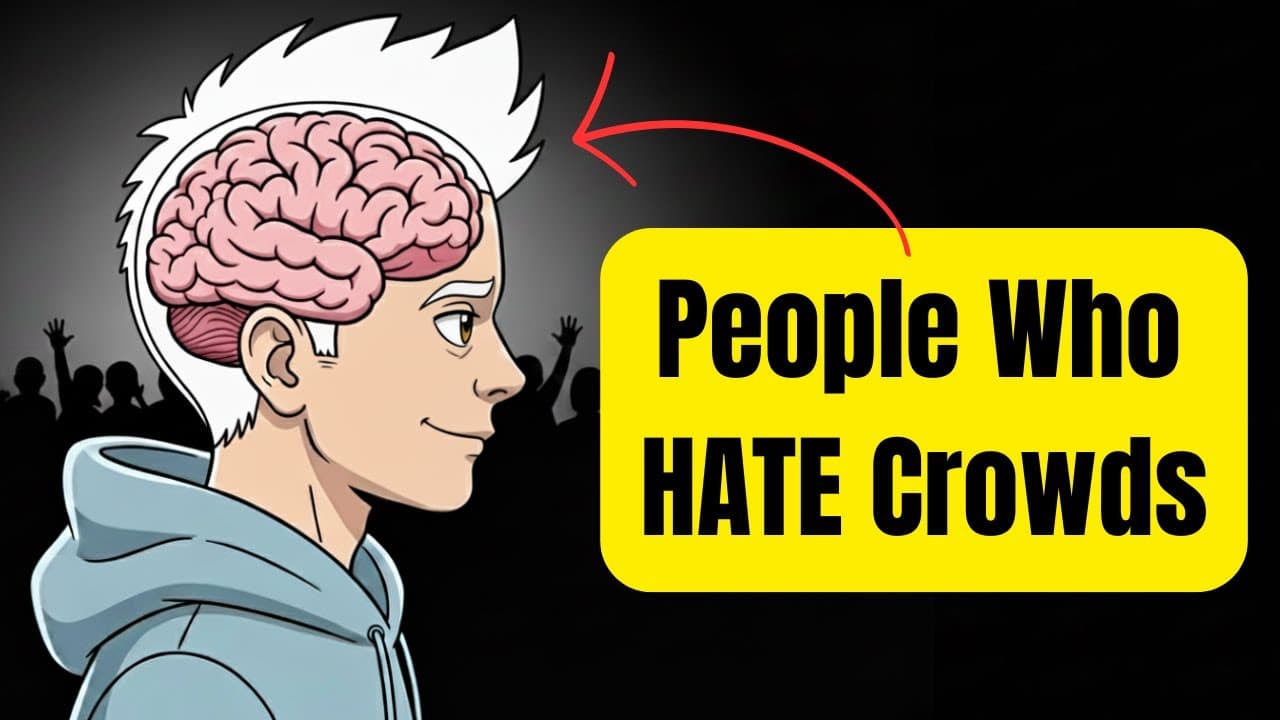
Crowded places trigger heightened sensitivity in many people because the brain processes and stores vast social cues, making overstimulation painful. Solitude and deeper conversations feel more rewarding, while noise and masks drain energy. The takeaway is that being overwhelmed is a natural brain trait, not a flaw.
Transcript
If you'd rather fight a bear than attend a crowded concert, congratulations. Your brain just saved you from a psychological nightmare that most people are too distracted to notice. And no, you're not damaged. You're just seeing something everyone else is blind to. Picture this. It's Saturday night. Your phone buzzes. Hey, we're all meeting at that ... Read More
Key Insights
- Sensory processing sensitivity affects about 20% of the population, meaning one in five people experiences heightened perception in crowds.
- Your brain acts like a powerful spam filter for stimuli, but it also logs and later reviews what you sensed, increasing cognitive load.
- People who prefer solitude tend to score higher in emotional intelligence, reflecting a capacity for deeper understanding rather than social ineptitude.
- Extroverts get reward from external stimulation, while some individuals are rewarded by internal focus and quiet time, affecting how they experience crowds.
- Dopamine and acetylcholine function differently in some brains, leading to different motivations for being alone or with others.
- Mirror neurons can make crowds feel emotionally intense by absorbing others’ emotions, which can be draining but also enhances empathy.
- Many people are not anti-social; they are anti-BS, preferring honest conversations over performative social scenes.
- Silence and solitude are framed as opportunities for clarity and self-understanding, not signs of failure or loneliness.
Install to Summarize YouTube Videos and Get Transcripts
Explore YouTube Video Summarizer or Get YouTube Transcript Extractor
Questions & Answers
Q: What is the main reason crowds feel overwhelming for some people
The main reason crowds feel overwhelming is sensory processing sensitivity, where the brain processes and stores a large amount of input from the environment. This leads to cognitive overload in crowded spaces as subtle cues like body language and tonal shifts accumulate, making real-time processing exhausting and energy-draining.
Q: How does the video describe the difference between introverts and extroverts in crowds
The video explains that extroverts derive reward from external stimulation in crowds, while some individuals are rewarded by internal focus and solitude. This means introverted or highly perceptive people may feel exhausted by social masks and small talk, preferring meaningful conversations and quiet time to recharge.
Q: What neurotransmitters are mentioned and how do they affect crowd experiences
The video mentions acetylcholine as a neurotransmitter that rewards introspection and deep focus, contrasting with dopamine which extroverts use for social reward. This difference helps explain why some people feel energized by solitude and deep thinking rather than by external social interaction.
Q: What is described as a potential skill rather than a flaw in crowded settings
Being sensitive to social cues and emotions is described as a potential strength, not a flaw. The video notes that this sensitivity can lead to high emotional intelligence, better reading of subtext, and an ability to sense what others need before they say it, reinforcing authentic connections.
Q: How does the video frame the experience of social gatherings for sensitive individuals
The video frames social gatherings as environments where authentic connection is difficult due to masks and performative behavior. It suggests that sensitive individuals may prefer fewer, deeper conversations at times that suit their energy, rather than multiple superficial interactions that drain their nervous system.
Q: What coping strategies does the video imply for crowded environments
Coping strategies implied include seeking honest conversations, avoiding forced small talk, and choosing environments or times with lower stimulation. It also suggests recognizing solitude as a valid choice and prioritizing depth over quantity in social interactions to preserve energy.
Q: Why is solitude portrayed as a positive choice in the video
Solitude is portrayed as positive because it provides space for clarity, self-understanding, and rest from overstimulation. The video argues that quiet rooms often hold the loudest truths and that opting out of constant social activity can be a form of liberation rather than loneliness.
Q: Who might benefit most from the ideas in this video
People who experience discomfort in crowded settings, those with high perceptual sensitivity, and individuals who value depth and authenticity in conversations may benefit most. The video encourages embracing one’s natural social pace, seeking real connections, and viewing solitude as a strength rather than a flaw.
Summary & Key Takeaways
-
In crowded environments, the brain screenshotifies and stores sensory input, leading to cognitive overload that many people experience as overwhelm. This video explains that heightened sensitivity is a legitimate trait rather than a defect, and it highlights the adaptive history of this brain pattern. Solitude and meaningful exchanges are presented as healthier responses than forced social performance.
-
The content argues that introverted or highly perceptive individuals do not hate people but dislike inauthentic social performance. It reframes crowd avoidance as a natural consequence of how some brains optimize for deep processing and real connection over small talk under pressure.
-
A practical perspective is offered, suggesting that real conversations at low-stimulation times can satisfy emotional needs. The video also reframes social energy as something that should be managed, not minimized, encouraging viewers to seek environments that support depth and personal pace.
Read in Other Languages (beta)
Share This Summary 📚
Summarize YouTube Videos and Get Video Transcripts with 1-Click
Try YouTube Summary with ChatGPT & Claude or YouTube Transcript Generator
Explore More Summaries from Psychology Simplified 📚
Summarize YouTube Videos and Get Video Transcripts with 1-Click
Try YouTube Summary with ChatGPT & Claude or YouTube Transcript Generator