How to understand the psychology of cutting people off
TL;DR
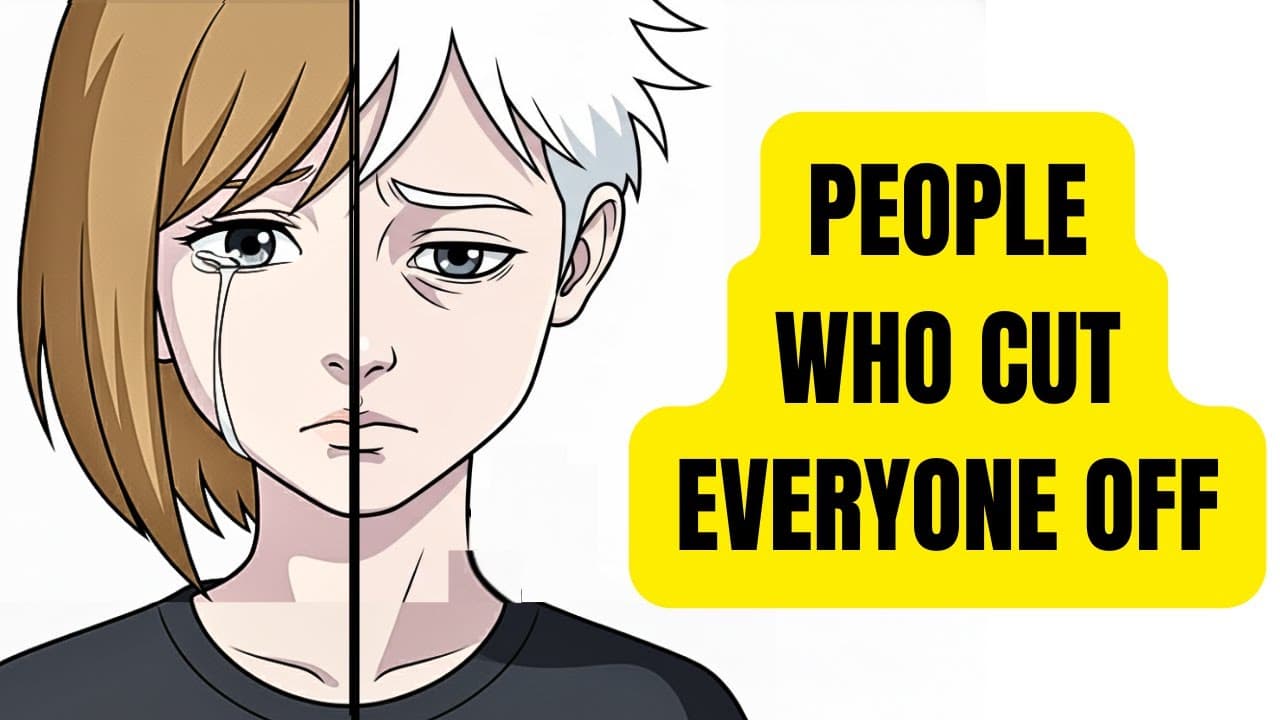
Cutting people off often serves self preservation rather than cruelty. Emotional burnout, patterns from childhood, and repeated experiences of abandonment train the nervous system to protect itself by reducing access to others. Boundaries become walls when they are used indiscriminately, but they can also be a pathway to healing and healthier later connections.
Transcript
You haven't texted anyone in three months. Your birthday passed. No plans, no complaints. Someone asked if you wanted to hang out and you said, "I'm busy." But here's the twist. You weren't lying. You were busy. Busy protecting your peace. And honestly, you've never felt lighter. People call you cold now. The one who changed. The one who cut everyo... Read More
Key Insights
- Cutting people off can be a protective response evolved from years of emotional neglect or one sided care.
- The nervous system uses cost-benefit analysis to decide how much energy to invest in relationships.
- Abandonment pain can become a learned expectation, shaping future interactions and trust.
- Boundaries are a tool to exclude unsafe or unhealthy connections, not a rejection of all closeness.
- Hypervigilance helps detect patterns of unreliability early in conversations.
- Pattern recognition becomes a form of data collection about who is safe and who is not.
- Isolation is framed as absence of rejection rather than absence of connection, offering a space to heal.
- Choosing yourself is presented as survival, not selfishness, with walls becoming a means to preserve wellbeing.
Install to Summarize YouTube Videos and Get Transcripts
Explore YouTube Video Summarizer or Get YouTube Transcript Extractor
Questions & Answers
Q: A real search query question about the video, Question 1
Why do people cut others off and how does that relate to protecting the self rather than being cruel? The video explains that long standing patterns from childhood create a blueprint where connection often leads to abandonment. People learn to protect themselves by reducing exposure to others, so cutting off becomes a predictable response when trust is broken or when support is inconsistent.
Q: Question 2
How does the concept of boundaries differ from walls in the context of relationships? The content describes boundaries as selective access that keeps the wrong people out, while walls keep everyone out. When boundaries turn into walls, they can hinder new connections, but they also reflect a deliberate choice to prevent repeated harm and preserve emotional safety.
Q: Question 3
What role does hypervigilance play in people who isolate themselves, and is it always negative? The video frames hypervigilance as accurate pattern recognition that helps identify unreliable or emotionally unavailable behavior early in conversations. It is not pessimism; it is a survival tool that reduces repeated hurt by avoiding harmful dynamics.
Q: Question 4
How might early experiences shape someone’s later relationships and reactions to hurt? The transcript notes that early experiences where emotions were dismissed or help was unavailable teach that needing people is dangerous. This creates a blueprint where adults repeat patterns of withdrawal to prevent further pain and maintain control.
Q: Question 5
What does the video suggest about loneliness and the act of isolating oneself? It states that loneliness is often experienced before cutting off, and the physical isolation does not create new loneliness but stops pretending it isn’t there. The message is that isolation can be a quiet form of self care during healing.
Q: Question 6
Can isolation ever be part of a path back to healthy connection? The video implies that choosing isolation is not a permanent rejection of connection but a pause to protect the self. It leaves room for future relationships that feel safe and respectful, suggesting healing can lead to healthier engagements on one’s own terms.
Q: Question 7
What is the distinction between needing people and needing protection from harm? The content suggests that needing people can be dangerous when others only show up in good times. Protection means setting boundaries to avoid repeated emotional costs, thus prioritizing one’s wellbeing without closing off potential support.
Q: Question 8
What does the speaker mean by saying you are not cold but surviving? The message is that the choice to cut off is a protective measure, not a lack of longing for connection. Surviving here means staying whole, preserving energy for healing, and being ready to engage again only on terms that honor personal needs.
Summary & Key Takeaways
-
In this video, the speaker reframes cutting people off as a learned response to pain and unreciprocated care, rooted in childhood experiences and patterns of abandonment.
-
The central idea is that boundaries may morph into walls if they are used to avoid all contact, but they can also safeguard the person while they heal.
-
Ultimately, the message is that choosing isolation is a survival strategy, not a rejection of the possibility of healthy connection in the future.
Read in Other Languages (beta)
Share This Summary 📚
Summarize YouTube Videos and Get Video Transcripts with 1-Click
Try YouTube Summary with ChatGPT & Claude or YouTube Transcript Generator
Explore More Summaries from Psychology Simplified 📚


Summarize YouTube Videos and Get Video Transcripts with 1-Click
Try YouTube Summary with ChatGPT & Claude or YouTube Transcript Generator