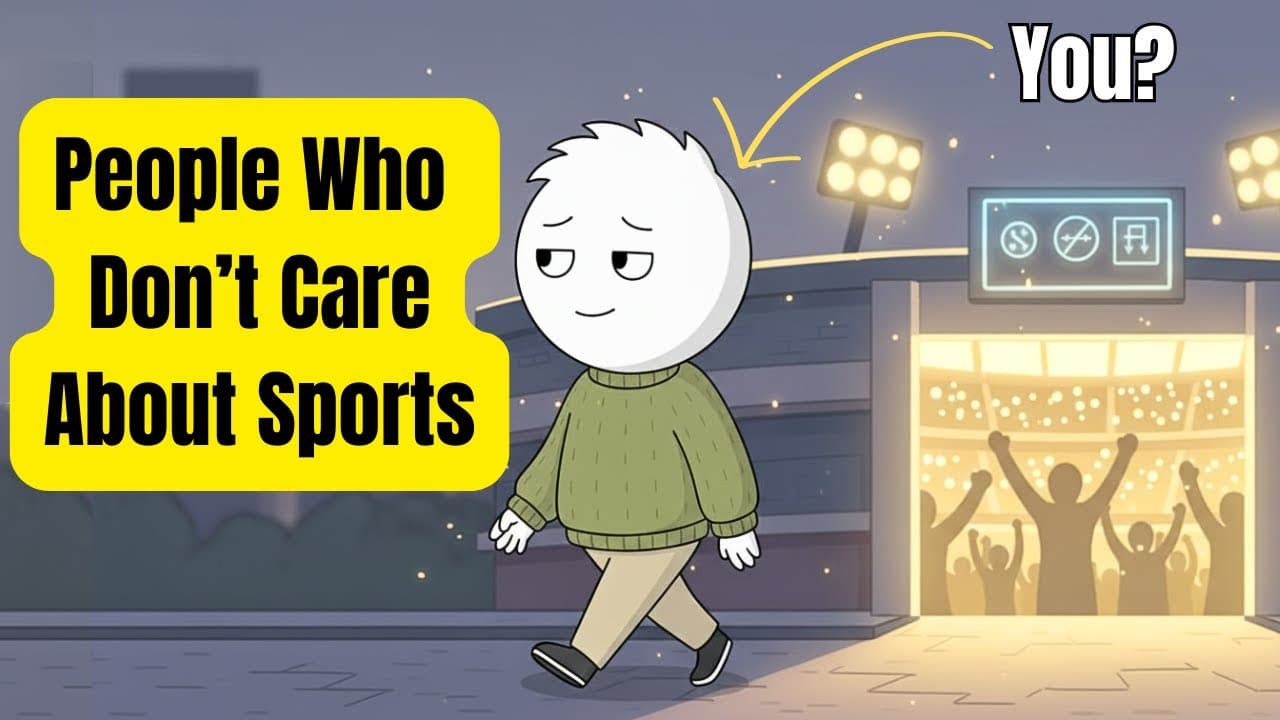
What Causes People Not to Care About Sports in Life?
TL;DR
Indifference to sports stems from brain reward patterns and identity traits. Some people have lower tribal attachment and different dopamine responses, so they don’t experience the same social payoff from sports. Instead, they seek meaning in art, relationships, or personal projects, engaging with life differently.
Transcript
While millions of people are screaming at their TVs, painting their faces, and emotionally destroyed because 11 strangers lost a game, there's a massive group of people who just don't care. And according to neuroscience, their brains might actually be wired differently. Stay with me because what I'm about to tell you will completely change how you ... Read More
Key Insights
- Sports fans trigger dopamine with game by game events, producing anticipation and reward.
- Non fans show lower us-versus-them thinking and less dependence on team outcomes for self esteem.
- Dopamine pathways respond to vicarious competition similarly to other rewards like gambling.
- Genetic variations in dopamine receptors may influence how strongly someone cares about competitive sports.
- Non fans may engage in empathy and meaning through art, nature, and personal relationships as alternative rewards.
- Burging and basking in reflected glory are common in fans but less so in non fans.
- Flow states can be achieved through many activities, including reading, creating, exploring, or watching sports.
- Meaning and narrative attachment differ: fans seek sport storylines, non fans find meaning in personal or creative pursuits.
- More videos from this channel:
- More from this channel: Psychology Simplified
Install to Summarize YouTube Videos and Get Transcripts
Explore YouTube Video Summarizer or Get YouTube Transcript Extractor
Questions & Answers
Q: Why do some people never get emotionally invested in sports
Some people do not experience the same neural rewards from watching sports because their dopamine systems are less triggered by vicarious competition. This difference may be genetic, involving variations in dopamine receptor genes that modulate how much someone cares about competitive spectator activities. As a result, the emotional payoff felt by fans simply does not occur for non fans.
Q: How does social identity theory relate to sports obsession
Social identity theory explains that sports fans form identities around teams and players and experience an us versus them mentality during games. This tribal bonding triggers oxytocin release and strengthens group belonging. In contrast, non fans tend to derive identity from individual values and achievements rather than alignment with a group, reducing tribal allegiance.
Q: What is parasocial investment and how does it differ from direct engagement
Parasocial investment describes one sided emotional ties with teams and players where the viewer feels a sense of reciprocity that is not actually present. Direct engagement involves active participation and outcomes that affect the person’s real life, such as personal projects or relationships. The two approaches reflect different ways people allocate emotional energy.
Q: What role does unpredictability play in sports addiction
Unpredictability keeps the dopamine flowing because the outcome is not known until the end of the game. This intermittent reinforcement pattern is highly addictive and explains why fans chase the thrill of uncertain results. The brain treats sports outcomes similarly to other high payoff uncertainties such as gambling.
Q: How do non fans describe meaning and fulfillment
Non fans often find meaning through creativity, relationships, nature, or intellectual challenges rather than the drama of a sports narrative. They may feel present and engaged in their own lives, directing emotional energy toward activities where they experience reciprocity, impact, and personal relevance.
Q: Can not caring about sports be a defense mechanism
Yes, indifference can serve as a defense mechanism, especially if someone faced bullying in gym class or exclusions within sports culture. Pushing back against aggressive competitiveness or simply not understanding why adults scream at games can be protective, helping individuals maintain self esteem and emotional balance.
Q: Do sports fans exhibit higher empathy in any domains
Sports fans can score higher on certain empathy measures for others’ struggles, even when those others wear team jerseys. This reflects their capacity for deep care in specific contexts, suggesting empathy allocation is flexible and can extend to issues involving communities or causes beyond sports.
Q: What is the overall takeaway about not caring about sports
The overall takeaway is that not caring about sports is not a flaw but a different way of experiencing the world. Brain reward patterns, identity formation, and empathy allocation all differ, leading to alternative sources of meaning and engagement. Both sports fans and non fans navigate human needs for story, connection, and purpose in distinct but valid ways.
Summary & Key Takeaways
-
Summary point 1: The video explains that not caring about sports is tied to brain chemistry and social identity, offering a non judgmental view of different ways people derive meaning and community.
-
Summary point 2: It highlights dopamine driven reward systems in sports fans and contrasts them with non fans who pursue rewards elsewhere such as art, nature, or intellectual challenges.
-
Summary point 3: The discussion suggests both approaches can coexist and that empathy and meaning can be allocated differently without implying superiority of one style over another.
Read in Other Languages (beta)
Share This Summary 📚
Summarize YouTube Videos and Get Video Transcripts with 1-Click
Try YouTube Summary with ChatGPT & Claude or YouTube Transcript Generator
Explore More Summaries from Psychology Simplified 📚

Summarize YouTube Videos and Get Video Transcripts with 1-Click
Try YouTube Summary with ChatGPT & Claude or YouTube Transcript Generator