Why Do Some People Choose to Stay Tattoo-Free?
TL;DR
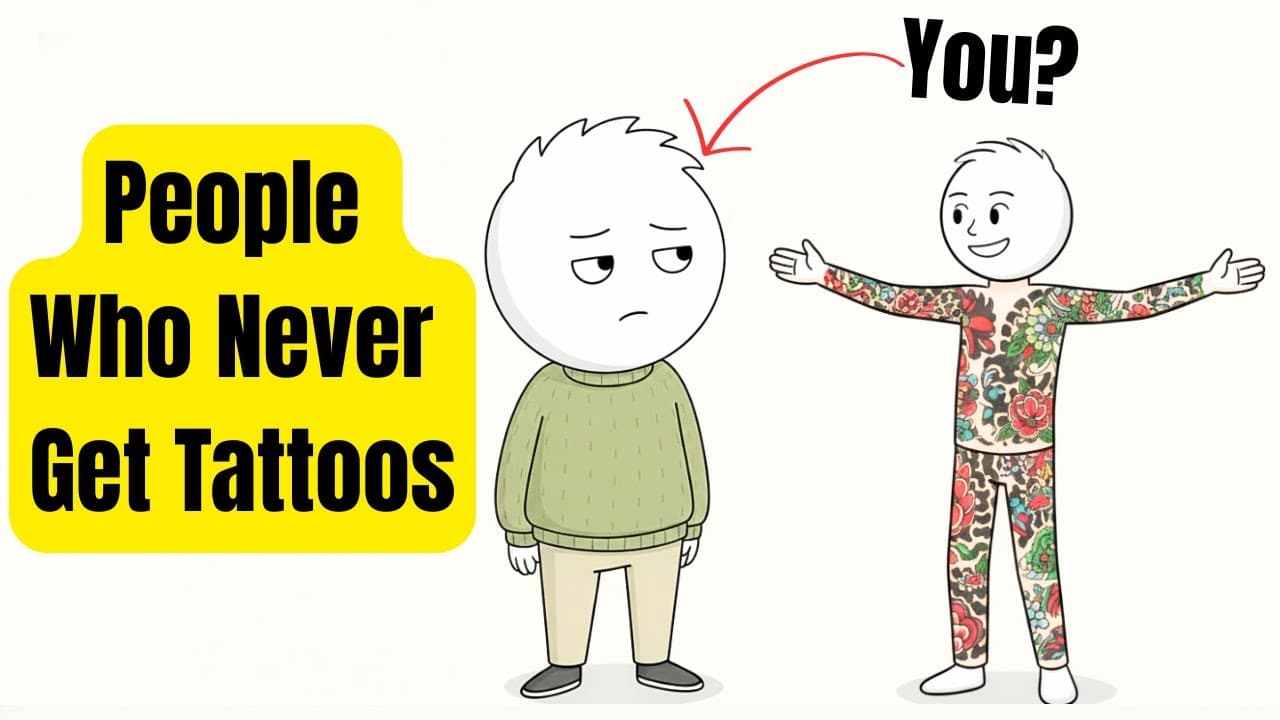
Remaining tattoo-free can reflect future-focused thinking, a fluid sense of identity, careful impression management, or a belief that meaning does not require external symbols. The crucial distinction is whether unmarked skin results from an authentic preference or from fear, anxiety, and avoidance, because the same outward choice can arise from very different psychological motives.
Transcript
Tell me if this sounds familiar. Your friend just got their third tattoo. Your co-workers showing off their new sleeve. Your Instagram feed is literally a gallery of fresh ink. Meanwhile, you're sitting there with completely blank skin. And for some reason, people think you're the weird one. But here's the twist. Choosing to stay tattoo free is way... Read More
Key Insights
- Tattoo permanence can create concern about future regret because a person’s tastes, values, and personality may change over decades. Someone who avoids tattoos may be protecting a future version of themselves from a permanent decision made according to their present identity.
- Future-self continuity describes how people connect their current identity with the person they expect to become. When that connection feels weak, choosing a tattoo can seem like making an irreversible decision on behalf of a future stranger who merely shares the same body.
- A fluid identity orientation treats the self as an evolving work in progress. People with this outlook may resist tattoos because permanent symbols can appear to freeze a temporary interest, belief, relationship, or stage of identity that they expect to outgrow.
- Identity foreclosure is presented as committing to an identity before fully exploring who one is. Avoiding tattoos may preserve openness to future identities, although persistent avoidance can sometimes indicate fear of commitment or self-definition rather than healthy adaptability.
- Impression management is the strategic control of how other people perceive someone. Tattoo-free individuals may consider professional expectations, family approval, and social judgment because permanent body art introduces a visible factor that cannot always be controlled after the decision is made.
- Unmarked skin can be a conscious minimalist choice rather than the absence of self-expression. Some people appreciate their bodies without additions and reject the assumption that internal beliefs, relationships, or experiences require external symbols to become meaningful.
- Intrinsic identity orientation locates identity within the person rather than in visible markers. Someone guided by this view may feel no need for a tattoo to confirm what they love, preserve an important memory, or communicate who they are to others.
- Authentic motivation is the key distinction between choosing unmarked skin and merely avoiding marked skin. The same tattoo-free appearance may represent thoughtful independence, future awareness, social anxiety, fear of commitment, or several motives operating together.
Install to Summarize YouTube Videos and Get Transcripts
Explore YouTube Video Summarizer or Get YouTube Transcript Extractor
Questions & Answers
Q: Why do some people choose to stay tattoo-free?
Some people remain tattoo-free because they anticipate future regret, expect their identities to evolve, or prefer not to make permanent statements about temporary interests. Others consider professional perception, family approval, or social judgment. Unmarked skin can also express minimalism and the belief that identity and meaning exist internally without requiring visible symbols.
Q: How does future-focused thinking affect tattoo decisions?
Future-focused thinking encourages a person to imagine how their later self might evaluate a tattoo chosen today. Because personality, taste, and values can shift over decades, a design that feels meaningful at one age may feel inappropriate later. Avoiding the tattoo can therefore represent awareness of possible regret rather than indecision about the present.
Q: What is future-self continuity in tattoo psychology?
Future-self continuity concerns how strongly someone connects their current identity to the person they expect to become. A person who struggles to imagine being fundamentally the same individual in twenty years may feel that a permanent tattoo makes a decision for a stranger. That perceived distance can make body art feel unusually risky or restrictive.
Q: What does a fluid identity orientation mean?
A fluid identity orientation means viewing oneself as an evolving work in progress rather than a finished, fixed identity. Someone with this perspective may avoid tattoos because a permanent image can lock a current preference or belief into the body. Remaining unmarked preserves space for changing values, interests, relationships, and future versions of the self.
Q: Can avoiding tattoos indicate a fear of commitment?
Avoiding tattoos can sometimes reflect fear of commitment or reluctance to define oneself, but the choice does not automatically prove either trait. It may instead represent thoughtful openness to growth and realistic concern about changing preferences. The important issue is whether the person consciously values flexibility or is using flexibility to rationalize fear and indecision.
Q: How does impression management influence tattoo choices?
Impression management involves strategically shaping how other people perceive you. A tattoo-free person may calculate how visible body art could affect professional treatment, family approval, or broader social judgment. Because a permanent tattoo cannot be easily adjusted for every setting, avoiding one may preserve greater control over personal presentation, although anxiety can also motivate that calculation.
Q: Can unmarked skin be a form of self-expression?
Unmarked skin can express simplicity, bodily appreciation, independence, or resistance to pressure to display identity through external symbols. For some people, keeping the body as it came is an intentional choice comparable to minimalism. Its meaning depends on genuine preference, since consciously choosing unmarked skin differs psychologically from avoiding tattoos primarily because of fear.
Q: Do tattoos make memories or relationships more meaningful?
Tattoos are not required for memories, relationships, or beliefs to carry deep meaning. The video argues that some people process important experiences internally and do not need permanent reminders on their bodies. A lack of visible symbols does not imply weak attachment, just as someone does not need a tattoo of a loved one to remember that person.
Summary & Key Takeaways
-
Tattoo permanence can make a present decision feel like an obligation imposed on a future self. People who anticipate changing tastes, values, or personalities may avoid permanent body art because they can imagine regretting it decades later. The video characterizes this response as future-focused thinking rather than simple indecisiveness.
-
Some tattoo-free people view identity as fluid and resist fixing their current interests into a permanent statement. This openness may preserve adaptability and leave room for future versions of themselves. However, the same behavior can sometimes reflect fear of commitment or reluctance to define oneself, making motivation essential to its interpretation.
-
Social judgment, professional perception, minimalism, and intrinsic identity can all influence the decision to remain unmarked. Some people strategically manage how others see them, while others genuinely appreciate their bodies without added symbols. The central conclusion is that tattoos and tattoo-free skin are equally valid when chosen consciously and authentically.
Read in Other Languages (beta)
Share This Summary 📚
Summarize YouTube Videos and Get Video Transcripts with 1-Click
Try YouTube Summary with ChatGPT & Claude or YouTube Transcript Generator
Explore More Summaries from Psychology Simplified 📚






Summarize YouTube Videos and Get Video Transcripts with 1-Click
Try YouTube Summary with ChatGPT & Claude or YouTube Transcript Generator