How did Ramesses II build Karnak and monumental ruins
TL;DR
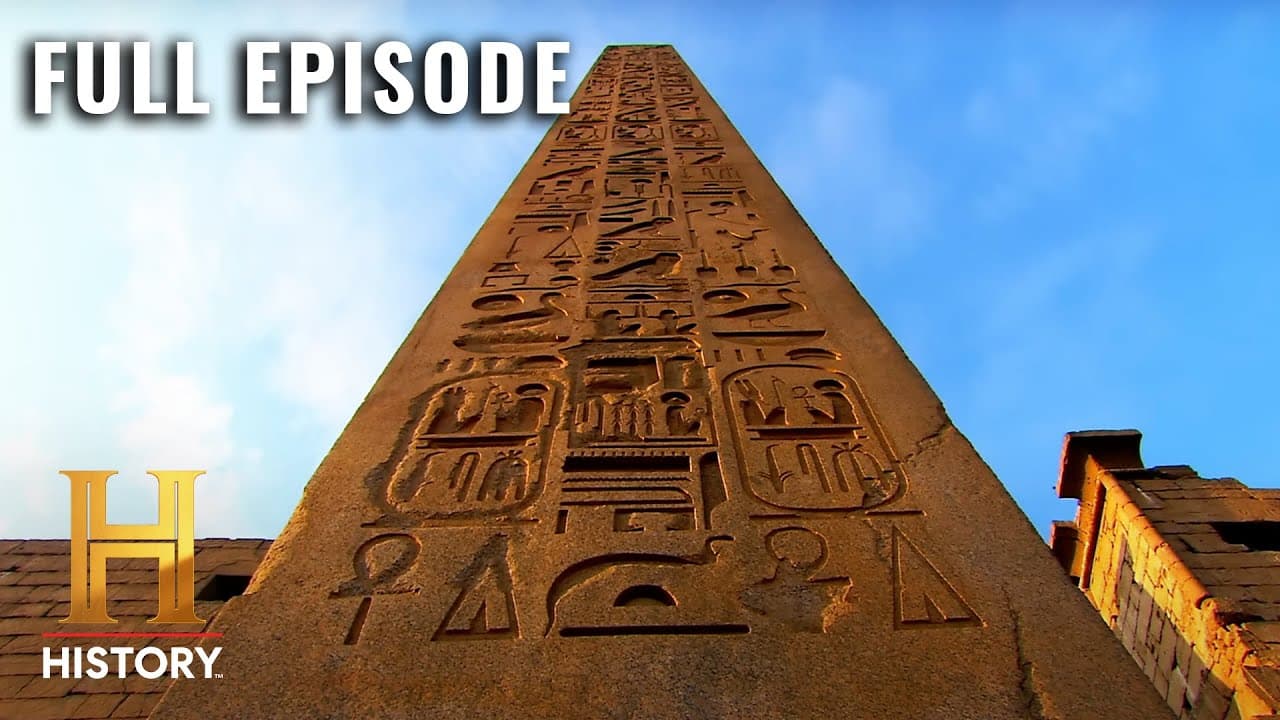
Ramesses II is shown as a superlative builder who expanded Karnak and led a vast program of construction. The episode explains techniques like using ramps to raise 25,000 tons of stone, assembling 134 columns, and carving hieroglyphs with copper chisels and even stone tools. It highlights how public works demonstrated royal power and religious devotion across Egypt.
Transcript
[music playing] NARRATOR: 1300 BC, the mighty Egyptian civilization is in its golden age. Its ruler is Ramesses II, a man who intends to be the greatest of the pharaohs. He will make his mark by building. He built everywhere. NARRATOR: Vast statues, towering obelisks, temples carved from living rock. Ramesses is a giant of a man. He dominates this ... Read More
Key Insights
- Ramesses II is presented as the driving force behind Karnak’s expansion, tying political power to monumental architecture.
- The hypostyle hall required 134 columns with central pillars seven stories high, illustrating the scale of ancient building projects.
- Ancient builders used mud brick ramps and earth to elevate stone blocks, a method that allowed the massive structure to be raised without modern equipment.
- The ramp system avoided long scaffolds by progressively building up ramps and foundations, enabling multi-level construction in a crowded site.
- Wooden pegs and notches were used to align and lock blocks tightly, preventing movement as assembly progressed.
- The construction relied on simple tools, including copper chisels and stone pounders, underscoring a sophisticated plan executed with basic technology.
- Wall paintings and tomb scenes provide critical clues about ramp usage and construction sequence, revealing practical engineering solutions.
- Scaffolding and finishing work were visible in tomb paintings, showing how craftsmen prepared surfaces for massive statues and inscriptions.
- More videos from this channel:
- More from this channel: HISTORY
Install to Summarize YouTube Videos and Get Transcripts
Explore YouTube Video Summarizer or Get YouTube Transcript Extractor
Questions & Answers
Q: A real search query question about the video (e.g. 'How to...', 'What is...', 'Why does...', 'When should...'). Question 1
Ramesses II is shown as taking personal control of Karnak and guiding the project from foundation to completion. The episode explains that the king stretched a cord between poles to survey the temple, hacked earth with a mattock, and performed a ceremony to dedicate the temple to its god. This sequence demonstrates how royal authority and religious ritual framed building activity.
Q: Question 2
The hypostyle hall at Karnak is described as a vast forest of columns, with 134 columns in total and central columns seven stories high. The construction required careful alignment and fastidious finishing, using techniques that could lock stones tightly together. This reveals a sophisticated approach to creating large interior spaces without modern lifting equipment.
Q: Question 3
Mud brick ramps played a crucial role in raising the enormous blocks for the hall. Builders laid foundations, built ramps on either side, placed blocks at successive levels, and extended the ramps outward until the structure reached full height. This method allowed 25,000 tons of stone to be moved up to the columns.
Q: Question 4
Wood and notches were used to align and lock stone blocks during assembly. Pieces of hard wood fitted into cut notches pulled two blocks tightly together, ensuring stability during construction. This technique functioned like a temporary fastener system to keep stones in perfect alignment as work progressed.
Q: Question 5
Scholars identify that the builders dressed surfaces after erecting the columns, using sandstone slabs to finish details and smooth surfaces for hieroglyphic inscriptions. The process shows a division of labor where mass erection occurred first, followed by dedicated craftsmen refining details and inscriptions.
Q: Question 6
Evidence from wall paintings suggests that scaffolding was used during the construction and finishing of large statues. Workers appear to use wooden supports to reach high surfaces, indicating that ancient Egyptians had practical methods to access elevated areas even before iron tools.
Q: Question 7
The episode links Karnak’s expansion to Ramesses II’s broader program of monument building during a time of religious and political upheaval. The king sought to leave a lasting legacy by extending sacred precincts, creating new gateways, and developing urban centers as expressions of imperial power.
Q: Question 8
The documentary emphasizes that ancient Egyptian builders achieved advanced results with copper chisels and basic tools. By reconstructing construction sequences and techniques, researchers can infer how these workers accomplished massive architectural feats and preserved them for millennia, underscoring the ingenuity of early engineering.
Summary & Key Takeaways
-
Ramesses II elevates Karnak through large scale temple expansion and a grand hypostyle hall, showcasing his power and religious devotion.
-
Construction relied on mud brick ramps and wooden supports, allowing massive blocks to rise without cranes, while careful fitting kept stones aligned for centuries.
-
Masons used copper chisels and simple tools to shape stone, with evidence of scaffolding and detailed hieroglyphs that conveyed political and religious messages.
Read in Other Languages (beta)
Share This Summary 📚
Summarize YouTube Videos and Get Video Transcripts with 1-Click
Try YouTube Summary with ChatGPT & Claude or YouTube Transcript Generator
Explore More Summaries from HISTORY 📚





Summarize YouTube Videos and Get Video Transcripts with 1-Click
Try YouTube Summary with ChatGPT & Claude or YouTube Transcript Generator