How do engines power the world and history?
TL;DR
Engines evolved from steam to electric to jet, shaping transport, industry, and power generation. The episode covers steam engines, Watt enhancements, turbines, and alternative designs like Stirling, showing how efficiency and new concepts expanded what machines could do and where they could operate.
Transcript
NARRATOR: They power our lives... from cars to lawnmowers... from ships to steam trains. They've transformed our world, and taken us to the moon. Now, "Engines" on Modern Marvels. Captioning sponsored by A&E TELEVISION NETWORKS It's no accident that the root word of engine is "ingenious." For three centuries, these ingenious designs have be... Read More
Key Insights
- Steam engines replaced animal power, enabling faster, more reliable movement of materials and expanding geographic reach for work and travel.
- James Watt introduced a Flying Ball Governor that regulated steam flow to keep engines running steadily at a uniform pace.
- By 1800, over 1,500 steam engines were in use across Britain, Europe, and the United States, powering mills and machinery, accelerating industrial growth.
- Steam turbines offered a more compact, higher temperature, and higher expansion alternative to piston engines, leading to their dominance in ships and electricity generation by the early 20th century.
- The Stirling engine, developed in 1816, is a low pressure engine that uses heat and cool cycles, reducing explosion risk while enabling safe, efficient operation.
- The Corliss governor improved steady operation in textile mills by regulating steam intake, enabling more reliable and continuous power delivery to machinery.
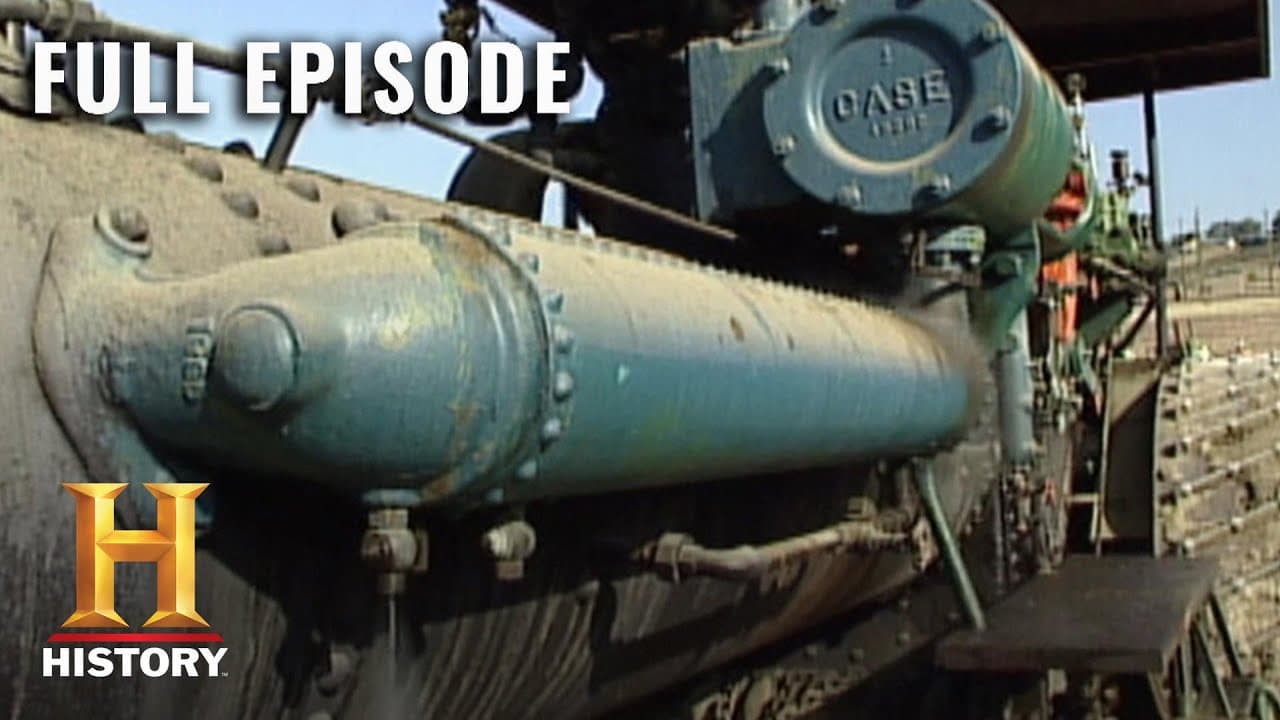
- Steam engines found diverse applications beyond factories, powering steamships, locomotives, and large agricultural machines, illustrating their adaptability and impact on agriculture and transportation.
- Nuclear steam turbines now power many electricity generators and naval vessels, showing how steam-based power continues to underpin modern energy and defense systems.
- More videos from this channel:
- More from this channel: HISTORY
Install to Summarize YouTube Videos and Get Transcripts
Explore YouTube Video Summarizer or Get YouTube Transcript Extractor
Questions & Answers
Q: How did steam engines contribute to the Industrial Revolution and urban development?
Steam engines enabled faster and more reliable movement of goods and people, which reduced dependence on horses and traditional transport limits. They powered factory machines, trains, ships, and agricultural equipment, connecting distant regions, expanding markets, and allowing urban centers to grow as labor and resources could move more efficiently. This shift accelerated industrialization and reshaped daily life.
Q: What was the significance of James Watt's Flying Ball Governor?
James Watt's Flying Ball Governor used centrifugal force to sense engine speed and automatically regulate the steam valve, preventing overspeed and maintaining a steady, uniform motion. This invention made steam engines practical for continuous machine operation, improving reliability and efficiency in factories and mills, and helping industrial processes become more predictable.
Q: How did steamships change transatlantic travel and trade?
Steamships introduced reliable, year-round crossings across the Atlantic, reducing travel time and extending operational windows for commerce. They used large paddle wheels powered by steam engines, enabling ships to move independently of wind and sail conditions, which expanded trade routes and contributed to global economic integration.
Q: What led to the shift from steam piston engines to steam turbines?
Steam turbines offered greater power in a more compact package with higher temperatures and expanded steam usage, allowing more efficient energy conversion. They gradually replaced piston engines on major vessels by the early 20th century, enabling faster ships, more efficient factories, and a shift toward centralized electricity generation.
Q: Why is the Stirling engine considered safer or advantageous in some contexts?
The Stirling engine operates on a hot air principle, using external heat rather than internal combustion, which reduces the risk of high-pressure explosions. Its lower operating pressures and sealed system make it attractive for demonstrations, education, and niche power applications where safety and reliability are prioritized.
Q: What role did the Corliss governor play in industrial power usage?
The Corliss governor allowed steam engines to run more steadily by regulating throttle and steam intake in response to load, preventing speed fluctuations. This steadier operation was crucial for textile mills and other industries that required consistent power, improving efficiency, output, and machine lifespan across factories.
Q: How did early engines influence agriculture and rural life?
Steam engines empowered large agricultural machines and steam-powered tractors, transforming farming operations by providing heavy, reliable power for land preparation, processing, and harvesting. This mechanization increased productivity, reduced labor requirements, and helped bridge rural and urban economies as farming could scale to meet growing demand.
Q: What is the modern relevance of steam power in today’s energy landscape?
Steam-based power remains central to electricity generation through steam turbines in many power plants, including nuclear facilities, highlighting a continuous thread from historic steam engines to contemporary energy infrastructure. Despite modernization, the underlying principle of converting heat to mechanical work via steam continues to underpin much of today’s electrical grid.
Summary & Key Takeaways
-
Steam engines sparked the Industrial Revolution by replacing animal power and enabling faster material handling across distances, which transformed cities and rural life alike.
-
The show highlights key milestones such as James Watt's improvements and the adoption of steam turbines for ships and power plants, underscoring a shift from piston to turbine power.
-
The narrative culminates with modern developments like electric motors, nuclear steam turbines, and the Stirling engine, illustrating a continuum of engine innovation that powers today’s world.
Read in Other Languages (beta)
Share This Summary 📚
Summarize YouTube Videos and Get Video Transcripts with 1-Click
Try YouTube Summary with ChatGPT & Claude or YouTube Transcript Generator
Explore More Summaries from HISTORY 📚


Summarize YouTube Videos and Get Video Transcripts with 1-Click
Try YouTube Summary with ChatGPT & Claude or YouTube Transcript Generator