How Did Nikola Tesla Envision Wireless Power?
TL;DR
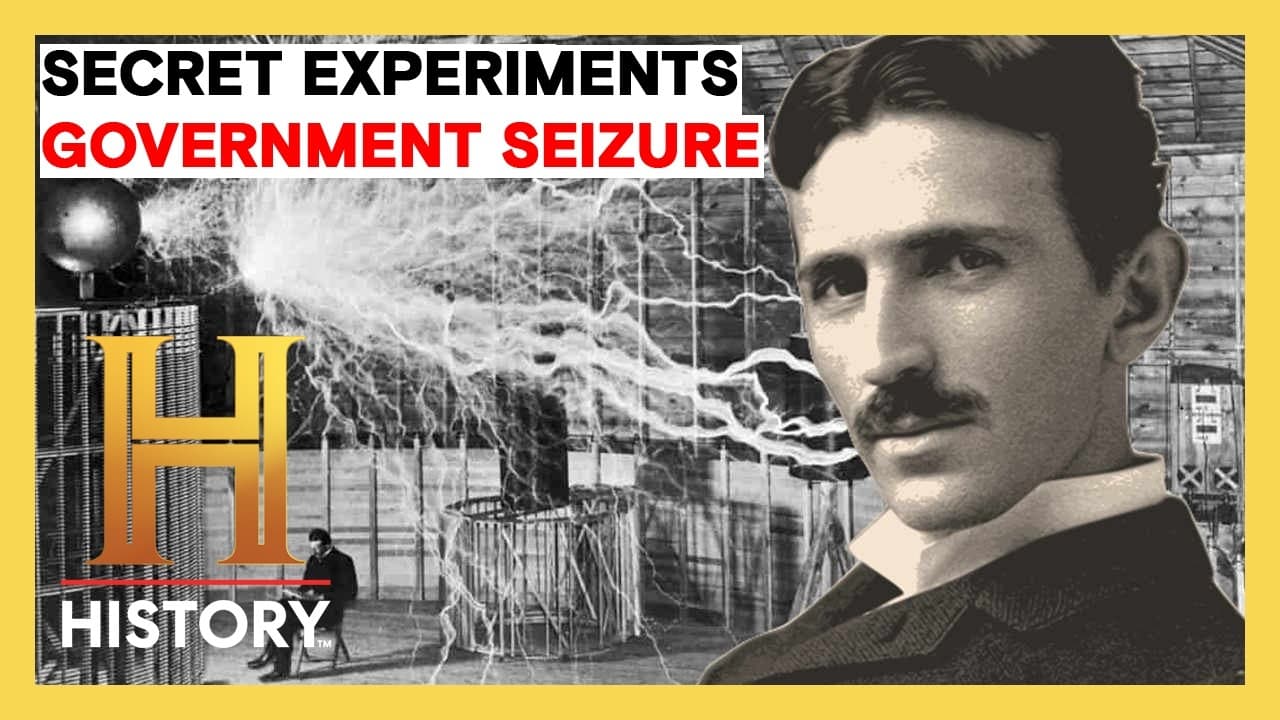
Nikola Tesla’s alternating-current system prevailed over Edison’s direct-current model and became the foundation of the world’s power grid. He also pursued wireless electricity through experiments at Colorado Springs and Wardenclyffe Tower, while the program explores disputed claims that extraterrestrial communication, unusual visions, or hidden knowledge influenced his inventions.
Transcript
NARRATOR: He is the man who harnessed lightning. He really is the quintessential wizard. NARRATOR: He envisioned new technologies far before their time. RABBI ARIEL BAR TZADOK: These images would burst into his mind. NARRATOR: He also claimed to have contact with otherworldly beings. DAVID CHILDRESS: You have to wonder if extraterrestrials themselv... Read More
Key Insights
- • Tesla’s alternating-current system became the foundation of the world’s power grid because electricity could be manipulated during transmission and used for more than lighting. The program contrasts this capability with Edison’s direct-current network, which lost potency over distance and required closely spaced power plants.
- • The war of the currents was a contest between Edison’s direct-current system and Tesla’s alternating-current design. Edison publicly portrayed alternating current as dangerous, even using it to electrocute animals, but Tesla’s system ultimately prevailed in the competition to electrify society.
- • Tesla’s inventive legacy included work on electric railroads, fluorescent and neon lights, wireless radio communication, X-rays, remote control, turbine engines, speedometers, helicopters, and torpedoes. According to the program, he held nearly 700 patents worldwide by the time of his death.
- • Tesla’s concept of progress distinguished benefits to humanity from technology alone. The program attributes to him the view that polluting technology does not qualify as progress, connecting his inventive ambitions with concern about the environmental costs of steam, coal, factories, railways, and roads.
- • Tesla’s Colorado Springs experiments were intended to test whether electricity could travel wirelessly across substantial distances. The program describes bulbs inserted into the Earth lighting through a ground-based circuit, while also stating that Tesla kept important mechanical details secret, even from his assistant.
- • Wardenclyffe Tower was conceived as more than the radio station Tesla initially described to financier JP Morgan. Tesla envisioned multiple receiving stations at nodal points around Earth, allowing energy to move wirelessly from station to station and potentially, in his thinking, between planets.
- • Tesla’s papers became a source of enduring speculation after his death on January 7, 1943. The program says his technical papers and notebooks had been removed when his nephew reached his hotel room, while the official account held that nothing exceptionally significant was discovered.
- • Extraterrestrial influence is presented as a controversial hypothesis rather than a demonstrated explanation for Tesla’s genius. Ancient-astronaut theorists interpret his visions, reported communications, and unusually advanced concepts as possible outside guidance, but the program frames the central question as unresolved speculation.
Install to Summarize YouTube Videos and Get Transcripts
Explore YouTube Video Summarizer or Get YouTube Transcript Extractor
Questions & Answers
Q: How did Nikola Tesla’s alternating-current system work better than direct current?
Tesla’s alternating-current system could be manipulated as electricity traveled through a distribution network, allowing it to supply lighting and other electrical devices across much greater distances. Edison’s direct-current system lost potency along the line, required power plants every half mile, and could provide only enough power for light bulbs, according to the program. Tesla’s approach ultimately prevailed and became the foundation of the world’s power grid.
Q: What was the war of the currents between Tesla and Edison?
The war of the currents was the rivalry between Thomas Edison’s direct-current distribution system and Nikola Tesla’s alternating-current design. A major prize was the right to harness Niagara Falls and supply power across the Northeast. Edison argued that alternating current was dangerous and staged public animal electrocutions, but Tesla’s more capable system won and helped make electricity broadly useful throughout society.
Q: How did Nikola Tesla test wireless electricity at Colorado Springs?
Tesla traveled to Colorado Springs in 1899 to 1900 to investigate whether electricity could be transmitted wirelessly for miles. He used a tower reaching 200 feet at the top and instructed an assistant to activate the system. Tesla then placed light bulbs into the Earth miles away. The program says the bulbs lit, indicating that his tower had created a wireless electrical circuit through the ground.
Q: What was Nikola Tesla trying to accomplish with Wardenclyffe Tower?
Tesla used $150,000 from banker JP Morgan to construct Wardenclyffe Tower after initially obtaining support for a radio station. The structure rose 187 feet and extended 120 feet underground. Tesla envisioned similar receiving stations at nodal points around Earth, with electricity moving wirelessly between them. He hoped this system could provide power globally and even imagined using the same principle to transmit energy to other planets.
Q: Why did funding for Wardenclyffe Tower end?
The program says JP Morgan discovered that Tesla’s actual goal was to create a highly efficient wireless electricity system that could provide free power to everyone on the planet. Morgan had supplied $150,000 for what was described as a radio station. After learning of Tesla’s broader intentions, he did not provide additional funding, cutting short Tesla’s attempt to complete the Wardenclyffe project.
Q: What inventions and technologies are attributed to Nikola Tesla?
The program credits Tesla with groundbreaking work involving alternating-current electricity, electric railroads, fluorescent and neon lights, wireless radio communication, X-rays, remote control, turbine engines, speedometers, helicopters, and torpedoes. It states that he held nearly 700 patents worldwide when he died. His alternating-current system is identified as his central achievement because it remains the foundation of the world’s electrical power grid.
Q: What happened to Nikola Tesla’s papers after his death?
Nikola Tesla died of a heart attack on January 7, 1943, on the 33rd floor of the Hotel New Yorker. When his nephew arrived at room 3327, Tesla’s remains, technical papers, and notebooks had already been removed. The program discusses speculation that United States government agents seized and classified them, while also stating that the official account found no material of exceptional significance.
Q: Did extraterrestrials give Nikola Tesla knowledge for his inventions?
The program presents extraterrestrial assistance as a speculative ancient-astronaut hypothesis, not a proven fact. Its proponents interpret Tesla’s sudden mental images, claimed communications with otherworldly beings, unusual radio signals, and ideas far ahead of accepted technology as possible evidence that he received outside information. The episode repeatedly asks whether such influence occurred, but the supplied material provides no conclusive demonstration that extraterrestrials guided his work.
Summary & Key Takeaways
-
Nikola Tesla developed an alternating-current system that could transmit useful electricity more effectively than Edison’s direct-current network. Their rivalry, called the war of the currents, centered partly on harnessing Niagara Falls. Tesla’s approach prevailed and enabled electricity to power lighting and many other devices across much greater distances.
-
Tesla pursued wireless power at Colorado Springs, where the program says he used a large tower and placed light bulbs in the Earth to test a ground-based electrical circuit. He later built Wardenclyffe Tower, envisioning receiving stations at nodal points that could relay energy around the planet without conventional wires.
-
The program combines Tesla’s documented inventions with controversial ancient-astronaut speculation. It discusses his intense mental images, reported reception of unusual radio signals, interest in transmitting energy between planets, and the removal of his papers after his death. These elements are presented as possible evidence of extraterrestrial influence, not as established conclusions.
Read in Other Languages (beta)
Share This Summary 📚
Summarize YouTube Videos and Get Video Transcripts with 1-Click
Try YouTube Summary with ChatGPT & Claude or YouTube Transcript Generator
Explore More Summaries from HISTORY 📚


Summarize YouTube Videos and Get Video Transcripts with 1-Click
Try YouTube Summary with ChatGPT & Claude or YouTube Transcript Generator