How to Do a 30-Minute Dumbbell Leg Workout
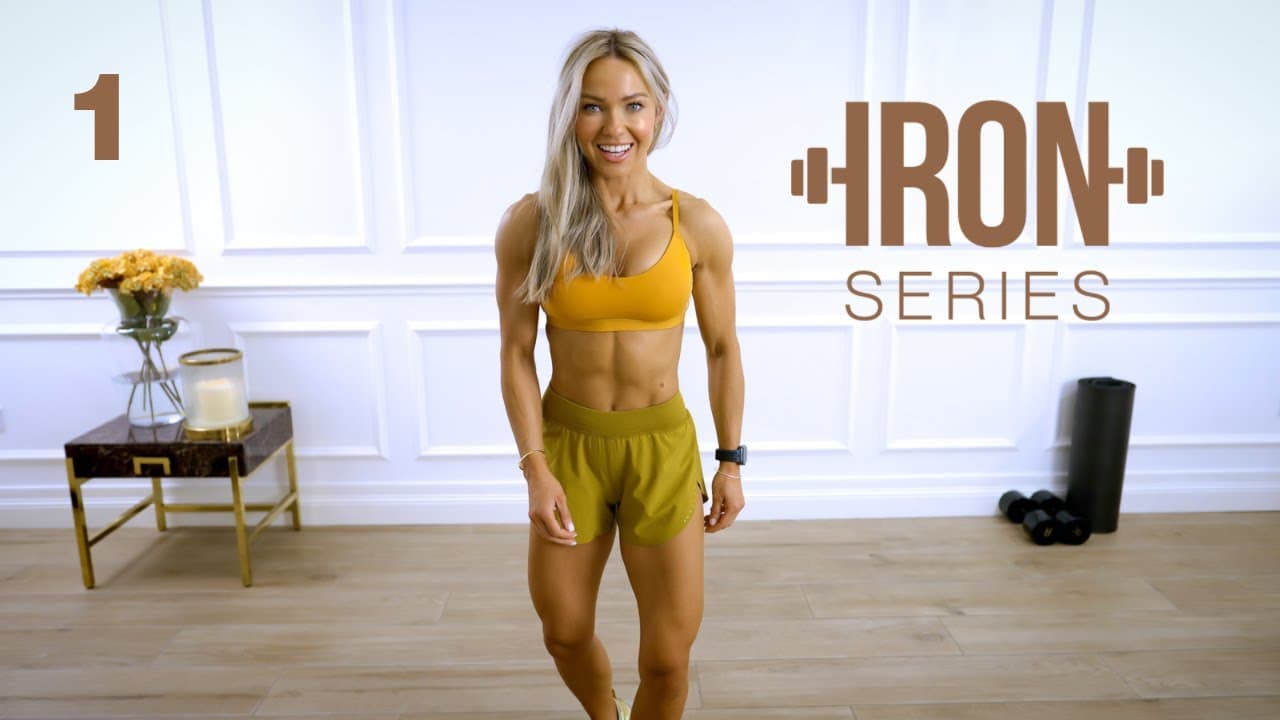
TL;DR
Perform controlled compound leg movements for one minute, rest for 30 seconds, and aim for roughly 8–15 reps during each working interval. Choose weights that permit a comfortable range of motion, and if the dumbbells feel light, slow both phases of each repetition to increase time under tension instead of simply doing more reps.
Transcript
- Hi everyone and welcome day one in the IRON Series. And today it's leg day. But before we get into the actual workout, I just wanna run through a few little things relating to this series. So, this series is six weeks in total, and there will be five workouts per week. Each workout will be approximately 30 minutes. That will exclude the cool down... Read More
Key Insights
- The leg workout uses one-minute work periods followed by 30 seconds of rest. Participants are generally aiming for approximately 8–15 repetitions within each minute, although the suitable number depends on the exercise and the weight available.
- Controlled range of motion is the main performance goal. Exercise depth, foot position, and available movement can differ between individuals, so adjustments such as slightly turning out the toes during squats should reflect personal comfort and mobility.
- Slower repetitions can make lighter weights more demanding. Controlling both the lowering and lifting phases of a lunge increases time under tension, allowing participants to focus on movement quality instead of compensating with more repetitions.
- Compound movements recruit the entire lower body during the session. The workout is designed to involve as much muscle as possible within each repetition while giving participants continued practice with foundational dumbbell movement patterns.
- A whole-body warmup should precede every session, including workouts focused on only one region. The suggested warmup lasts approximately five to ten minutes because holding dumbbells and stabilizing movements can involve the back, core, legs, and upper body together.
- The IRON Series lasts six weeks and schedules five approximately 30-minute workouts each week. A typical week contains two lower-body workouts, two upper-body workouts, and one full-body session, with cooldown time excluded from the stated workout duration.
- The mind-muscle connection means thinking about the target muscles contracting rather than merely moving a weight between two positions. The description presents every workout as a practice session in which participants can repeatedly develop this intentional approach to lifting.
- Equipment choices can be adapted to what is available. Dumbbells are the primary tool, but barbells and kettlebells can substitute, normal lunges can replace uncomfortable step-ups, and chair dips can be used when dip bars are unavailable.
Install to Summarize YouTube Videos and Get Transcripts
Explore YouTube Video Summarizer or Get YouTube Transcript Extractor
Questions & Answers
Q: How do you structure this 30-minute dumbbell leg workout?
The workout is structured around one minute of work followed by 30 seconds of rest. Most exercises are compound movements intended to work the entire lower body. During each working minute, aim for roughly 8–15 controlled repetitions, depending on the exercise and your chosen weight. The stated workout duration excludes the cooldown, and a separate whole-body warmup should be completed beforehand.
Q: How many repetitions should you do during each exercise?
Aim for approximately 8–15 repetitions during each one-minute working interval. The appropriate total depends on both the exercise and the dumbbells you have available. Repetition quality remains more important than reaching the top of the range. If your weights are lighter than you would normally select, slow the lowering and lifting phases rather than trying to complete as many repetitions as possible.
Q: How can you make light dumbbells harder during leg exercises?
Make light dumbbells more challenging by deliberately slowing each repetition and increasing time under tension. During a lunge, for example, control the descent and the return instead of moving quickly to accumulate extra repetitions. This approach preserves the emphasis on controlled movement and muscle recruitment while allowing the available equipment to provide a more demanding training stimulus.
Q: What equipment is needed for the IRON Series?
Dumbbells and a mat are the main equipment used throughout the series. Some sessions may also use a chair for Bulgarian lunges or decline pushups, a yoga block or another sturdy object for heel elevation, a high-resistance fabric glute band, and a stable platform for step-ups. Barbells, kettlebells, and dip bars may be used as alternatives when available.
Q: How should you warm up before a dumbbell workout?
Complete a whole-body warmup lasting approximately five to ten minutes before starting. Warming only the body region named in the workout is not advised because exercises recruit additional areas. During leg training, holding dumbbells also involves the back, core, and upper body. Upper-body sessions can similarly involve the legs during movements such as renegade rows.
Q: How should you adjust leg exercises to your mobility?
Use the full range of motion that you can perform comfortably and with control, recognizing that movement differs between individuals. Squat depth, foot position, and joint range do not need to look identical for everyone. You might turn your toes slightly outward during squats or lower Romanian deadlifts only toward the knees. Step-ups can be replaced with normal lunges if they feel uncomfortable.
Q: What is the weekly schedule for the IRON Series?
The series runs for six weeks with five workouts each week, and every workout lasts approximately 30 minutes before the cooldown. A typical week includes two lower-body-focused sessions, two upper-body-focused sessions, and one full-body workout. The Friday full-body session combines different dumbbell exercises, while arms or core and abdominal work typically appears on Sunday alongside an optional suggested cardio or HIIT workout.
Q: How does the mind-muscle connection apply to lifting?
The mind-muscle connection involves intentionally thinking about the working muscles contracting instead of focusing only on moving the weight from one point to another. In a bent-over row, for example, the goal is to think about the back muscles contracting rather than simply drawing the elbows upward. Repeatedly practicing this focus may help the approach feel more natural during future lifting sessions.
Summary & Key Takeaways
-
The first IRON Series session is a roughly 30-minute leg workout built primarily around compound dumbbell movements that recruit the entire lower body. Each exercise uses a one-minute working interval followed by 30 seconds of rest. The trainer uses two 15-kilogram dumbbells, but participants should select weights suited to their abilities.
-
Good repetitions require control through the available range of motion, not identical depth or foot placement for every participant. Squat toe angle, Romanian deadlift depth, and other details can be adjusted for comfort. When weights are relatively light, slower repetitions can maintain difficulty by increasing time under tension without chasing a higher repetition count.
-
The six-week IRON Series includes five workouts per week, typically divided into two lower-body sessions, two upper-body sessions, and one full-body workout. Participants should complete a five-to-ten-minute whole-body warmup first. Most sessions use dumbbells, while some finishers and core-focused exercises rely more heavily on body weight.
Read in Other Languages (beta)
Share This Summary 📚
Summarize YouTube Videos and Get Video Transcripts with 1-Click
Try YouTube Summary with ChatGPT & Claude or YouTube Transcript Generator
Explore More Summaries from Caroline Girvan 📚


Summarize YouTube Videos and Get Video Transcripts with 1-Click
Try YouTube Summary with ChatGPT & Claude or YouTube Transcript Generator