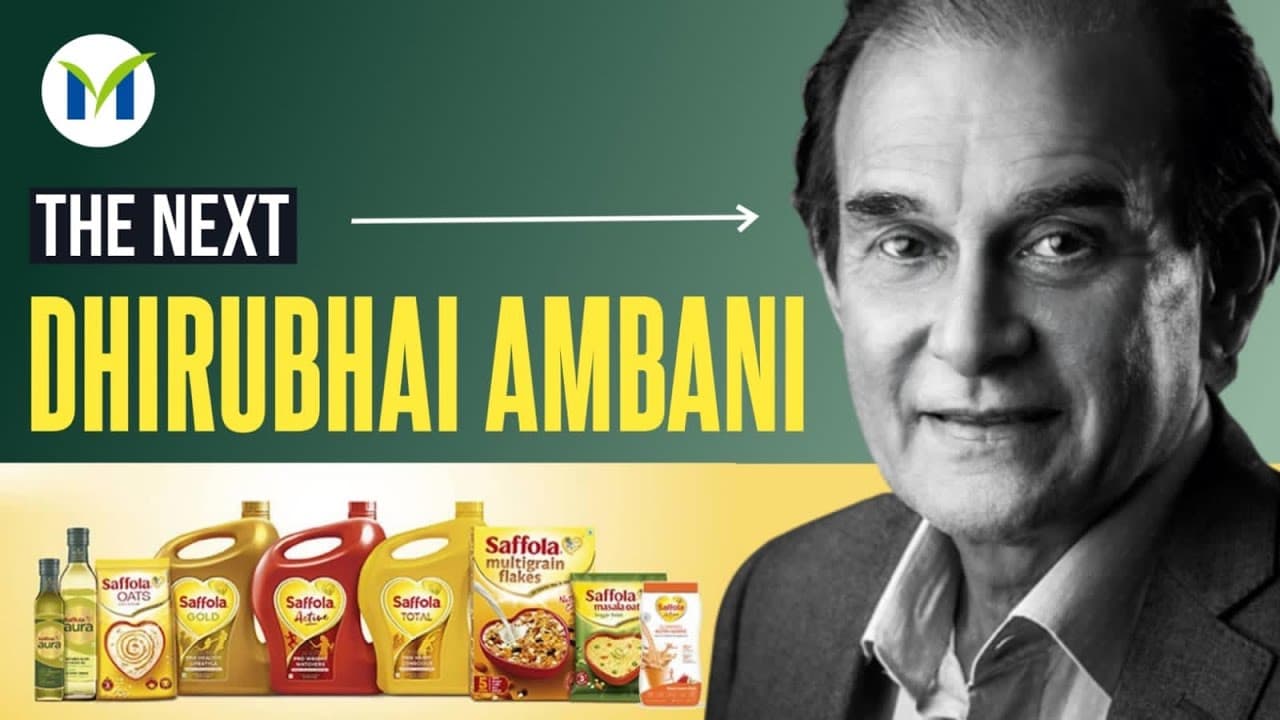
How Did Marico’s Saffola Beat ITC and Hindustan Unilever in India’s Edible Oil War?
TL;DR
Saffola dominated India’s ultra-premium edible oil segment by establishing medical credibility, educating consumers about heart risks, and expanding from heart patients to a prevention market described as 10 times larger. When ITC and HUL introduced cheaper rivals, Marico protected Saffola’s premium positioning by launching Sweekar Sunflower for the lower-priced segment. Read on to see how this two-brand strategy defended market share and margins.
Transcript
hi everybody suffola is one of the most legendary companies in the indian business history in the past 21 years the stock price of its parent company mariko has shot up by 17 200 going from just 2.67 rupees to 487 rupees in 2022 and if you look at the market share of surface category it stood at an insane market share of 81 percent as of 2021 and t... Read More
Key Insights
- Saffola originated from a clear product gap: heart patients wanted refined safflower oil, but the crude oil available in the market tasted bitter, while the limited refining companies were largely unbranded and unreliable.
- First-mover advantage did not eliminate Saffola’s marketing challenge because consumers and medical professionals initially lacked awareness of the product. The company therefore needed to educate the market about both safflower oil and heart health before demand could grow.
- Medical credibility was central to Saffola’s early growth. The brand worked with institutions including Escorts Health Institute and Bombay Hospital, held conferences among cardiologists, and sought recommendations that could convert heart patients into long-term customers.
- Consumer education created trust before purchase. Saffola organized awareness campaigns, free cholesterol checks, and a Dial-a-Dietitian program, providing advice about diet and lifestyle that positioned the brand as dependable and concerned with customer health.
- Heart disease prevention offered a market described as ten times larger than the existing patient segment. Saffola expanded its audience by highlighting obesity, hypertension, diabetes, and smoking as four risk factors through television, radio, and newspaper campaigns.
- Household decision-makers shaped Saffola’s advertising strategy. Commercials portrayed wives concerned about the health of men over 45 who were obese, recognizing that men might consume the oil while women commonly decided which cooking oil the household purchased.
- A separate low-cost brand protected Saffola’s premium positioning. Instead of cutting Saffola’s price when HUL and ITC offered products five to ten percent cheaper, Marico introduced Sweekar Sunflower to compete directly in the lower-priced segment.
- Premium margins mattered more than volume alone. By 1998, Sweekar generated revenue of 100 crore rupees and sold three times Saffola’s volume, yet contributed only one-third of Saffola’s unit margin, demonstrating the profitability of Saffola’s premium position.
Install to Summarize YouTube Videos and Get Transcripts
Explore YouTube Video Summarizer or Get YouTube Transcript Extractor
Questions & Answers
Q: How did Marico’s Saffola become a leading edible oil brand in India?
Saffola addressed demand for dependable refined safflower oil, then built credibility through doctors, hospitals, cardiologist conferences, heart-health campaigns, and free cholesterol checks. It subsequently expanded beyond heart patients to consumers interested in preventing heart disease, creating a much larger market while retaining its premium positioning.
Q: What market gap led to the launch of Saffola?
Heart patients wanted safflower oil, but the crude product available in the market tasted very bitter. Refining companies were scarce, unbranded, and unreliable, so the Mariwala family launched Saffola through Bombay Oil Company in 1965 as a branded, refined alternative.
Q: How did Saffola earn the trust of doctors and patients?
Saffola partnered with institutions including Escorts Health Institute and Bombay Hospital and held conferences among cardiologists. It also ran awareness campaigns, provided free cholesterol checks, and created a Dial-a-Dietitian program through which people could seek diet and lifestyle advice.
Q: Why did Saffola shift its marketing from heart treatment to prevention?
The heart-patient segment was too small for an FMCG product and risked making Saffola appear suitable only for sick people. Consumers seeking to prevent heart disease represented a market described as 10 times larger, so the brand began highlighting obesity, hypertension, diabetes, and smoking as risk factors.
Q: How did Saffola use advertising to influence household purchases?
Saffola used television, radio, and newspaper campaigns to connect its brand with reducing heart-disease risks. Some commercials portrayed wives concerned about the health of obese men over 45, reflecting that men might consume the oil while women commonly selected the household’s cooking oil.
Q: How did Marico respond to competition from HUL’s Flora and ITC’s Sun Drop?
Flora and Sun Drop competed with intensive advertising and prices 5% to 10% below Saffola. Instead of discounting its premium brand, Marico launched Sweekar Sunflower to compete in the lower-priced segment while preserving Saffola’s identity and margins.
Q: What results did Marico achieve with Saffola and Sweekar Sunflower?
Together, Saffola and Sweekar reached a 14% share of the refined edible oil market by 1991. By 1998, Sweekar generated 100 crore rupees in revenue and sold three times Saffola’s volume, although its unit margin was only one-third of Saffola’s.
Q: What business lessons come from Saffola’s growth strategy?
Saffola’s rise shows how a brand can create demand by educating consumers and earning credibility before emphasizing sales. Marico also protected its premium brand by introducing a separate lower-cost product, allowing it to defend market share without sacrificing Saffola’s stronger margins.
Summary & Key Takeaways
-
Saffola began after the Mariwala family recognized unmet demand for refined safflower oil among heart patients. The available crude oil tasted bitter, refining options were scarce and unreliable, and doctors lacked a dependable product to recommend. Bombay Oil Company responded by launching Saffola in 1965 as a branded, refined alternative.
-
Saffola built trust through doctors, hospitals, cardiologists, health campaigns, free cholesterol checks, and a Dial-a-Dietitian program. It later expanded beyond existing patients to the much larger prevention market. Consistent television, radio, and newspaper messaging connected the brand with reducing heart disease risks such as obesity, hypertension, diabetes, and smoking.
-
When HUL’s Flora and ITC’s Sun Drop competed through intensive advertising and prices five to ten percent below Saffola, Marico avoided discounting its premium brand. It launched Sweekar Sunflower for the lower-priced segment. Together, Sweekar and Saffola reached a 14 percent refined edible oil market share by 1991 while preserving Saffola’s stronger margins.
Read in Other Languages (beta)
Share This Summary 📚
Summarize YouTube Videos and Get Video Transcripts with 1-Click
Try YouTube Summary with ChatGPT & Claude or YouTube Transcript Generator
Explore More Summaries from Think School 📚





Summarize YouTube Videos and Get Video Transcripts with 1-Click
Try YouTube Summary with ChatGPT & Claude or YouTube Transcript Generator