How to Master Azure Data Services in 2025
TL;DR
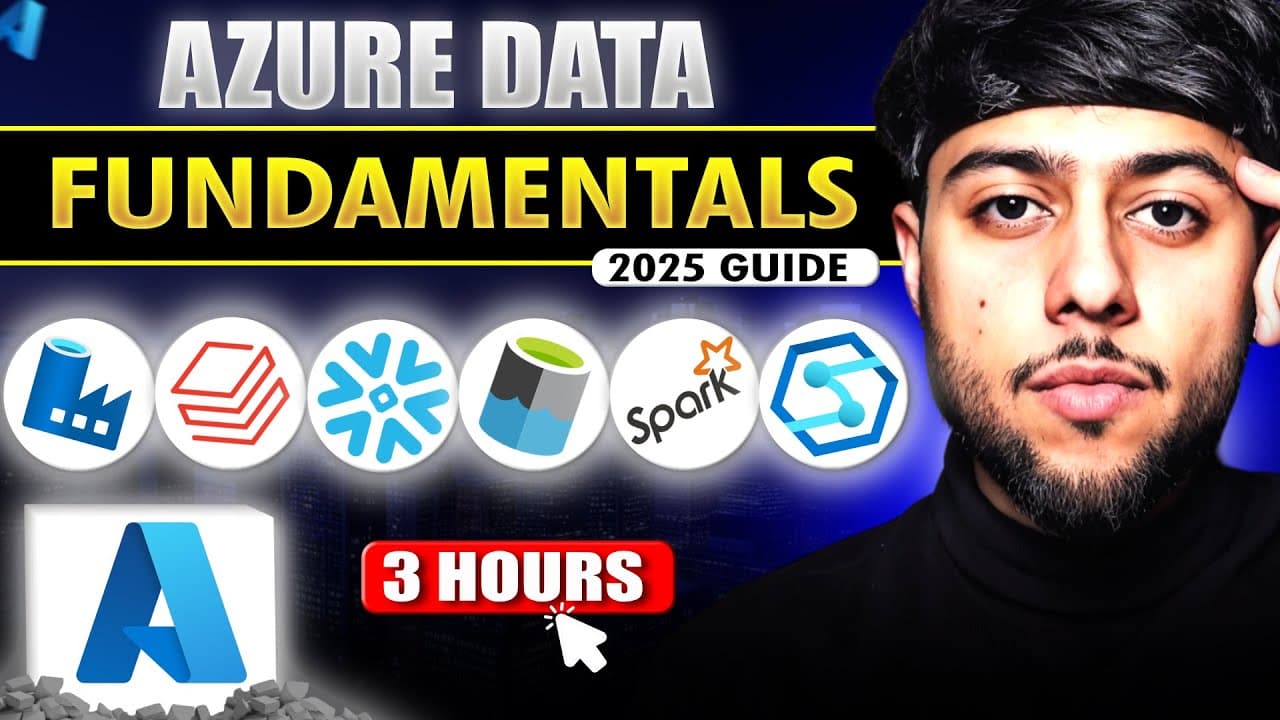
Azure's demand in data roles is booming in 2025. This comprehensive 3-hour guide covers essential Azure services like Azure SQL Database, Cosmos DB, Data Lake, and more, with practical sessions for hands-on experience. Learn to create Azure resources, understand cloud computing types, and manage data redundancy, making you a proficient Azure data engineer.
Transcript
the demand of Azure in the data space is growing exponentially and everyone wants to crack an Azure data role in 2025 but we have so many services in Azure and what are the ones for data domain what are the required fundamental knowledge and what are the best resources all these questions will be answered today because this 3 hours long video will ... Read More
Key Insights
- Azure's demand in the data space is growing rapidly, making it a valuable skill for data engineers.
- Azure offers a variety of services for different data formats: structured, semi-structured, and unstructured.
- Azure SQL Database is a cloud-based service for structured data, similar to traditional SQL databases.
- Azure Cosmos DB is designed for semi-structured data, offering multiple APIs for flexibility.
- Azure Data Lake is built on top of blob storage, providing a scalable solution for unstructured data.
- Azure provides robust data redundancy policies, ensuring high availability and fault tolerance.
- Creating an Azure free account allows users to explore services with $200 credit for 30 days.
- Azure's cloud services are categorized into IaaS, PaaS, and SaaS, each offering different levels of management and flexibility.
Install to Summarize YouTube Videos and Get Transcripts
Explore YouTube Video Summarizer or Get YouTube Transcript Extractor
Questions & Answers
Q: How to create an Azure free account?
To create an Azure free account, visit the Azure website and click on 'Try Azure for free.' You'll need a Microsoft account and a credit card for verification, though you won't be charged. The free account provides $200 credit for 30 days to explore various Azure services.
Q: What are the types of cloud services in Azure?
Azure offers three types of cloud services: Infrastructure as a Service (IaaS), Platform as a Service (PaaS), and Software as a Service (SaaS). IaaS provides virtualized computing resources, PaaS offers a platform for building applications, and SaaS delivers software applications over the internet.
Q: How does Azure ensure data redundancy?
Azure ensures data redundancy through policies like Locally Redundant Storage (LRS), Zone Redundant Storage (ZRS), Geo-Redundant Storage (GRS), and Geo-Zone Redundant Storage (GZRS). These policies replicate data across multiple data centers and regions, ensuring high availability and fault tolerance.
Q: What is Azure SQL Database used for?
Azure SQL Database is a cloud-based service for structured data, similar to traditional SQL databases. It offers scalability, high availability, and security, making it suitable for applications requiring relational data storage and management.
Q: What is Azure Cosmos DB, and how is it used?
Azure Cosmos DB is a globally distributed, multi-model database service designed for semi-structured data. It supports multiple APIs, including SQL, MongoDB, and Cassandra, allowing flexible data modeling and querying options, making it ideal for modern application development.
Q: How does Azure Data Lake work?
Azure Data Lake is built on top of blob storage, providing a scalable and secure solution for storing and analyzing large volumes of unstructured data. It supports hierarchical file storage, making it easy to manage and process big data workloads.
Q: What are Azure's data redundancy policies?
Azure's data redundancy policies include Locally Redundant Storage (LRS), Zone Redundant Storage (ZRS), Geo-Redundant Storage (GRS), and Geo-Zone Redundant Storage (GZRS). These policies ensure data is replicated across multiple locations, providing high availability and disaster recovery options.
Q: What is the difference between Azure Blob Storage and Azure Data Lake?
Azure Blob Storage is a service for storing large amounts of unstructured data, such as text or binary data. Azure Data Lake, built on top of blob storage, provides additional features like hierarchical namespace and is optimized for big data analytics, supporting various data formats and processing frameworks.
Summary & Key Takeaways
-
Azure is increasingly in demand for data roles, and this tutorial covers essential Azure services, including Azure SQL Database, Cosmos DB, and Data Lake, with practical sessions for hands-on learning. It provides a comprehensive understanding of Azure's cloud computing types, data redundancy policies, and how to create resources.
-
The video explains the differences between IaaS, PaaS, and SaaS in Azure, highlighting the levels of management and flexibility each offers. It also covers data availability zones, ensuring high availability and fault tolerance for Azure services.
-
Key Azure services for data include Azure SQL Database for structured data, Cosmos DB for semi-structured data, and Data Lake for unstructured data. The tutorial also guides on setting up an Azure free account to explore these services with $200 credit for 30 days.
Read in Other Languages (beta)
Share This Summary 📚
Summarize YouTube Videos and Get Video Transcripts with 1-Click
Try YouTube Summary with ChatGPT & Claude or YouTube Transcript Generator
Explore More Summaries from Ansh Lamba 📚

![Apache Spark - The Ultimate Guide [From ZERO To PRO] thumbnail](/_next/image?url=https%3A%2F%2Fi.ytimg.com%2Fvi%2FFNJze2Ea780%2Fhqdefault.jpg&w=750&q=75)


Summarize YouTube Videos and Get Video Transcripts with 1-Click
Try YouTube Summary with ChatGPT & Claude or YouTube Transcript Generator