How Does Generative AI Create New Content?
TL;DR
Generative AI creates new content by predicting and generating outputs from patterns learned during training, rather than retrieving prewritten answers or merely classifying existing data. Modern systems became possible through transformer architecture, vast digital datasets, and increased computing power, while fine-tuning and human feedback help them follow instructions and avoid harmful content.
Transcript
Hi, my name is Drew Bent and I'm a teacher, programmer, and member of technical staff at Enthropic. Welcome to our exploration of generative AI. In this video, we'll dive into what generative AI actually is, how it works under the hood, and the technological breakthroughs that made these systems possible. You might interact with generative AI daily... Read More
Key Insights
- Generative AI is artificial intelligence that creates new content rather than only analyzing or categorizing existing information. A traditional system might classify an email as spam, while a generative system can compose a completely new email that did not previously exist.
- Large language models are generative AI systems trained to predict and produce human language. They are described as large because they contain billions of parameters, mathematical values that influence how information is processed and function somewhat like synaptic connections in a brain.
- The transformer architecture is a major development from 2017 that improved how AI processes sequences of text. It maintains relationships between words across long passages, helping language models interpret words and ideas within their broader context.
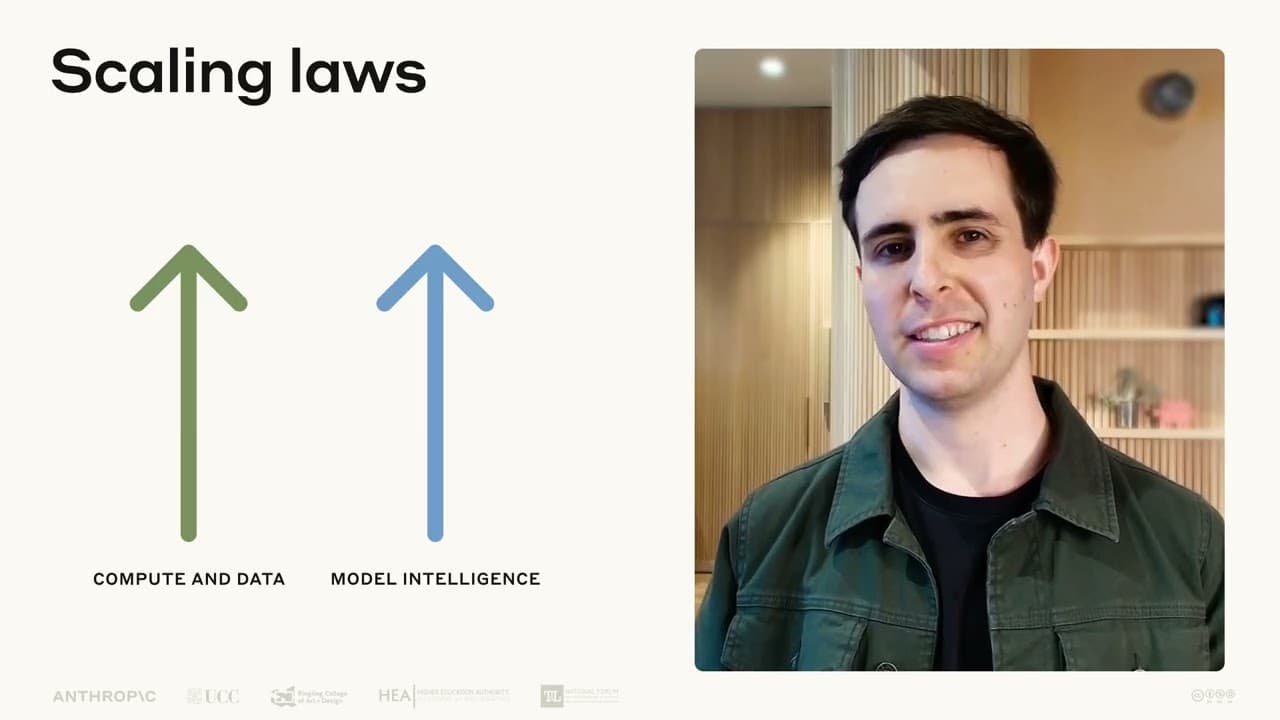
- Modern generative AI depends on three converging factors: architectural breakthroughs, abundant digital data, and increased computational power. Websites, code repositories, specialized GPUs and TPUs, and distributed computing clusters collectively supplied the learning material and processing capacity required for training.
- Scaling laws are empirical findings showing that model performance improves predictably as models become larger and receive more data and computing power. Increased scale can also produce capabilities that were not explicitly programmed, including adapting to unfamiliar tasks with minimal instruction.
- Pre-training is the stage in which a language model analyzes patterns across billions of text examples by repeatedly predicting what comes next. Through many iterations, it refines these predictions and develops a complex statistical map of language, concepts, and knowledge.
- Fine-tuning is additional training that shapes a pretrained model to follow instructions, provide helpful responses, and avoid harmful content. Human feedback and reinforcement learning can use rewards and penalties to guide behavior toward being more helpful, honest, and harmless.
- A context window is the limited amount of information a language model can consider at one time. It includes prompts, generated responses, and shared conversation material, while information outside that window remains unavailable unless the system uses specialized tools such as web search.
Install to Summarize YouTube Videos and Get Transcripts
Explore YouTube Video Summarizer or Get YouTube Transcript Extractor
Questions & Answers
Q: What is generative AI and how is it different from traditional AI?
Generative AI refers to artificial intelligence systems that create new content instead of only analyzing existing data. Traditional AI might examine an email and classify it as spam or not spam based on learned patterns. Generative AI can use patterns learned during training to write an entirely new email that did not exist before, representing a fundamental change in what AI systems can do.
Q: How do large language models generate new text?
Large language models generate text by reading a prompt and continuing it according to statistical patterns learned during training. They do not retrieve a prewritten answer from a database. During pre-training, they repeatedly predict what comes next in billions of text examples, gradually learning relationships among words, phrases, concepts, and the patterns that make language coherent and meaningful.
Q: Why are large language models called large?
Large language models are called large because they contain billions of parameters. These parameters are mathematical values that determine how a model processes information, somewhat like synaptic connections in a brain. By adjusting these values throughout training, the model becomes better at representing statistical relationships within language and using those learned patterns to predict and generate appropriate continuations.
Q: What technological developments made modern generative AI possible?
Modern generative AI resulted from three crucial developments coming together: algorithmic and architectural breakthroughs, the explosion of digital training data, and massive increases in computational power. Transformer architecture improved contextual text processing, websites and code repositories supplied diverse learning material, and GPUs, TPUs, and distributed computing clusters made training highly complex models on that material possible.
Q: What is the transformer architecture used for in generative AI?
The transformer architecture, developed in 2017, helps AI systems process sequences of text while maintaining relationships between words across long passages. This capacity is important because understanding language requires interpreting words within context rather than treating them as isolated items. Its ability to handle these contextual relationships fundamentally changed how modern language-based AI systems learn and generate coherent text.
Q: What happens during pre-training and fine-tuning?
During pre-training, a language model examines patterns across billions of text examples and repeatedly predicts what comes next. This process builds a complex statistical map of language and knowledge. Fine-tuning then provides additional training focused on instruction following, helpfulness, and avoiding harmful content. Human feedback and reinforcement learning can apply rewards and penalties to shape the model's behavior.
Q: What is a context window in a large language model?
A context window is the practical limit on how much information a language model can consider at one time, functioning like working memory. It contains the user's prompts, the model's responses, and other information shared during the conversation. Content outside the current window cannot be used unless the system has access to a specialized tool, such as web search.
Q: Why do larger generative AI models develop new capabilities?
Scaling laws show that model performance improves in predictable ways when models become larger and are trained with more data and computing power. Researchers also observed that increased scale can produce capabilities that were not explicitly programmed. Examples described in the lesson include reasoning through problems step by step and adapting to new tasks from minimal instructions or examples in a prompt.
Summary & Key Takeaways
-
Generative AI differs from traditional analytical AI because it produces new material instead of only classifying or evaluating existing data. Large language models are generative systems trained to predict and produce human language. Their billions of parameters determine how information is processed and help represent complex relationships among words, concepts, and contexts.
-
Modern generative AI emerged from three developments: improved algorithms and architectures, enormous collections of digital text, and powerful computing infrastructure. The transformer architecture improved the processing of contextual relationships across text, while GPUs, TPUs, and distributed clusters enabled large-scale training. Scaling these ingredients produced predictable performance gains and unexpected new capabilities.
-
Large language models first learn by repeatedly predicting the next part of text across billions of examples. Fine-tuning, human feedback, reinforcement learning, rewards, and penalties then shape their behavior. During use, the model continues a prompt with newly generated text, drawing only on learned patterns and information available within its limited context window.
Read in Other Languages (beta)
Share This Summary 📚
Summarize YouTube Videos and Get Video Transcripts with 1-Click
Try YouTube Summary with ChatGPT & Claude or YouTube Transcript Generator
Explore More Summaries from Anthropic 📚




Summarize YouTube Videos and Get Video Transcripts with 1-Click
Try YouTube Summary with ChatGPT & Claude or YouTube Transcript Generator