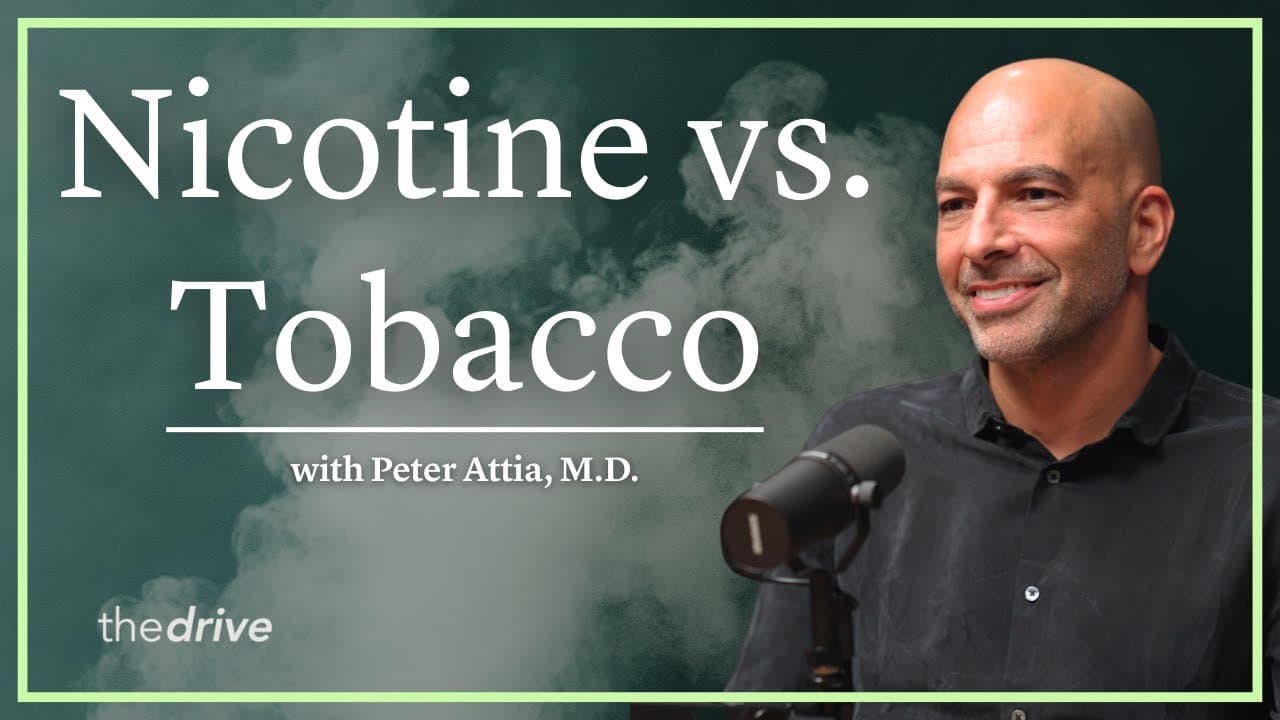
How to assess nicotine risk separate from tobacco use
TL;DR
Nicotine itself is not the primary cause of tobacco related disease; the harmful effects largely come from tobacco burning and related byproducts. Some studies suggest nicotine may have mechanistic effects, but human evidence is limited and confounded by smoking behavior. More research with tobacco free nicotine products is needed to isolate nicotine's impact.
Transcript
I would say that clearly the biggest risk of pure nicotine and now I'm just talking about it through the lens of synthetically acquired nicotine so you're getting rid of all the tobacco related processing is uh in its addictive nature and make no mistake about it nicotine is highly addictive. Um there are some other areas where depending on the dos... Read More
Key Insights
- Nicotine activates nicotinic acetylcholine receptors throughout the body, not just in the brain, which can influence various physiological processes and potentially contribute to harm independent of tobacco.
- The closest human evidence comes from a Mendelian randomization study that uses genetic variants related to nicotine metabolism to proxy nicotine exposure, aiming to separate nicotine effects from tobacco consumption.
- In this discussion, researchers acknowledge that rodent models show potential linkages between high nicotine doses and tumor growth or atherosclerotic changes, but emphasize the limitations of translating those findings to humans.
- A key takeaway is that the reported disease risk in some studies is driven by tobacco related factors, and not by nicotine itself, when controlling for smoking heaviness.
- Mendelian randomization findings suggest that when smoking intensity is accounted for, the additional risk from nicotine exposure alone may be reduced or abolished, indicating non-nicotinic components drive much of the harm.
- The talk highlights the need for randomized exposure studies comparing tobacco free nicotine products to isolate nicotine effects on health outcomes beyond observational data.
- Researchers stress that while MR is clever, it is not a substitute for randomized trials that would provide stronger evidence on nicotine independent of tobacco use.
- The overall message is that tobacco combustion and related byproducts are the primary culprits in disease, rather than nicotine alone, though certainty awaits more robust human data.
Install to Summarize YouTube Videos and Get Transcripts
Explore YouTube Video Summarizer or Get YouTube Transcript Extractor
Questions & Answers
Q: A real search query question about the video (How to, What is, Why does) What is the main health risk of nicotine independent of tobacco use?
The main health risk discussed is not the nicotine molecule by itself but the context of its delivery, specifically tobacco combustion and tobacco related products. The speaker notes that nicotine can be addictive and may have dose dependent effects on the endothelium, yet the human evidence tying nicotine alone to major diseases is limited. Most data come from models and a Mendelian randomization study that attempts to separate nicotine exposure from tobacco use, suggesting that tobacco related components drive the harm rather than nicotine itself. This means nicotine alone might carry some risk, but current strongest human data indicate the tobacco vector is the primary problem.
Q: What does Mendelian randomization mean in the context of nicotine research?
Mendelian randomization uses genetic variants as proxies to estimate the causal effect of a behavior or exposure on health outcomes. In nicotine research, scientists look at genes related to nicotine metabolism to infer nicotine exposure levels independent of smoking heaviness. The approach helps separate effects of nicotine from the broader toxins in tobacco, but it remains an observational tool and does not replace randomized trials. The key insight from this method is that when adjusting for smoking heaviness, the additional risk attributed to nicotine exposure alone may be reduced, highlighting tobacco as the main driver of harm.
Q: Why are rodent studies mentioned, and how should their findings be interpreted?
Rodent studies are cited to illustrate potential mechanistic links between nicotine and disease processes, such as increased tumor growth or plaque formation at high nicotine doses. However, the speaker cautions that rodent models do not perfectly mirror human physiology and that daylight exists between animal findings and human outcomes. Therefore, while rodent data can generate hypotheses, they should not be taken as definitive evidence of harm in humans. The overall interpretation is that rodent results require careful triangulation with human data.
Q: What does the speaker say about the overall level of evidence for nicotine harm independent of tobacco?
The speaker states that this is not level one evidence because randomized exposure to different nicotine products without tobacco is rare and ethically challenging for hard outcomes like mortality. The closest available evidence, such as the Mendelian randomization study, is clever and informative but not definitive. The consensus is that more direct, tobacco free nicotine exposure studies would be needed to establish causality with high confidence, particularly for hard health endpoints. Until then, tobacco remains the main known harmful vector.
Q: How does the transcript describe the relationship between nicotine metabolism and exposure?
The transcript explains that nicotine metabolism is genetic, with some individuals metabolizing nicotine quickly and others slowly. Slower metabolism was associated with higher disease risk in the Mendelian randomization analysis unless adjusted for smoking heaviness. This implies that the amount of nicotine exposure is partly mediated by metabolic rate, but the observed risks are largely confounded by how much tobacco someone smokes. The key point is that metabolism modifies exposure, yet the non nicotine components of smoke drive much of the harm.
Q: What are the non nicotine components of tobacco thought to contribute to disease?
Non nicotine components of tobacco contribute to disease primarily through tobacco combustion byproducts. The discussion notes that the main drivers of disease risk are the tobacco related products rather than nicotine, particularly when smoking intensity is accounted for. This includes harmful byproducts produced during burning and processing of tobacco, which are linked to higher risks of cardiovascular and respiratory conditions. The emphasis is on tobacco related exposures rather than nicotine alone.
Q: What would a ideal study look like to determine nicotine harm independently of tobacco?
An ideal study would randomize participants to use tobacco free nicotine products versus controls while following them for hard outcomes such as mortality and cardiovascular events. Such a design would isolate nicotine exposure from tobacco combustion. However, ethical and logistical challenges make this difficult. The speaker suggests that softer outcomes might be studied, but robust evidence for hard endpoints requires long term randomized trials comparing nicotine alone to a nicotine placebo or alternative nicotine delivery methods without tobacco.
Q: What is the practical takeaway regarding nicotine products and health risk?
The practical takeaway is that current evidence suggests the danger from tobacco comes mainly from combustion and tobacco related products rather than nicotine itself. Nicotine is addictive and may have some mechanistic effects, but the human data do not show clear, large harms from nicotine alone. For policy and personal decisions, the focus should remain on reducing tobacco use and exposure to tobacco smoke, while recognizing that nicotine delivery without combustion may carry lower risk, though more evidence is needed.
Summary & Key Takeaways
-
Nicotine is addictive and present in various delivery methods, but the main disease drivers appear to be tobacco related products and combustion. Mendelian randomization is used to separate nicotine exposure from tobacco exposure, yet it remains indirect evidence.
-
Non smoking nicotine exposure studies in humans are rare and methodologically challenging, so conclusions about nicotine alone cannot be considered definitive level one evidence. The current best available data point to tobacco as the major harm source.
-
Future research could test tobacco free nicotine products to directly measure nicotine related health outcomes, though such trials are difficult for hard endpoints like mortality.
Read in Other Languages (beta)
Share This Summary 📚
Summarize YouTube Videos and Get Video Transcripts with 1-Click
Try YouTube Summary with ChatGPT & Claude or YouTube Transcript Generator
Explore More Summaries from Peter Attia MD 📚




Summarize YouTube Videos and Get Video Transcripts with 1-Click
Try YouTube Summary with ChatGPT & Claude or YouTube Transcript Generator