What Are Peter’s Takeaways on Bone Health, Calorie Restriction, Addiction, and Gene Editing? (PS 3 Sneak Peek)
TL;DR
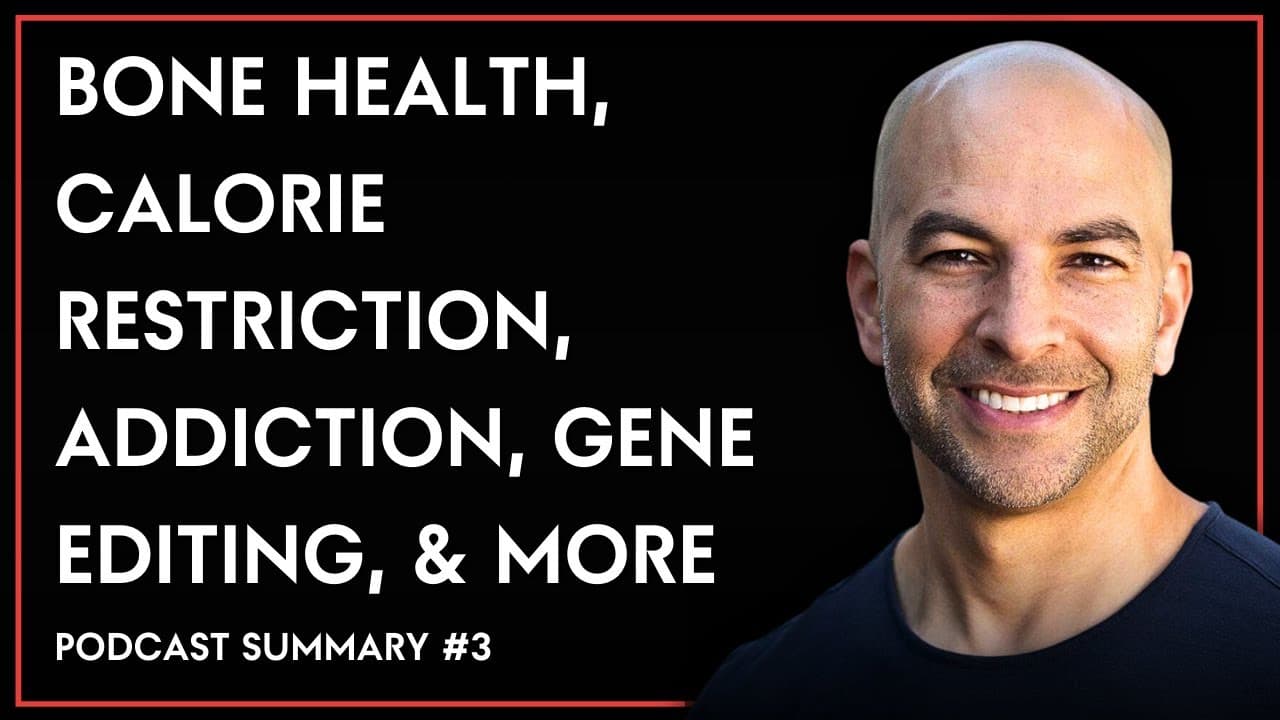
Addiction is shaped by inherited susceptibility, upbringing, and environment rather than genetics alone. Peter discusses evidence suggesting addiction is about 50 to 60 percent heritable, while trauma, social exposure, and surrounding influences also affect risk. The quarterly review also covers CRISPR-mediated gene editing, bone health, calorie restriction, metabolic health, testosterone therapy, and prostate cancer care. Read on for the practical takeaways Peter drew from these discussions.
Transcript
hey everyone welcome to the drive podcast I'm your host Peter AA Peter welcome to another quarterly podcast summary AMA which is a mouthful how you doing good do we have an abbreviation for that I think it's QPS one two three this is three QPS 360 something oh yeah yeah we're just going to keep throwing numbers at it until it sticks all cuz that's ... Read More
Key Insights
- Addiction is defined by uncontrolled compulsive use, cravings, continued use despite consequences, tolerance to a stimulus, and withdrawal after its removal. These features can appear in substance use disorders and in behavioral patterns such as gambling, sex, or workaholism.
- Addiction is approximately 50 to 60 percent heritable according to the discussed evidence from identical twins raised apart. That genetic contribution is large enough to matter, but it is not large enough to make addiction an unavoidable fate for someone with a family history.
- Addiction risk is also shaped by nurture and neighborhood. Upbringing, exposure to people who practice a behavior, traumatic experiences, friendships, and the surrounding environment can all influence whether susceptibility develops into persistent compulsive behavior.
- Breaking an addictive habit is harder when a person's social environment continually reinforces it. Someone struggling with gambling, for example, may need different friends or distance from gambling situations because remaining immersed among gamblers makes abstinence especially difficult.
- Individual addictions appear to involve a specific lock-and-key relationship between a person and a stimulus. One person may enjoy alcohol or encounter gambling without becoming compulsive, while another may experience a reward cycle powerful enough to damage daily life.
- A four-week dopamine fast is a period of complete abstinence from the behavior a patient wants to stop. Anna Lembke reported that 80 percent of her patients feel better afterward, although some people require medication to move safely through the transition.
- Cold plunging may reduce inflammation and muscle soreness, and it may improve mood for some people. The host reports feeling substantially better after immersion in a 40-degree bathtub for 10 minutes, while Anna Lembke reports no comparable mood improvement.
- The quarterly review covers several distinct health questions beyond addiction, including CRISPR-mediated gene editing, strong bones across the lifespan, calorie restriction, metabolic health, testosterone therapy, and prostate cancer. The focus is on practical takeaways that may affect behavior or patient care.
Install to Summarize YouTube Videos and Get Transcripts
Explore YouTube Video Summarizer or Get YouTube Transcript Extractor
Questions & Answers
Q: What are the defining signs of addiction?
Addiction is characterized by uncontrolled compulsive use, cravings, continued use despite negative consequences, tolerance to a stimulus, and withdrawal when it is removed. These patterns can involve alcohol and behaviors such as gambling, sex, and workaholism.
Q: How much of addiction risk is inherited?
The discussion describes addiction as approximately 50 to 60 percent heritable, based on evidence involving identical twins raised apart. That genetic contribution is substantial, but it does not mean a person’s fate is sealed.
Q: How do upbringing and environment affect addiction?
Risk is shaped by nurture and neighborhood as well as inherited susceptibility. Upbringing, trauma, exposure to particular behaviors, friendships, and the surrounding environment can influence whether a vulnerability develops into compulsive behavior.
Q: Why can a person become addicted to one stimulus but not another?
The discussion describes a lock-and-key relationship between an individual and a particular stimulus. One person may drink alcohol or encounter gambling without becoming compulsive, while another may experience a reward cycle powerful enough to damage daily life.
Q: Why is stopping an addiction harder around people who share it?
A social group can normalize and repeatedly expose someone to the behavior they are trying to stop. A person struggling with gambling, for example, may need distance from gambling situations or a different group of friends because remaining surrounded by gamblers makes abstinence especially difficult.
Q: What is a four-week dopamine fast for addiction?
A four-week dopamine fast is a period of complete abstinence from the behavior a person wants to stop. Anna Lembke reports that 80 percent of her patients feel better afterward, although some people may require medication to move safely through the transition.
Q: What role does dopamine play in addiction?
Dopamine is described as one of the most important neurotransmitters in the reward system and therefore in addiction. It is not the only neurotransmitter involved, and the discussion focuses more broadly on the science and defining features of addiction.
Q: What health topics does Peter’s quarterly podcast summary cover?
The review covers dopamine and addiction through Anna Lembke’s episode, CRISPR-mediated gene editing, bone mineral density and lifting in aging females, calorie restriction, and prostate cancer. Its purpose is to explain Peter’s main takeaways and how they may affect his behavior or patient care, not to replace the original interviews.
Summary & Key Takeaways
-
Addiction is characterized by compulsive, uncontrolled use, cravings, continued behavior despite consequences, tolerance, and withdrawal. These patterns can involve substances such as alcohol as well as behaviors including gambling, sex, and work. Dopamine is central to reward and addiction, although it is not the only neurotransmitter involved in these processes.
-
Addiction is described as approximately 50 to 60 percent heritable, based on evidence involving identical twins raised apart. The remaining influence comes from nurture and neighborhood, including upbringing, trauma, social exposure, and the surrounding environment. Genetic susceptibility therefore matters substantially, but it does not determine whether an individual will develop addiction.
-
The broader quarterly review connects addiction research with CRISPR-mediated gene editing, building and maintaining strong bones, calorie restriction, longevity, metabolic health, testosterone therapy, and prostate cancer. Its purpose is to highlight the host's most important takeaways and resulting changes in personal behavior or patient care, rather than replace the original interviews.
Read in Other Languages (beta)
Share This Summary 📚
Summarize YouTube Videos and Get Video Transcripts with 1-Click
Try YouTube Summary with ChatGPT & Claude or YouTube Transcript Generator
Explore More Summaries from Peter Attia MD 📚



Summarize YouTube Videos and Get Video Transcripts with 1-Click
Try YouTube Summary with ChatGPT & Claude or YouTube Transcript Generator