How Did China Build Up Its Hidden Debt Crisis?
TL;DR
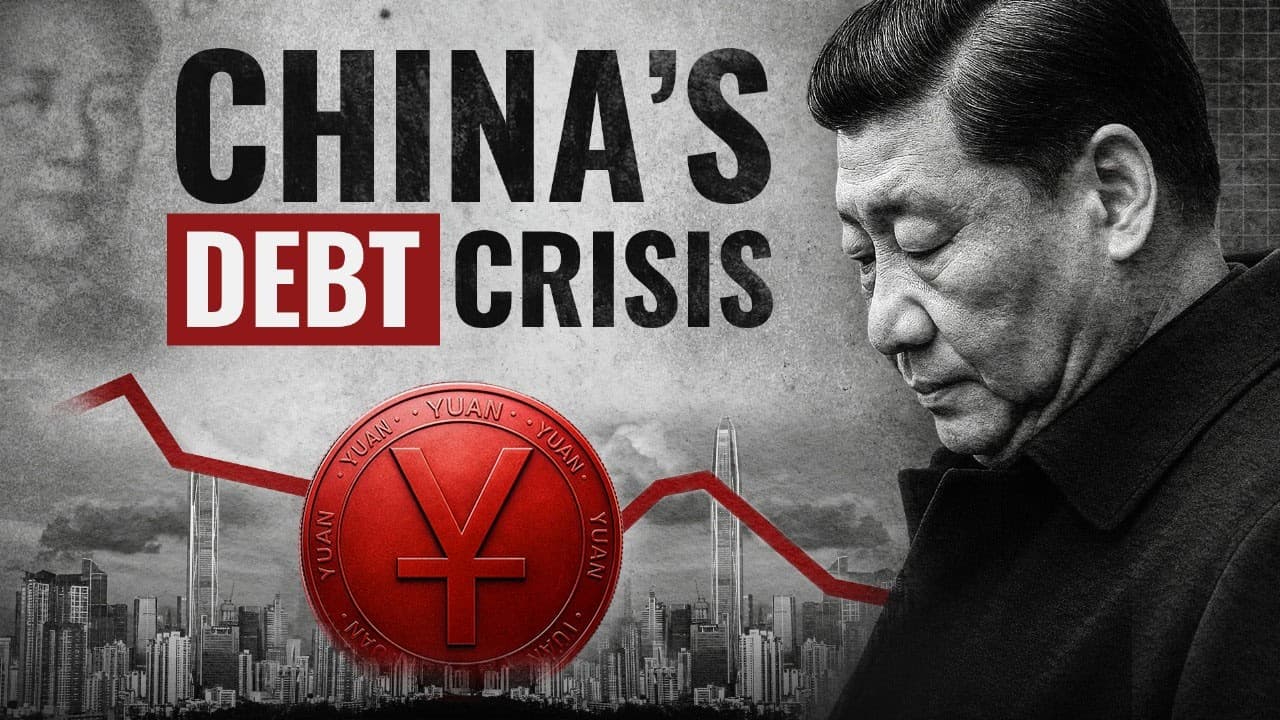
China’s reported debt ratio may hide extensive borrowing by local government financing vehicles, with unofficial estimates placing total debt near 300% of GDP. Local officials pursued ambitious growth targets by using state land as collateral for off-book loans, financing infrastructure and property construction even where demand was weak, which contributed to empty developments, strained local finances, and the property-sector crisis.
Transcript
After the United States of America, now it is China that is sitting on the edge of a massive debt crisis. Beijing is grappling with a mounting debt crisis. 54 trillion at the end of 2022. This is the story of a huge change in the Chinese economy. Unrest is growing in China. Fresh protests have broken out in major cities with hundreds rallying chant... Read More
Key Insights
- China’s official debt-to-GDP ratio is presented as comfortably below 100%, but unofficial estimates cited in the case study place the broader figure near 300%. The gap reflects liabilities that may not appear directly on Beijing’s reported government accounts.
- Local government officials are evaluated partly through economic performance, making GDP growth a career scorecard. Officials seeking promotion may set targets above the national goal, launch additional projects, raise more money, and prioritize visible economic expansion even when the underlying demand is uncertain.
- China’s local governments are responsible for around 85% of public spending but receive about 50% of total tax revenue, according to the case study. This imbalance creates pressure to find financing beyond ordinary revenue, particularly when ambitious local growth targets require extensive investment.
- Local government financing vehicles are technically separate companies that borrow for local authorities. A government can transfer state-managed land to an LGFV on a low-price lease, after which the vehicle uses the land as collateral to obtain bank financing for local projects.
- Banks lend to financing vehicles partly because land is expected to appreciate and because lenders assume local governments will rescue troubled vehicles. This arrangement allows borrowing to expand while shifting liabilities away from conventional local government accounts.
- Infrastructure construction can increase measured GDP even when a project has little practical demand. The case study describes airports, highways, business parks, residential buildings, roads, and subways being developed in places where usage, occupancy, rent, or commercial activity remained weak.
- Chinese households had placed more than 70% of their wealth into property by 2020, according to the transcript. Expectations of continuously rising prices encouraged families to buy, while developers and state-owned companies continued building as economic activity and construction appeared to accelerate.
- Ghost cities are developments with extensive buildings and infrastructure but very low occupancy. The transcript cites roughly 65 million empty housing units, while examples such as Kangbashi in Ordos and Yujiapu show how construction can fail to generate sufficient residents or rental income.
Install to Summarize YouTube Videos and Get Transcripts
Explore YouTube Video Summarizer or Get YouTube Transcript Extractor
Questions & Answers
Q: Why might China’s official debt ratio understate its debt burden?
China’s official debt-to-GDP figure is presented as below 100%, but the case study says substantial borrowing occurs through local government financing vehicles that are technically separate from local governments. Because these liabilities can remain outside ordinary government accounts, unofficial estimates cited in the transcript place China’s broader debt-to-GDP ratio near 300%, rather than the officially reported level.
Q: What are local government financing vehicles in China?
Local government financing vehicles, or LGFVs, are companies that are technically separate from local governments but exist to serve their financing needs. A local authority can transfer state-managed land to an LGFV on a low-price lease. The vehicle then pledges that land as collateral, borrows from a bank, and uses the proceeds to fund infrastructure and other local development projects.
Q: How do Chinese local governments use land to borrow money?
A local government first transfers a piece of state-owned land under its management to a local government financing vehicle. The LGFV presents the land to a bank as valuable collateral and requests a loan. The bank may lend because it expects the land’s value to rise and assumes that the local government would support the vehicle if financial trouble developed.
Q: Why did Chinese officials approve unnecessary construction projects?
Local officials are described as competing to exceed national GDP growth targets because strong economic results can improve their promotion prospects. Construction generates immediate spending and measured economic activity, so officials have incentives to approve airports, highways, business parks, housing, and other projects. When promotion is linked to growth, even developments with limited demand can appear politically attractive.
Q: How did property become central to household wealth in China?
Chinese households poured savings into real estate because they believed property prices would continue rising as the economy expanded and construction accelerated. Many feared that delaying a purchase would make housing unaffordable later. According to the transcript, families had placed more than 70% of their wealth into property by 2020, creating deep exposure to the performance of the housing market.
Q: What caused China’s ghost cities to emerge?
Ghost cities emerged when local governments, financing vehicles, state-owned companies, and developers built large developments in locations without sufficient housing or commercial demand. Construction raised GDP and provided contracts, but many completed buildings lacked residents, tenants, or rental income. The transcript says China has about 50 massive ghost cities and roughly 65 million empty housing units.
Q: How does local government spending contribute to China’s debt problem?
The case study says local governments are responsible for around 85% of public spending while receiving only about 50% of total tax revenue. They also historically faced legal restrictions on direct borrowing. This combination created a financing gap, encouraging authorities to use off-book LGFVs to borrow against land and fund the projects needed to pursue ambitious local growth targets.
Q: What warning does China’s debt model offer for infrastructure-led growth?
The case study shows that infrastructure spending can raise measured GDP without creating equivalent long-term value. Projects built without sufficient demand may produce empty housing, unused transport links, vacant offices, and little rental income while leaving debts behind. Growth targets therefore need to be considered alongside actual usage, repayment capacity, household exposure, and the financial sustainability of local governments.
Summary & Key Takeaways
-
China’s official debt-to-GDP ratio appears to be below 100%, but the case study says unofficial estimates place the real figure near 300%. The difference is attributed largely to borrowing conducted outside standard local government accounts through local government financing vehicles, which fund projects on behalf of local authorities.
-
China’s local governments reportedly handle about 85% of public spending while receiving roughly 50% of total tax revenue. Because they historically could not legally borrow directly, they transferred state-managed land to financing vehicles, which pledged the land as collateral for bank loans and used the proceeds to finance infrastructure and construction.
-
Growth incentives encouraged officials to approve projects that raised measured GDP and improved their promotion prospects. State-owned companies received continuing construction work, developers purchased surrounding land, and households placed more than 70% of their wealth in property by 2020. Weak demand eventually produced ghost cities, empty housing, and financially troubled developments.
Read in Other Languages (beta)
Share This Summary 📚
Summarize YouTube Videos and Get Video Transcripts with 1-Click
Try YouTube Summary with ChatGPT & Claude or YouTube Transcript Generator
Explore More Summaries from Think School 📚





Summarize YouTube Videos and Get Video Transcripts with 1-Click
Try YouTube Summary with ChatGPT & Claude or YouTube Transcript Generator