What Is the Impact of AI on Future Industries?
TL;DR
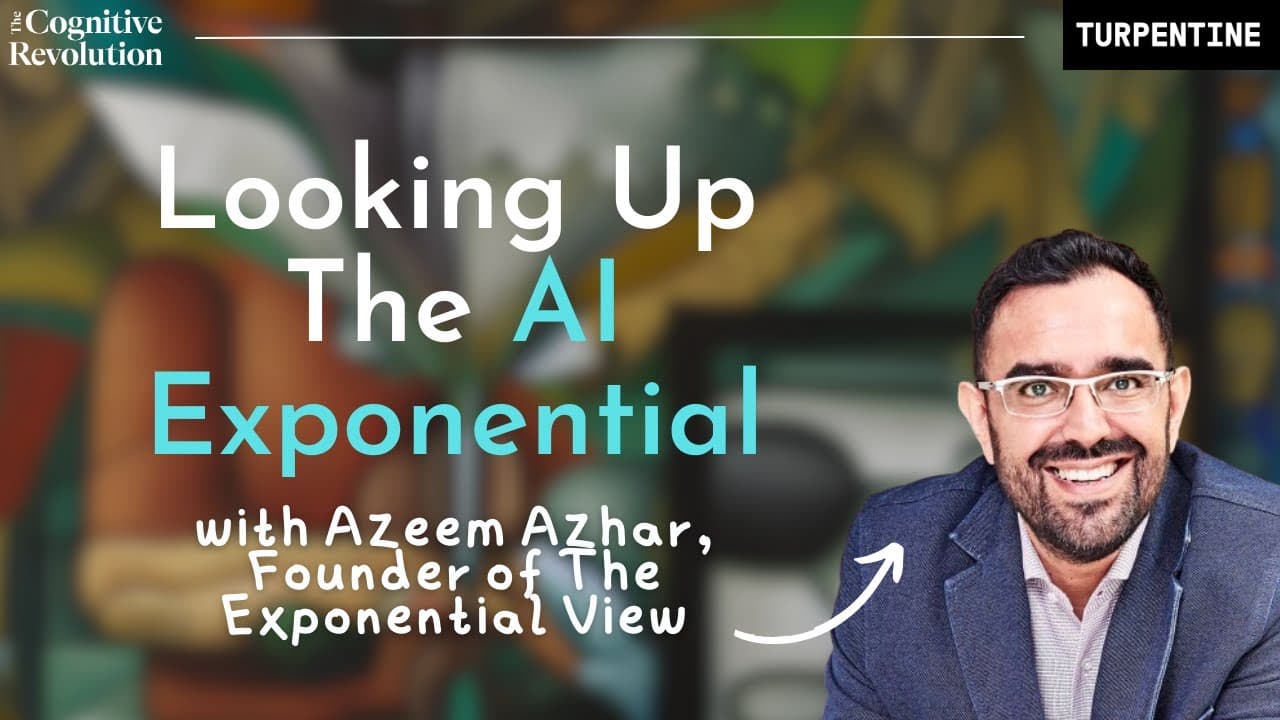
AI is rapidly transforming industries by shifting the economy from one dominated by traditional sectors to one fueled by AI and renewables. Startups are expected to drive significant disruption by creating new products and markets, even as established companies adopt AI technologies. The integration of AI raises questions about governance, control, and the future of human relationships as AI companions become more prevalent.
Transcript
Moors law was turning into this acceleration of AI capabilities over the top and the other was that what was happening in Renewables with things like lithium batteries and solar was on a mors law- like trajectory uh and there was some other Technologies like genome sequencing and genome synthesis that seem to be doing something similar so I started... Read More
Key Insights
- AI and renewables are on an exponential trend, fundamentally altering the economy and behaving differently from previous technologies.
- The transition from an oil-driven economy to one fueled by AI and renewables is underway, with significant implications for society and work.
- Startups are likely to drive true disruption in AI, creating new products and markets despite incumbents' rapid adoption.
- Business leaders are retraining teams to lead in AI adoption, focusing on the potential of having significantly more compute power.
- The arrival of AGI may be sooner than expected but initially less impactful than anticipated, according to Sam Altman.
- AI is changing human relationships, especially with the rise of AI companions, raising questions about governance and control.
- Bot-to-bot communication in high-dimensional vector formats poses a risk of loss of control and requires new governance mechanisms.
- The rapid adoption and integration of AI in large companies are driven by both frontline workers and CEOs, indicating a significant shift in business operations.
- More videos with Azeem Azhar:
Install to Summarize YouTube Videos and Get Transcripts
Explore YouTube Video Summarizer or Get YouTube Transcript Extractor
Questions & Answers
Q: What is the main focus of the conversation with Azeem Azhar?
The conversation focuses on the transformative power of AI and its implications for the economy and society. It explores the transition from an oil-driven economy to one fueled by AI and renewables, highlighting the exponential trends in these technologies and their differing behaviors compared to previous generations.
Q: How are startups expected to impact the AI industry?
Startups are expected to drive true disruption in the AI industry by creating entirely new products and markets. Despite the rapid adoption of AI by incumbent companies, startups are likely to innovate and bring about significant changes, leveraging the potential of AI to develop novel solutions and business models.
Q: What are business leaders doing to prepare for AI adoption?
Business leaders are retraining their teams to lead in AI adoption, focusing on the potential of having significantly more compute power. They are exploring how to integrate AI into their operations, considering both immediate efficiencies and long-term strategic opportunities that AI can offer.
Q: What are the potential implications of AGI's arrival?
According to Sam Altman, AGI may arrive sooner than expected but will initially be less impactful than anticipated. The conversation suggests that while AGI holds significant potential, its immediate effects may not be as transformative as imagined, requiring careful consideration and preparation for its integration into society.
Q: How is AI changing human relationships?
AI is changing human relationships, particularly with the rise of AI companions. This shift raises questions about governance, control, and the nature of human interaction with AI systems, as these technologies become more integrated into daily life and influence social dynamics.
Q: What are the risks associated with bot-to-bot communication?
Bot-to-bot communication in high-dimensional vector formats poses a risk of loss of control, as these interactions may become inscrutable to humans. This scenario requires new governance mechanisms to ensure that AI systems remain aligned with human values and do not operate beyond our understanding or control.
Q: How is AI adoption in large companies being driven?
AI adoption in large companies is being driven by both frontline workers and CEOs, creating a pincer movement that accelerates integration. Frontline workers are using AI tools to enhance productivity, while CEOs recognize the strategic importance of AI, leading to widespread adoption across various business functions.
Q: What governance mechanisms are needed for AI development?
New governance mechanisms are needed to manage the development and integration of AI, particularly concerning bot-to-bot communication and the potential for loss of control. These mechanisms should ensure transparency, accountability, and alignment with human values, addressing the complex challenges posed by advanced AI systems.
Summary & Key Takeaways
-
The conversation explores the transformative power of AI, focusing on the transition from an economy driven by traditional industries to one fueled by AI and renewables. Azeem Azhar discusses the exponential trends in AI and renewables, highlighting the different behaviors of these technologies compared to previous generations.
-
Startups are expected to drive true disruption in the AI industry by creating entirely new products and markets, despite the rapid adoption of AI by incumbent companies. Business leaders are retraining their teams and exploring the potential of having significantly more compute power.
-
The discussion also touches on the implications of AI on human relationships, the potential arrival of AGI, and the need for new governance mechanisms to manage bot-to-bot communication and prevent loss of control. The rapid adoption of AI in large companies is driven by both frontline workers and CEOs.
Read in Other Languages (beta)
Share This Summary 📚
Summarize YouTube Videos and Get Video Transcripts with 1-Click
Try YouTube Summary with ChatGPT & Claude or YouTube Transcript Generator
Explore More Summaries from Cognitive Revolution "How AI Changes Everything" 📚



Summarize YouTube Videos and Get Video Transcripts with 1-Click
Try YouTube Summary with ChatGPT & Claude or YouTube Transcript Generator