How Can Citizen Assemblies Revive Democracy Today?
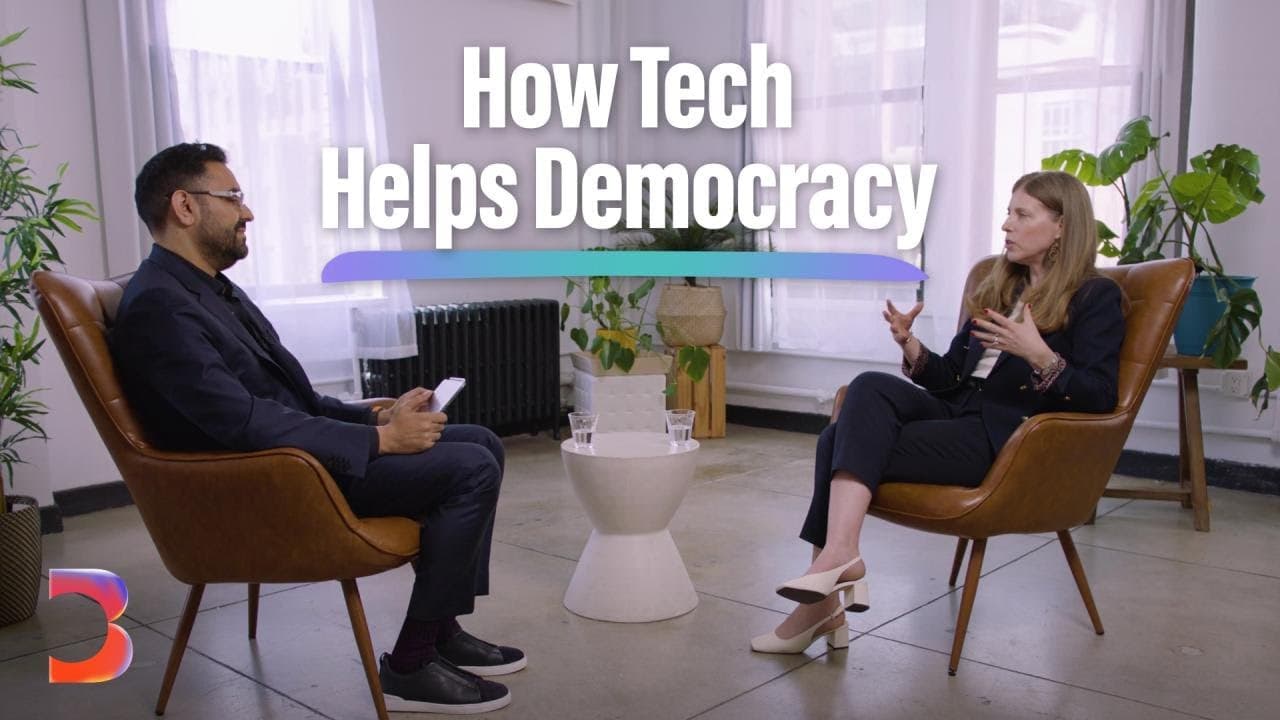
TL;DR
Citizen assemblies can revitalize democracy by engaging randomly selected individuals to deliberate on contentious political issues, fostering inclusive discussions that lead to consensus. They have proven successful in places like Ireland and France, helping to rebuild trust in democratic processes and address polarization, despite institutional resistance from existing political elites.
Transcript
we are at the beginning of a new golden age for democracy that is a premise for today's conversation welcome to exponentially democracy is having a popularity crisis Recent research found that the young are more disaffected with it than at any point in the last 50 years polarization is a common problem the basic questions of State economic growth a... Read More
Key Insights
- Citizen assemblies offer a method to engage diverse populations in political decision-making, potentially reviving democratic processes and addressing polarization.
- Trust in traditional democratic institutions is at an all-time low, with many citizens believing their governments are corrupt or ineffective.
- Technological advancements, while posing challenges like misinformation, can also facilitate more inclusive and representative democratic processes.
- Mini-publics, or citizen assemblies, have successfully tackled contentious issues in countries like Ireland and France, demonstrating their potential effectiveness.
- Citizen assemblies encourage respectful deliberation and consensus-building, contrasting the adversarial nature of traditional political debates.
- The success of citizen assemblies relies on their ability to be descriptively representative, bringing diverse perspectives into the decision-making process.
- Global challenges such as artificial intelligence governance could benefit from a worldwide deliberative process, leveraging citizen assemblies for consensus building.
- Institutional resistance from political elites poses a significant barrier to the widespread adoption of citizen assemblies, as they may perceive it as a loss of power.
- More videos with Azeem Azhar:
Install to Summarize YouTube Videos and Get Transcripts
Explore YouTube Video Summarizer or Get YouTube Transcript Extractor
Questions & Answers
Q: What are citizen assemblies and how do they function?
Citizen assemblies, or mini-publics, are groups of randomly selected individuals who deliberate on political issues. They aim to be descriptively representative of the larger population, fostering diverse perspectives. Participants engage in respectful deliberation, ultimately providing recommendations that can inform policy decisions, as seen in Ireland and France.
Q: How have citizen assemblies been successfully implemented in other countries?
In Ireland, citizen assemblies addressed contentious issues like marriage equality and abortion, leading to significant policy changes. Similarly, in France, assemblies have been used to deliberate on climate justice and end-of-life issues, demonstrating their ability to tackle complex topics and influence legislative processes.
Q: What challenges do citizen assemblies face in becoming widely adopted?
Citizen assemblies face resistance from political elites who may perceive them as a threat to their power. The traditional political system's attachment to old ideas about legitimacy and accountability also poses a barrier. Additionally, there is a need for societal acceptance and understanding of the assemblies' role in democratic processes.
Q: How can technology aid in the implementation of citizen assemblies?
Technology can facilitate the organization and operation of citizen assemblies by enabling global participation and reducing costs. It can assist in synthesizing input and output, ensuring diverse perspectives are represented. Technology also offers tools for managing deliberative processes, potentially increasing their efficiency and effectiveness.
Q: What role could citizen assemblies play in global issues like artificial intelligence governance?
Citizen assemblies could provide a platform for global deliberation on AI governance, ensuring diverse perspectives are considered. By engaging individuals from various backgrounds, assemblies can help identify shared human values and inform policy decisions. This approach could lead to more democratic and inclusive global governance structures for AI.
Q: Why do citizen assemblies encourage more respectful deliberation compared to traditional political debates?
Citizen assemblies foster respectful deliberation by bringing together individuals without pre-existing political allegiances. Participants engage as equals, focusing on problem-solving rather than adversarial debate. This environment encourages open-mindedness and careful listening, contrasting with the grandstanding often seen in traditional political settings.
Q: What evidence supports the effectiveness of citizen assemblies in reducing polarization?
Research and case studies from countries like Ireland and France demonstrate that citizen assemblies can reduce polarization by fostering common understanding and consensus. These assemblies allow diverse groups to deliberate on complex issues, resulting in recommendations that reflect collective intelligence and bridge ideological divides.
Q: How can citizen assemblies become a permanent part of the political system?
To become permanent, citizen assemblies need institutional support and societal acceptance. Establishing them as ongoing bodies, like in Brussels, can normalize their role in political systems. Building a strong evidence base of their effectiveness and addressing political resistance will be crucial for their integration into regular political processes.
Summary & Key Takeaways
-
Citizen assemblies, comprising randomly selected individuals, offer a promising solution to revitalize democracy by engaging diverse populations in meaningful deliberation. They have shown success in countries like Ireland and France, tackling contentious issues with dignity and consensus.
-
Despite challenges like misinformation and polarization, technology can aid in facilitating more inclusive democratic processes. Citizen assemblies leverage cognitive diversity, bringing together varied perspectives to address complex political issues and reduce polarization.
-
Institutional resistance remains a significant barrier to the adoption of citizen assemblies, as political elites may view them as a threat to their power. However, as evidence of their effectiveness grows, they may become a standard part of political systems worldwide.
Read in Other Languages (beta)
Share This Summary 📚
Summarize YouTube Videos and Get Video Transcripts with 1-Click
Try YouTube Summary with ChatGPT & Claude or YouTube Transcript Generator
Explore More Summaries from Bloomberg Originals 📚






Summarize YouTube Videos and Get Video Transcripts with 1-Click
Try YouTube Summary with ChatGPT & Claude or YouTube Transcript Generator