Why Vietnam Had to Make a Trade Deal With Trump
TL;DR
Vietnam's economy relies heavily on US exports, making a trade deal essential.
Transcript
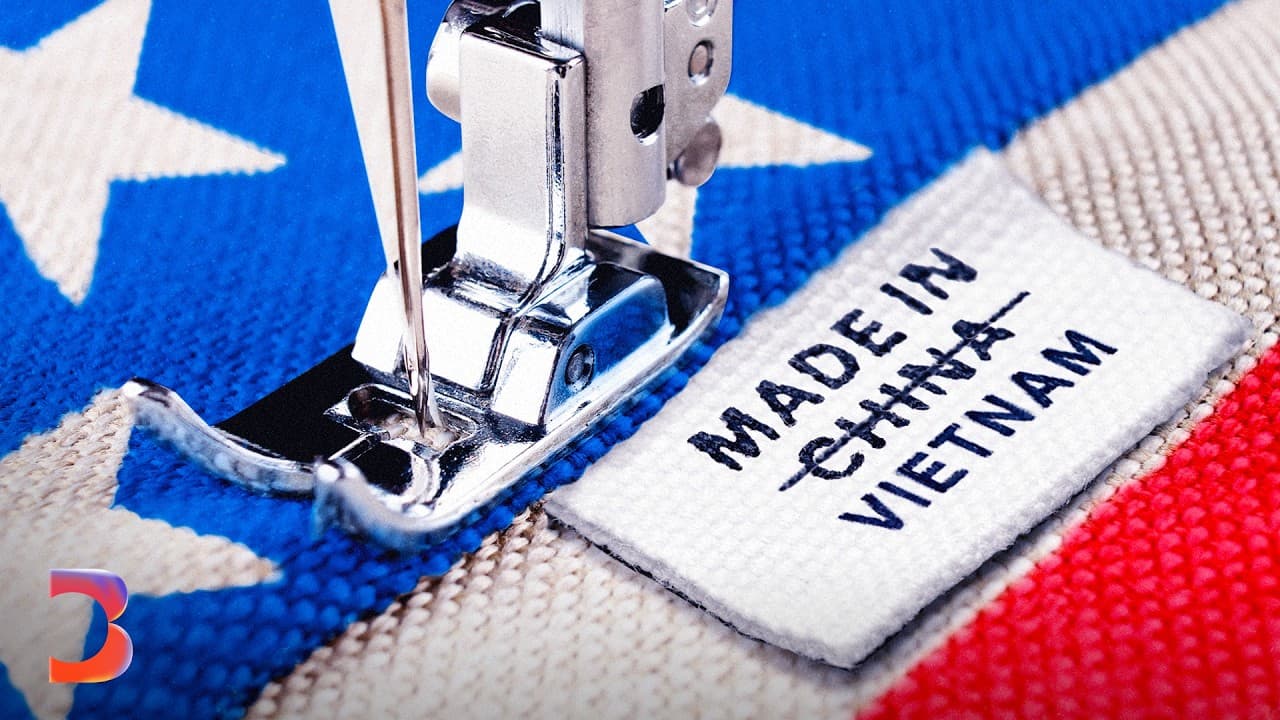
A land once devastated by American bombing now accounts for half of Nike’s global shoe production. Hundreds of other American companies and their suppliers have manufacturing bases in Vietnam too. As the Southeast Asian country’s annual GDP climbed, exports to the US grew. Now, Vietnam is one of the countries most dependent on American trade. The U... Read More
Key Insights
- Vietnam has become a major player in the global supply chain, producing goods for brands like Nike, Apple, and Samsung, with exports representing about 90% of its GDP.
- The US is Vietnam's largest export market, making the country heavily reliant on American trade and vulnerable to US tariff policies.
- Vietnam's economic transformation began after the Vietnam War, shifting from collectivism to attracting foreign investment through tax incentives and infrastructure development.
- The 'China Plus One' strategy has benefited Vietnam, as companies moved production from China to Vietnam to avoid US tariffs on Chinese goods.
- The Trump administration's tariffs on Vietnamese goods shocked the country, leading to reduced exports and potential economic repercussions, such as factory closures and layoffs.
- Vietnam's government proactively engaged with the US to negotiate a trade deal, offering to purchase big-ticket US products to reduce the trade gap.
- A major negotiation point was the US demand for Vietnam to prevent Chinese goods from being rerouted through Vietnam to avoid tariffs, a challenging task due to Vietnam's reliance on Chinese components.
- Vietnam employs 'bamboo diplomacy,' balancing relations between the US and China, both crucial to its geopolitical and economic interests.
Install to Summarize YouTube Videos and Get Transcripts
Explore YouTube Video Summarizer or Get YouTube Transcript Extractor
Questions & Answers
Q: Why is Vietnam heavily reliant on exports to the US?
Vietnam's economy is highly export-driven, with exports accounting for about 90% of its GDP. The US is its largest export market, making Vietnam heavily reliant on American trade. This dependency is due in part to Vietnam's strategic position in the global supply chain, producing goods for major brands like Nike, Apple, and Samsung.
Q: How did Vietnam's economic transformation begin post-war?
After the Vietnam War, Vietnam was one of the world's poorest countries. The government initiated economic reforms, moving away from collectivism and adopting policies to attract foreign investment. These included tax incentives, infrastructure development, and an open attitude toward global manufacturers, which successfully transformed Vietnam into a manufacturing hub.
Q: What is the 'China Plus One' strategy, and how has it benefited Vietnam?
The 'China Plus One' strategy involves companies diversifying their manufacturing bases by adding locations outside of China. This strategy benefited Vietnam as companies moved some production there to avoid US tariffs on Chinese goods. Vietnam's proximity to China, political stability, and competitive labor force made it an attractive alternative for manufacturers.
Q: How did the Trump administration's tariffs impact Vietnam?
The Trump administration's tariffs on Vietnamese goods shocked the country, leading to a decrease in exports to the US. This posed significant economic risks, such as potential factory closures and layoffs, as the US is Vietnam's largest export market. The tariffs prompted Vietnam to engage in negotiations with the US to secure a trade deal.
Q: What measures did Vietnam take to negotiate a trade deal with the US?
To negotiate a trade deal with the US, Vietnam's government proactively engaged with the Trump administration, offering to purchase big-ticket US products like aircraft and LNG to help reduce the trade gap. This strategy aimed to appease the US and secure Vietnam's economic interests by maintaining access to its largest export market.
Q: What challenges does Vietnam face in preventing trade fraud involving Chinese goods?
The US demanded that Vietnam prevent Chinese goods from being rerouted through Vietnam to avoid tariffs. This is challenging for Vietnam because many factories rely on Chinese components and machinery. Implementing such measures is complex and requires balancing its economic reliance on both US and Chinese trade relationships.
Q: What is 'bamboo diplomacy,' and why is it important for Vietnam?
'Bamboo diplomacy' is Vietnam's strategy of balancing its relations with the US and China, akin to bending like bamboo in the wind. This approach is crucial for Vietnam as it navigates geopolitical tensions between the two superpowers while maintaining its export-reliant growth model and securing its economic and geopolitical interests.
Q: How does Vietnam balance its relationships with the US and China?
Vietnam balances its relationships with the US and China through 'bamboo diplomacy,' strategically navigating tensions between the two. The US is its largest export market, while China is a critical geopolitical partner. Vietnam must manage these relationships delicately to preserve its economic growth and maintain stability in the region.
Summary & Key Takeaways
-
Vietnam’s economy has transformed significantly since the war, shifting from one of the poorest countries to a manufacturing hub for global brands. This transformation was fueled by foreign investment and a strategic shift from collectivism to an open market economy.
-
The US is Vietnam's largest export market, making the country highly dependent on American trade. The Trump administration's tariffs on Vietnamese goods posed a significant threat, prompting Vietnam to negotiate a trade deal to secure its economic interests.
-
Vietnam employs a diplomatic strategy known as 'bamboo diplomacy' to balance its relationships with the US and China. This strategy is crucial for maintaining its export-reliant growth model while navigating the geopolitical tensions between two superpowers.
Read in Other Languages (beta)
Share This Summary 📚
Summarize YouTube Videos and Get Video Transcripts with 1-Click
Try YouTube Summary with ChatGPT & Claude or YouTube Transcript Generator
Explore More Summaries from Bloomberg Originals 📚

Summarize YouTube Videos and Get Video Transcripts with 1-Click
Try YouTube Summary with ChatGPT & Claude or YouTube Transcript Generator