Why Did BP Struggle in the Oil Industry?
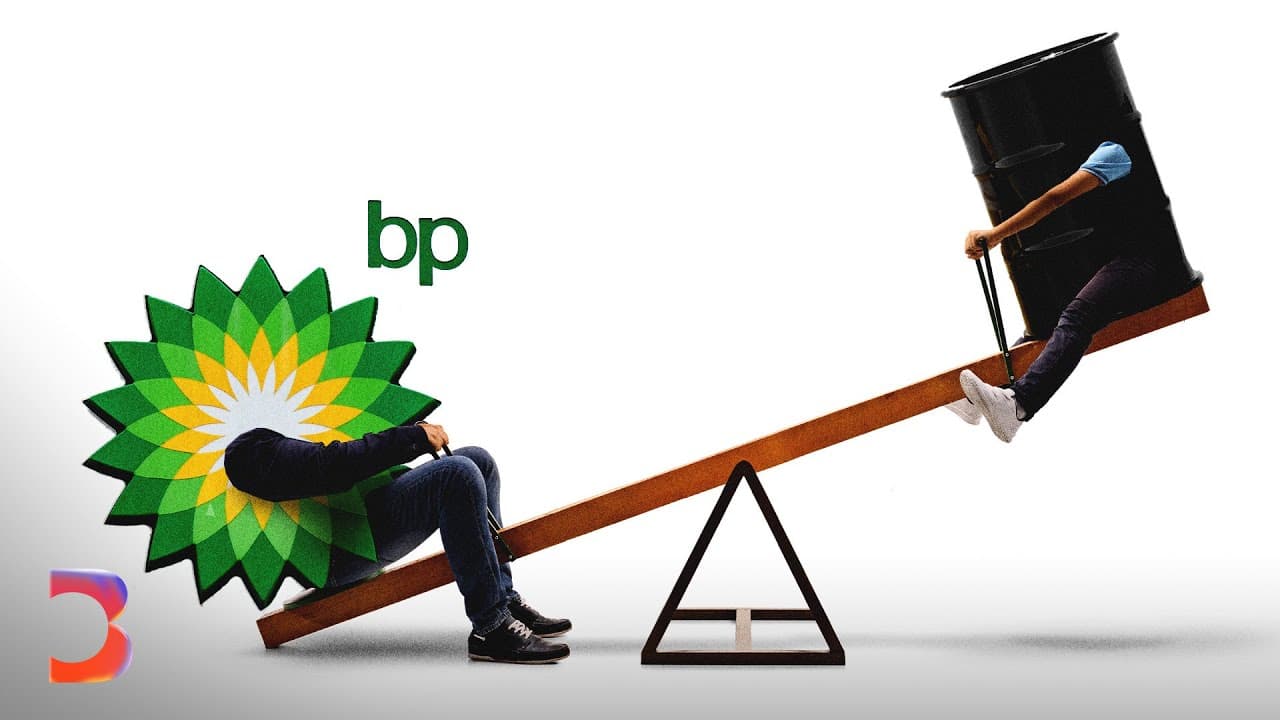
TL;DR
BP has faced significant challenges including financial losses, environmental disasters, and geopolitical tensions, leading to a decline in market value and investor confidence. The Deepwater Horizon spill and reliance on Russian operations were major setbacks. Recently, BP has been pressured by activist investors to reassess its strategy, shifting focus back to oil and gas amidst a complex global energy landscape.
Transcript
Record profits. Soaring gas prices. The cost of living crisis. Scorching heatwave. Natural disasters. How much worse could it get? It's really no surprise the term schadenfreude gets thrown around when an oil company is seen to be suffering. They want their profits at all costs, at the expense of our people and our lives. And right now, BP is reall... Read More
Key Insights
- BP's market value has significantly declined compared to its peers due to a series of missteps and disasters.
- The Deepwater Horizon oil spill was the most significant event in BP's history, costing over $60 billion.
- BP's reliance on Russian operations was severely impacted by geopolitical tensions, particularly the Ukraine crisis.
- BP attempted to pivot towards renewable energy but faced challenges in execution and market perception.
- Activist investor Elliot Management has taken a significant stake in BP, pushing for strategic changes.
- BP's debt levels are high compared to its competitors, necessitating cost-cutting and asset divestitures.
- Shell's strategic moves in liquified natural gas have been more successful compared to BP's initiatives.
- BP's future is uncertain as it navigates pressures from investors, geopolitical tensions, and the energy transition.
Install to Summarize YouTube Videos and Get Transcripts
Explore YouTube Video Summarizer or Get YouTube Transcript Extractor
Questions & Answers
Q: What caused BP's market value to decline?
BP's market value declined due to a combination of factors including the Deepwater Horizon oil spill, which resulted in massive financial losses and tarnished its public image. Additionally, its reliance on Russian operations was severely impacted by geopolitical tensions, particularly the Ukraine crisis, further affecting its market standing.
Q: How did the Deepwater Horizon spill affect BP?
The Deepwater Horizon spill was a catastrophic event for BP, costing the company over $60 billion and leading to a significant loss in market value. It also resulted in a damaged public image and restricted BP's ability to secure contracts with the US government for several years, impacting its operations and growth.
Q: Why did BP's strategy shift towards renewables face challenges?
BP's shift towards renewables faced challenges due to accusations of greenwashing and a miscalculation of future oil demand. The company predicted that global oil consumption had peaked, but geopolitical events, such as Russia's invasion of Ukraine, shifted priorities back to secure energy supplies, complicating BP's renewable strategy.
Q: What role did activist investors play in BP's recent strategy changes?
Activist investor Elliot Management took a significant stake in BP, pushing for transformative measures to boost value. Elliot's involvement has pressured BP to reassess its strategy, focusing more on traditional oil and gas operations while addressing its high debt levels and restructuring its management and board.
Q: How did BP's reliance on Russian operations impact the company?
BP's reliance on Russian operations was severely impacted by geopolitical tensions, especially after Russia's annexation of Crimea and the invasion of Ukraine. These events led to a substantial reduction in BP's production volumes and forced the company to abandon its Russian operations, significantly affecting its financial performance.
Q: What strategic moves did Shell make that differed from BP?
Shell made a strategic move by acquiring the UK's BG Group in a $70 billion bet on liquified natural gas, which paid off as global demand for secure energy supplies increased. Unlike BP, Shell retreated quickly from its energy transition strategy, which the market rewarded, contrasting with BP's prolonged focus on renewables.
Q: What are BP's current challenges in the oil industry?
BP's current challenges include managing high debt levels, responding to activist investor demands, and navigating geopolitical tensions that have disrupted its operations. The company is also grappling with balancing its strategy between traditional oil and gas and renewable energy amidst a shifting global energy landscape.
Q: How does BP's debt level compare to its competitors?
BP's debt level is significantly higher than its competitors, with a net debt-to-equity ratio of about 40% at the end of last year. This is far in excess of companies like Shell, Total, Chevron, and Exxon, making it essential for BP to cut costs and divest assets to stabilize its financial position.
Summary & Key Takeaways
-
BP has faced numerous challenges over the years, including environmental disasters like the Deepwater Horizon spill, which severely impacted its financial standing and public image. The company also struggled with its reliance on Russian operations amid geopolitical tensions, leading to further setbacks.
-
In recent years, BP attempted a strategic pivot towards renewable energy, but this approach faced criticism and accusations of greenwashing. The company has been under pressure from activist investors to reassess its strategy and focus more on traditional oil and gas operations.
-
Amidst these challenges, BP's high debt levels and competition from more successful rivals like Shell have compounded its difficulties. The company's future remains uncertain as it balances investor demands, geopolitical pressures, and the global energy transition.
Read in Other Languages (beta)
Share This Summary 📚
Summarize YouTube Videos and Get Video Transcripts with 1-Click
Try YouTube Summary with ChatGPT & Claude or YouTube Transcript Generator
Explore More Summaries from Bloomberg Originals 📚





Summarize YouTube Videos and Get Video Transcripts with 1-Click
Try YouTube Summary with ChatGPT & Claude or YouTube Transcript Generator