How Does COVAX Aim to Vaccinate the World Equitably?
TL;DR
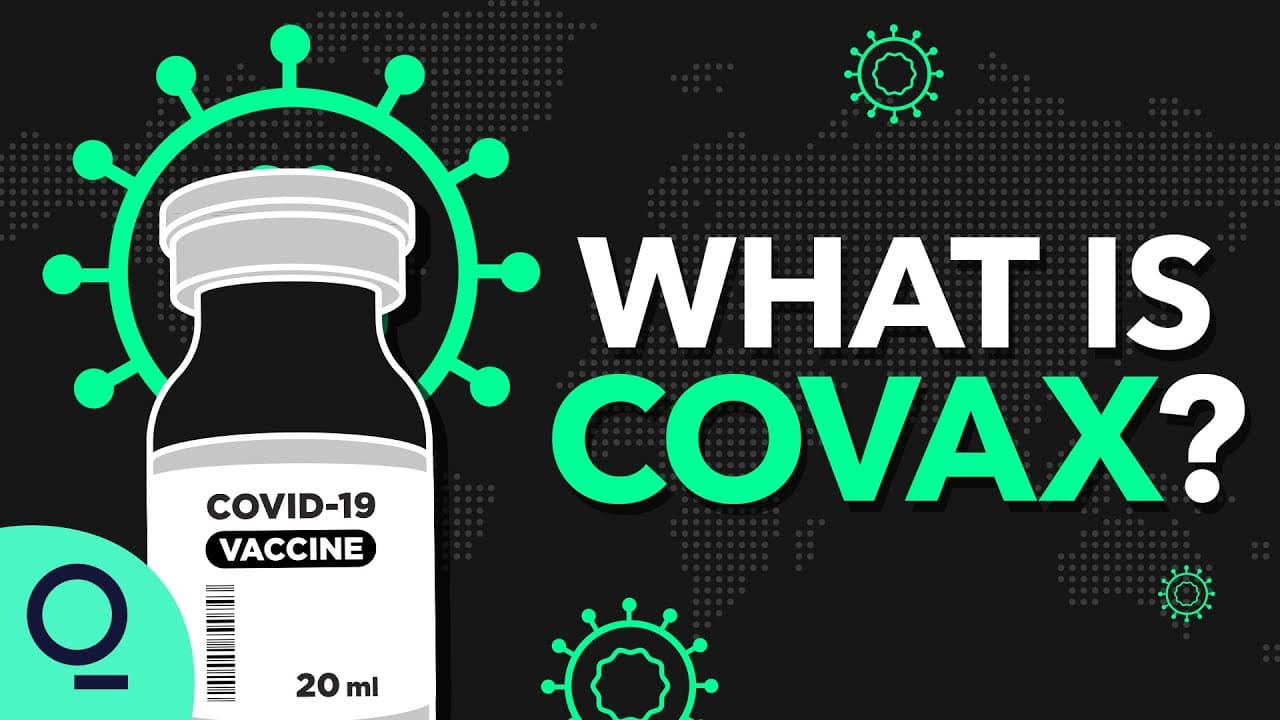
COVAX aims to vaccinate the world equitably by pooling purchases for wealthy participants and providing free doses to low-income countries with money raised from governments, development agencies and private contributors. More than 190 countries participate, but unequal access, limited manufacturing, financing needs and vaccine nationalism constrain distribution. The experience of Ethiopian nurse Hanna Samson shows why this system matters, and the details reveal why its success affects every country.
Transcript
I'm living here for eight months because I'm working in a COVID-19 center to save my family from the virus. I try to make a distance from my family. This is my reason to live here in the living room. It's hard that you live in one house, but you feel as though you live in another place. Hanna Samson is a nurse at the St. Paul's hospital in Ethiopia... Read More
Key Insights
- Personal sacrifice reveals inequity: Hanna Samson stayed in her living room for eight months and kept her distance from her family because she worked in a COVID-19 center. Her isolation demonstrates that unequal vaccine access affected daily family life, not merely national statistics. She was trying to protect relatives while continuing work that placed her directly in danger.
- Severe illness preceded vaccination: Hanna contracted COVID-19 in December 2020 and was admitted to the Millennium COVID care center. After arriving, she lost consciousness, spent 16 days in a high dependency unit and received oxygen. Her account connects delayed vaccine availability with the vulnerability of frontline workers who were caring for patients before protection became an option.
- COVAX changed Hanna's options: Health workers in the poorest countries often could not obtain a vaccine even while colleagues were becoming sick and dying. Through COVAX, Hanna was eventually able to receive one. Her case gives the initiative a concrete purpose: moving vaccine access toward people whose occupational exposure was high but whose countries struggled to secure supplies.
- Economic weakness limits negotiation: Many low-income countries entered the pandemic with financial constraints and heavy debt, leaving them unable to negotiate bilateral agreements like Europe and the U.S. Ethiopia demonstrates the pressure. Its public foreign debt stood at $27.8 billion at the end of 2019, and the combined health and economic shock led it to request relief through a G20 program.
- Three organizations divided responsibilities: The COVAX collaboration assigned distinct roles rather than treating vaccine access as one task. CEPI focused on research and development, Gavi concentrated on procurement and delivery, and WHO addressed the normative side. This division connected vaccine development with purchasing, international guidance and the practical work required to bring doses into participating countries.
- Participation follows two pathways: More than 190 countries take part in the COVAX facility, but they do not all participate on identical financial terms. Wealthier countries pay for doses through a common purchasing pool. Low-income countries receive free doses financed by governments, development agencies and private-sector contributions, reflecting the initiative's attempt to serve countries with sharply different purchasing power.
- Funding enables manufacturer agreements: COVAX started without money or vaccine deals, creating a sequencing challenge. It needed to raise funds while opening negotiations with manufacturers, because finance had to be available before agreements could be completed. The almost $7 billion raised and the additional $2 billion initiative therefore supported procurement, although funding could not guarantee access to scarce doses.
- Procurement includes precise commitments: Securing vaccines involves more than agreeing to buy a product. COVAX had to negotiate with pharmaceutical companies over the number of doses, their timing and their delivery. These terms determine whether participating countries can plan effective rollouts, so limited or delayed manufacturer commitments can restrict distribution even when international financing and demand already exist.
- Delivery requires country preparation: COVAX worked on supply agreements while also helping prepare countries for rollout on the ground. The two activities had to advance together because purchased doses would still need functioning delivery arrangements after arrival. This logistical burden helps explain why the effort is described as a huge international undertaking rather than simply a centralized vaccine purchasing fund.
- Dose access became the bottleneck: After large fundraising efforts, the immediate problem was not only money. COVAX also depended on others granting access to vaccines so it could serve most of the world's population. Wealthy countries' control and hoarding of available doses weakened the purchasing pool's ability to translate financing into equitable vaccination, leaving the initiative needing both additional funds and additional supply.
- Unequal vaccination creates shared risk: The consequences of poor-country shortages do not remain confined within national borders. The transcript identifies five or six variants of concern and highlights the fear that a variant could evade vaccine protection. Continued transmission in low-income countries could therefore return to developed countries, making donations and equitable access consistent with wealthy countries' own interests.
- Coverage remained far from sufficient: Existing fields state that COVAX donations covered only about 30% of low-income populations, which was described as insufficient for herd immunity. This shortfall clarifies the scale behind the 2 billion-dose target. It also explains why the initiative's early achievements were treated as meaningful but inadequate, with further financing, manufacturing capacity, dose access and international cooperation still required.
Install to Summarize YouTube Videos and Get Transcripts
Explore YouTube Video Summarizer or Get YouTube Transcript Extractor
Questions & Answers
Q: How does COVAX aim to vaccinate the world equitably?
COVAX combines pooled purchasing with subsidized access for countries that cannot afford bilateral vaccine deals. Wealthy participants pay for their doses through the COVAX purchasing pool, while low-income countries receive doses free through contributions from governments, development agencies and the private sector. Gavi focuses on procurement and delivery, CEPI handles research and development, and WHO addresses the normative side. This structure is intended to turn shared financing and coordinated negotiations into vaccine access across more than 190 participating countries.
Q: Why did Seth Berkley help create COVAX?
Seth Berkley, the head of Gavi, viewed pandemics as an evolutionary certainty and anticipated that vaccine access would become a major problem. At Davos in January 2020, he recognized that many countries would be unable to purchase vaccines independently once the pandemic spread. He discussed the emerging epidemic with CEPI CEO Richard Hatchett, which began the collaboration that developed into COVAX. The initiative was designed to provide an access route for countries lacking the financial capacity used by Europe and the U.S. to negotiate bilateral agreements.
Q: What challenges prevent COVAX from distributing more vaccines?
COVAX faces shortages in finance, manufacturing capacity, dose access and logistical readiness. It must raise money before making manufacturer agreements, negotiate the timing and delivery of scarce doses, and prepare countries to conduct rollouts. Wealthy countries' hoarding further reduces the supply available to the initiative, while pharmaceutical companies have been criticized for not sharing formulas that could expand production. As a result, raising money is necessary but cannot by itself secure enough vaccines for equitable distribution.
Q: How is COVAX funded, and how much had it raised?
COVAX raises money from governments, development agencies and private-sector contributors to provide free doses to low-income countries. Wealthier participants also purchase their own doses through its shared purchasing pool. The initiative had raised almost $7 billion and introduced a new effort to collect an additional $2 billion. Financing matters because COVAX began without money or agreements, and manufacturers required funding to be in place before concluding vaccine deals.
Q: Why is global vaccine inequality a risk for wealthy countries?
Unequal distribution leaves the virus circulating in countries with limited vaccine access. The transcript notes five or six variants of concern and identifies the possibility that a variant could evade the protection provided by vaccines. If the virus continues to rage in low-income countries, it may return to the developed world. Supporting COVAX is therefore presented not only as an equity measure, but also as an action aligned with wealthy countries' self-interest.
Q: How did COVAX affect nurse Hanna Samson?
Hanna Samson was a nurse at St. Paul's hospital in Ethiopia who worked in a COVID-19 treatment center. She contracted the virus in December 2020, lost consciousness after arriving for care and spent 16 days in a high dependency unit receiving oxygen and extensive support. Before vaccination, she had lived apart from her family inside the same home for eight months because she feared infecting them. COVAX later enabled her to receive a vaccine when access had not otherwise been an option for many health workers in poor countries.
Q: What roles do Gavi, CEPI and WHO play in COVAX?
The three organizations divide the initiative's work into complementary areas. CEPI focuses on research and development, while Gavi concentrates on procuring vaccines and delivering them to countries. WHO handles the normative side of the collaboration. Their coordinated roles matter because vaccine development alone does not provide access unless financing, purchasing, guidance and physical delivery are also addressed.
Q: Why is the AstraZeneca vaccine important to COVAX?
The existing page fields identify AstraZeneca as important to COVAX because it is affordable and easier to distribute than alternatives requiring more difficult handling. It can be stored at regular refrigerator temperatures, which simplifies delivery in resource-limited settings. The initiative relies heavily on it even though rare blood clot concerns complicated confidence and distribution. Its combination of lower cost and practical storage supports COVAX's effort to reach low-income countries, where financial and logistical constraints are substantial.
Summary & Key Takeaways
-
Frontline risk in Ethiopia: Nurse Hanna Samson lived apart from her family for eight months while working at a COVID-19 center. She contracted the virus in December 2020, lost consciousness after reaching the Millennium COVID care center and spent 16 days receiving oxygen and support. Her experience illustrates how workers in low-income countries remained exposed because vaccines were difficult to secure. COVAX eventually enabled Hanna to be vaccinated, turning a global distribution system into a direct source of protection.
-
Unequal access affects everyone: Rich countries raced to inoculate their populations while poor countries fell behind during the largest vaccination campaign in history. The U.N. characterized global distribution as wildly uneven and unfair, with only a very small proportion of doses used in low and middle income countries. This imbalance could allow concerning variants to emerge, including variants capable of evading vaccine protection. Ethiopia also faced economic pressure, carrying $27.8 billion in public foreign debt at the end of 2019 and later seeking G20 debt relief.
-
Building the COVAX partnership: Seth Berkley, head of Gavi, conceived the COVAX initiative at Davos in January 2020 after recognizing that countries unable to afford bilateral vaccine deals would need equitable access. He discussed the emerging epidemic with CEPI CEO Richard Hatchett, beginning a collaboration among several organizations. CEPI concentrated on research and development, Gavi focused on procurement and delivery, and WHO handled the normative side. Together, they formed a coordinated system involving more than 190 participating countries.
-
Pooling money and vaccine demand: Wealthy countries participate by paying for their doses through the COVAX purchasing pool. COVAX supplies doses free to low-income countries using contributions raised from governments, development agencies and the private sector. The initiative began without deals or money, so financing had to be secured while discussions with manufacturers were starting. Because manufacturers required finance before concluding agreements, fundraising and procurement were inseparable parts of the effort to obtain doses and distribute them internationally.
-
Scaling delivery despite shortages: COVAX had to negotiate timing and delivery with pharmaceutical companies while preparing countries for vaccine rollout on the ground. It aimed to deliver 2 billion doses by the end of the year, had raised almost $7 billion and launched an initiative seeking another $2 billion. Yet money alone could not resolve the central problem, because COVAX also needed access to doses controlled by others. Manufacturing constraints, wealthy-country hoarding and logistical demands continued to limit how quickly vaccines could reach poorer populations.
Read in Other Languages (beta)
Share This Summary 📚
Summarize YouTube Videos and Get Video Transcripts with 1-Click
Try YouTube Summary with ChatGPT & Claude or YouTube Transcript Generator
Explore More Summaries from Bloomberg Originals 📚
Summarize YouTube Videos and Get Video Transcripts with 1-Click
Try YouTube Summary with ChatGPT & Claude or YouTube Transcript Generator