How to Train Robots for Any Task with Physical Intelligence
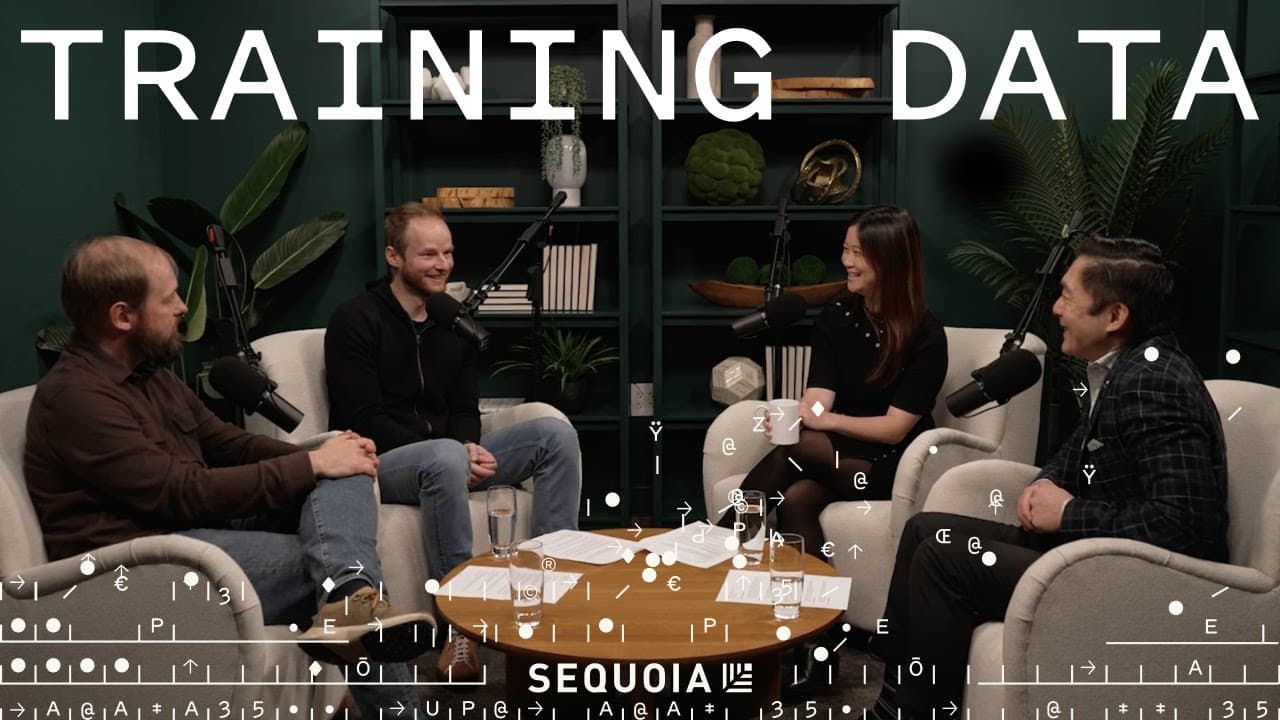
TL;DR
Physical Intelligence is transforming robotics by focusing on intelligence rather than hardware. Their models integrate vision, language, and action, enabling robots to perform diverse tasks. By using reinforcement learning, they achieve robust real-world performance, allowing robots to generalize across different environments and tasks.
Transcript
Just like the fact that this whole thing works, it's kind of mind-blowing. >> Yeah. >> Right. Like you you build this like loosely brain inspired thing that has very general purpose learning algorithm. You feed it data and it somehow gets it and gets it way better than anything we've ever had before. And this applies to robots and it applies to vis... Read More
Key Insights
- Physical Intelligence focuses on intelligence bottlenecks in robotics, not hardware limitations.
- End-to-end learning integrates vision, language, and action for generalizable robot behavior.
- Reinforcement learning from experience allows robots to overcome the limits of imitation learning.
- The Pi Star 0.6 model demonstrates robust real-world performance across diverse tasks.
- Robots can now perform tasks like making coffee for extended periods, showcasing reliability.
- Generalization is achieved through diverse data, enabling robots to adapt to new environments.
- Deployment of robots in real-world settings is a key focus for data collection and improvement.
- The ultimate goal is a single model capable of handling various tasks across different robots.
Install to Summarize YouTube Videos and Get Transcripts
Explore YouTube Video Summarizer or Get YouTube Transcript Extractor
Questions & Answers
Q: How does Physical Intelligence improve robotics?
Physical Intelligence enhances robotics by focusing on overcoming the intelligence bottleneck rather than hardware limitations. They develop foundation models that integrate vision, language, and action, enabling robots to learn generalizable behaviors. This approach allows robots to adapt to new environments and perform diverse tasks, moving beyond task-specific programming.
Q: What is the role of reinforcement learning in Physical Intelligence's approach?
Reinforcement learning is crucial in Physical Intelligence's approach as it allows robots to learn from experience and improve beyond imitation learning. By deploying robots in real-world settings, they collect data and receive feedback, enabling the models to refine their performance and handle a wider variety of tasks with greater reliability.
Q: How do Physical Intelligence's models achieve generalization?
The models achieve generalization by training on diverse data, which helps them adapt to new environments and tasks. This diversity in training data allows the robots to develop a form of common sense, enabling them to perform tasks in unfamiliar settings with some degree of reliability, even when they encounter new objects or scenarios.
Q: What are the key features of the Pi Star 0.6 model?
The Pi Star 0.6 model demonstrates the ability to perform tasks reliably over extended periods, such as making coffee for 13 hours. It integrates vision, language, and action, allowing it to learn from experience through reinforcement learning. This model represents a significant step towards deploying robots in real-world settings with robust performance.
Q: Why is real-world deployment important for Physical Intelligence?
Real-world deployment is essential as it provides valuable data for improving the models. By deploying robots in various settings, Physical Intelligence can collect diverse data that enhances the models' ability to generalize and perform reliably. This deployment-driven data collection is expected to be a major source of improvement and scalability for the models.
Q: How does Physical Intelligence's approach differ from traditional robotics?
Traditional robotics often focuses on hardware and task-specific programming, while Physical Intelligence emphasizes overcoming the intelligence bottleneck. Their approach involves developing general-purpose models that integrate vision, language, and action, allowing robots to learn and adapt to a wide range of tasks and environments, rather than being limited to specific applications.
Q: What challenges do Physical Intelligence face in achieving generalization?
The main challenges include ensuring that models can adapt to new environments without extensive retraining and handling the diversity of real-world scenarios. Achieving reliable performance across various tasks requires a comprehensive understanding of how to effectively train models with diverse data and refine them through real-world experience and feedback.
Q: What is the long-term vision for Physical Intelligence's models?
The long-term vision is to develop a single general-purpose model capable of handling diverse physical tasks across different robot embodiments. This would revolutionize the way intelligent machines are built, allowing for more flexible and adaptable robots that can be deployed in a variety of settings, performing tasks with human-like versatility and reliability.
Summary & Key Takeaways
-
Physical Intelligence aims to overcome the intelligence bottleneck in robotics by focusing on foundation models that integrate vision, language, and action. Their approach enables robots to learn generalizable behaviors rather than task-specific programs, allowing them to adapt to new environments and tasks.
-
The Pi Star 0.6 model showcases the ability of robots to perform tasks reliably for extended periods, such as making coffee for 13 hours straight. This reliability is crucial for real-world deployment and is achieved through reinforcement learning from experience, which pushes beyond the limits of imitation learning.
-
By focusing on intelligence rather than hardware, Physical Intelligence is paving the way for a single general-purpose model capable of handling diverse physical tasks across different robot embodiments. This represents a fundamental shift in how intelligent machines are built for the physical world.
Read in Other Languages (beta)
Share This Summary 📚
Summarize YouTube Videos and Get Video Transcripts with 1-Click
Try YouTube Summary with ChatGPT & Claude or YouTube Transcript Generator
Explore More Summaries from Sequoia Capital 📚


Summarize YouTube Videos and Get Video Transcripts with 1-Click
Try YouTube Summary with ChatGPT & Claude or YouTube Transcript Generator