How Did the IBC Transform Indian Banking?
TL;DR
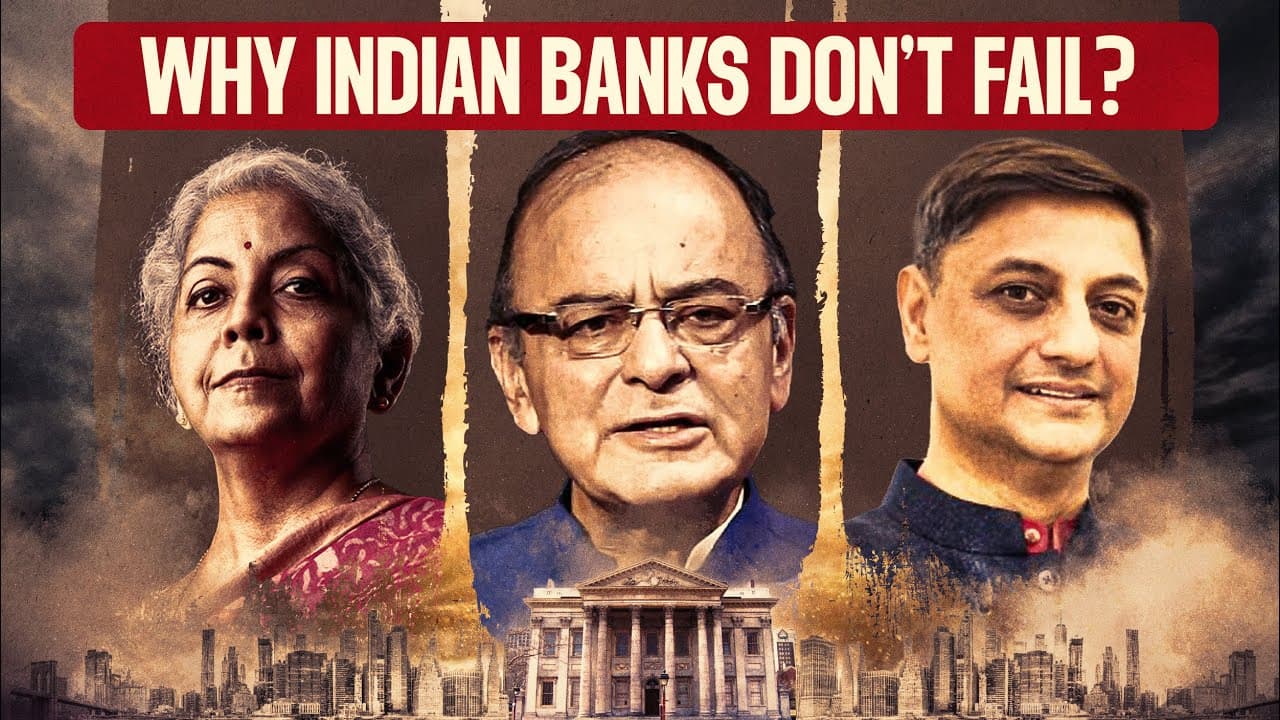
India’s Insolvency and Bankruptcy Code created a unified process for addressing financially distressed companies, giving creditors a clearer route to initiate insolvency proceedings. According to the case study, it helped save banks ₹3.16 lakh crore, while recovery rose from 26 cents per dollar before the reform to 71.6 cents per dollar by 2021.
Transcript
hi everybody if you're a upsc law or an economic student this is one of the most important case studies you will ever studied we all know what happened to Kingfisher Airlines right and if you remember these kind of defaults and thousands of crores in losses were not a new thing in India at all in a big win for Indian Banks a London high court has d... Read More
Key Insights
- India’s pre-2016 insolvency framework was divided across seven acts and several authorities, which handled distinct stakeholder claims without consistently addressing the financially distressed company as a whole. This fragmentation created conflicting actions, weak coordination, and delays while the underlying business continued losing value.
- Bankruptcy becomes relevant when a company cannot pay its vendors, banks, or employees, or when its liabilities exceed its assets. The case study presents insolvency proceedings as a mechanism for addressing this financial distress before the company collapses and destroys jobs, creditor recoveries, and shareholder value.
- Civil courts, debt recovery tribunals, and the company law board served different constituencies before the IBC. Civil courts handled unpaid salaries and contracts, tribunals focused on recovering loans, and the company law board addressed shareholder-rights disputes, leaving no coordinated response to the root financial problem.
- India’s insolvency resolution process previously took an average of 4.3 years. Such delays could discourage employees from pursuing unpaid claims and allow distressed businesses to deteriorate, reducing the value available to banks, vendors, employees, shareholders, and other affected parties.
- India’s earlier recovery rate was only 26 cents per dollar, according to the case study. Applied to ₹1 lakh crore trapped in distressed companies, that rate meant recovering ₹26,000 crore while ₹74,000 crore remained unrecovered or was lost.
- The Insolvency and Bankruptcy Code was introduced in 2016 when Indian banks were struggling with bad debt and the country was approaching a banking crisis. The reform sought to give creditors stronger tools for dealing with promoters, stressed assets, and companies unable to meet their obligations.
- The IBC allows both operational and financial creditors to initiate insolvency. Operational creditors include employees and vendors, while financial creditors include banks and non-banking financial companies. The transcript states that anyone owed ₹1 crore by the company can begin the process.
- India’s reported recovery rate reached 71.6 cents per dollar by 2021 after the IBC’s introduction. For ₹1 lakh crore stuck in distressed companies, the case study translates this into approximately ₹71,500 crore recovered, representing a stated improvement of ₹45,600 crore per ₹1 lakh crore.
Install to Summarize YouTube Videos and Get Transcripts
Explore YouTube Video Summarizer or Get YouTube Transcript Extractor
Questions & Answers
Q: What is India’s Insolvency and Bankruptcy Code?
India’s Insolvency and Bankruptcy Code, or IBC, is a bankruptcy framework introduced by the NDA government in 2016 to address financially distressed companies through a more unified process. It replaced a fragmented environment involving seven acts and multiple authorities that separately handled employee, vendor, bank, and shareholder claims without consistently resolving the company’s underlying financial problems.
Q: Why was the Insolvency and Bankruptcy Code introduced in India?
The IBC was introduced because India’s earlier system was fragmented, slow, and ineffective at preserving value. Insolvency cases took an average of 4.3 years to resolve, and the recovery rate was only 26 cents per dollar. Banks also lacked sufficient tools to make promoters pay or restore stressed assets, contributing to the banking difficulties described for 2017 and 2018.
Q: How did bankruptcy cases work in India before 2016?
Before 2016, bankruptcy-related disputes were governed through seven acts and multiple institutions. Employees and customers could approach civil courts, banks used debt recovery tribunals, and investors relied on the company law board. Each institution focused on its assigned claims, such as salaries, contracts, loans, or shareholder rights, but the overall system often failed to solve the company’s core financial distress.
Q: How did the old insolvency system affect employees and creditors?
The old system could leave employees waiting several years for court cases while banks hesitated to register complaints because disclosing bad loans could damage their reputation and concern shareholders. As distressed companies deteriorated or closed, employees lost jobs, creditors lost money, and shareholders saw their investments decline. The fragmented process therefore harmed several groups without repairing the underlying business.
Q: Who can initiate insolvency proceedings under the IBC?
Both operational creditors and financial creditors can initiate insolvency under the framework described in the transcript. Operational creditors include company employees and vendors, while financial creditors include banks and non-banking financial companies. The stated threshold is a debt of ₹1 crore, meaning anyone to whom the company owes that amount can initiate the insolvency process.
Q: How did the IBC change creditor recovery rates?
The case study states that India recovered only 26 cents per dollar before the reform, but the recovery rate reached 71.6 cents per dollar by 2021. For every ₹1 lakh crore trapped in distressed companies, the comparison is approximately ₹26,000 crore recovered earlier versus ₹71,500 crore in 2021, a stated improvement of ₹45,600 crore.
Q: How much money did the IBC save Indian banks?
According to the case study, the Insolvency and Bankruptcy Code saved Indian banks ₹3.16 lakh crore. The transcript connects this result to a stronger and more coordinated process for handling stressed companies and recovering creditor funds. It also argues that preventing uncontrolled corporate collapse helped protect jobs and made the code an important pillar of the Indian economy.
Q: Why can bankruptcy help a struggling company remain in business?
Bankruptcy can provide a formal way to address a company’s inability to pay vendors, banks, or employees instead of simply allowing it to collapse. The transcript cites Go First as an airline that filed for bankruptcy while remaining in business. The broader argument is that an organized insolvency process can confront financial distress while preserving operations, jobs, and recoverable value.
Summary & Key Takeaways
-
Before 2016, India’s insolvency framework involved seven acts and multiple authorities handling separate claims. Civil courts addressed matters such as unpaid salaries and contracts, debt recovery tribunals pursued bank loans, and the company law board handled shareholder disputes. Their fragmented efforts often failed to resolve the company’s underlying financial distress.
-
The fragmented system produced long delays and poor recoveries. Insolvency resolution took an average of 4.3 years, while creditors recovered only 26 cents per dollar. Employees could face prolonged court cases, banks risked exposing bad-loan records, and distressed companies could collapse before their assets or operations were effectively rescued.
-
The Insolvency and Bankruptcy Code was introduced in 2016 as a unified response to these problems. Operational creditors, including employees and vendors, and financial creditors, including banks and non-banking financial companies, can initiate insolvency when a company owes ₹1 crore. By 2021, the reported recovery rate had reached 71.6 cents per dollar.
Read in Other Languages (beta)
Share This Summary 📚
Summarize YouTube Videos and Get Video Transcripts with 1-Click
Try YouTube Summary with ChatGPT & Claude or YouTube Transcript Generator
Explore More Summaries from Think School 📚





Summarize YouTube Videos and Get Video Transcripts with 1-Click
Try YouTube Summary with ChatGPT & Claude or YouTube Transcript Generator