How Does The Power of Now Teach Presence?
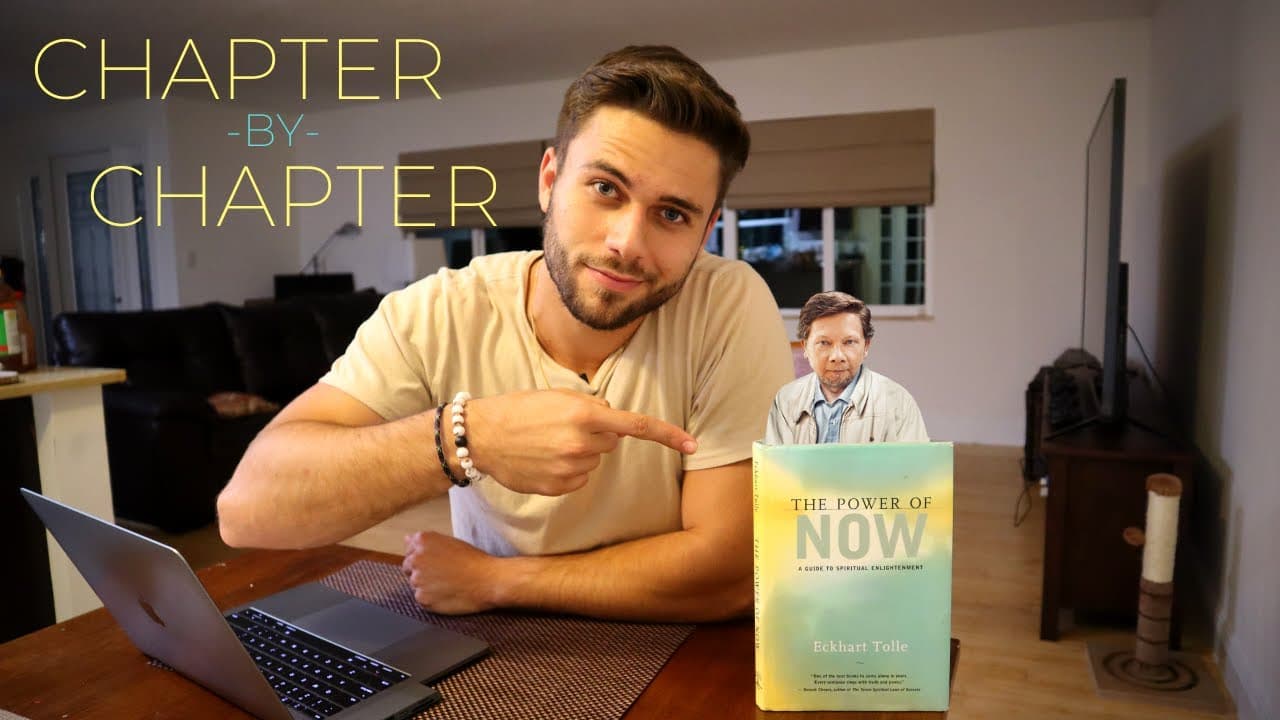
TL;DR
Presence reduces psychological suffering by shifting attention away from regret about the past and worry about the future. The central practice is to observe thoughts without treating them as your identity, then anchor attention in breathing, bodily sensations, surrounding details, silence, and empty space. This separates awareness from the thinking mind and weakens dependence on external outcomes for fulfillment.
Transcript
if you're watching this video you probably just recently became aware of this book and one a little bit more about it before you go ahead and commit to reading the entire thing I'll do my best to summarize it right now but at the end I'm gonna show you three reasons why I think you should absolutely read the whole thing anyway because it is just th... Read More
Key Insights
- The present moment is the only moment directly available because past events occurred in former present moments, while the future remains a mental projection. Attention to the present therefore reduces the tendency to live through memories, anticipation, regret, or worry.
- You are not your mind because thoughts can be observed as events appearing within awareness. Seeing yourself as the observer, or as a blank canvas through which thoughts pass, makes it easier to release thoughts without judging them or building an identity around them.
- The anxiety gap is the separation between a body that is always in the present and a mind projected into an imagined future. According to the summary, this mismatch creates anxiety and can be reduced by returning attention to breathing, physical sensations, sounds, and immediate surroundings.
- The pain body is accumulated pain and mental suffering that can become part of a person’s identity. Identification makes release difficult because letting go of pain may feel like losing the familiar self that has been constructed around suffering.
- Inner stability is strengthened by separating self-worth from opinions and outcomes. When identity is not tied to winning an argument, achieving success, or avoiding failure, being wrong or experiencing an unwanted result does not have to destroy the mind-based sense of self.
- Life is present being and the felt aliveness within the body, while a life situation consists of external conditions such as possessions, family circumstances, housing, and work. Confusing the two encourages people to seek lasting fulfillment from conditions that are inherently impermanent.
- Presence is experienced through stillness rather than understood only as an intellectual concept. Listening for silence beneath and between sounds, noticing empty space around objects, and sensing life within each body part are presented as practical portals into deeper awareness.
- Outer purpose is an activity or material objective, while inner purpose is awakening to presence. Once inner purpose is recognized, external work can become something performed for enjoyment rather than a source of identity, salvation, or permanent fulfillment.
- Related book: The Power of Now
- Export your Kindle highlights to Glasp: How to Download Highlights and Notes from Kindle
- More videos about this book:
- More videos with Eckhart Tolle:
Install to Summarize YouTube Videos and Get Transcripts
Explore YouTube Video Summarizer or Get YouTube Transcript Extractor
Questions & Answers
Q: How can you stop identifying with your thoughts?
You can stop identifying with thoughts by noticing them as mental events rather than assuming they are your identity. The summary compares awareness to a blank canvas on which thoughts appear. Meditation supports this shift by placing full attention on breathing, bodily sensations, surrounding sounds, or small details in ordinary activities. Observing a thought without judgment allows it to pass without controlling your sense of self.
Q: Why does thinking about the future create anxiety?
Future-focused thinking can create what the summary calls the anxiety gap. The body necessarily exists in the present, but the mind projects itself into a future moment that does not yet exist. This separation can produce unease, tension, stress, worry, and anxiety. Returning attention to immediate sensory experience closes the gap by bringing the mind back into alignment with the body’s present location.
Q: What is the pain body in The Power of Now?
The pain body is described as the accumulated pain and mental suffering built up throughout a person’s life. The main problem arises when that pain becomes part of personal identity. A person may then resist releasing it because doing so feels like losing who they are. Observing pain consciously, without treating it as the self, creates room for a different relationship with suffering.
Q: How does present-moment awareness reduce regret and worry?
Present-moment awareness redirects attention from mental time to what is happening now. The summary connects worry, stress, tension, and anxiety with excessive focus on the future. It connects guilt, regret, resentment, sadness, bitterness, and non-forgiveness with excessive focus on the past. Focusing fully on breathing, sensations, sounds, silence, or immediate surroundings interrupts these recurring mental patterns and reduces their influence.
Q: What is the difference between life and a life situation?
Life is described as present being, including the sense of aliveness felt when attention is rooted in the body and the current moment. A life situation consists of external circumstances, such as housing, family, possessions, work, and other conditions. The distinction matters because circumstances change, while inner presence does not need to depend on those conditions for identity, happiness, or fulfillment.
Q: How can you practice presence through the inner body?
Presence can be practiced by directing attention into the body and feeling its inner aliveness. One suggested meditation is to move attention through the body part by part, noticing the sensation that confirms each part is there even without touching anything. Breathing can serve as another anchor. This practice uses the physical body as an entry point into awareness without reducing identity to the body alone.
Q: Why should self-worth not depend on opinions or outcomes?
When self-worth is attached to an opinion, losing an argument can feel like the destruction of the mind-based self. Similarly, when fulfillment depends on future success, both achievement and failure gain power over a person’s inner state. The summary recommends separating identity from mental positions and results. This makes it possible to be wrong, fail, or succeed without allowing the outcome to determine fundamental worth.
Q: What do silence and empty space represent in presence practice?
Silence and empty space illustrate the awareness that allows experiences to exist. Sound depends on silence, and physical objects depend on the space around them. In the same way, thoughts appear within consciousness. Listening to silence between sounds or noticing space around objects can therefore help a person recognize awareness as the stable background of experience and stop confusing passing thoughts with the self.
Summary & Key Takeaways
-
The book’s central claim is that you are not your thinking mind. Thoughts arise within awareness, but they do not define the observer who notices them. Meditation and careful attention to breathing, bodily sensations, sounds, and ordinary surroundings can interrupt compulsive thinking and bring attention back to the present moment.
-
Psychological suffering often develops when the mind leaves the present. Future-focused thinking can produce unease, anxiety, tension, stress, and worry, while past-focused thinking can sustain guilt, regret, resentment, sadness, bitterness, and non-forgiveness. Presence loosens these patterns by directing awareness toward the only moment in which life actually occurs.
-
Inner freedom grows when identity and fulfillment no longer depend on opinions, possessions, roles, success, or failure. The summary distinguishes life, understood as present being and inner aliveness, from a life situation, which includes external circumstances. Accepting, changing, or leaving a situation is presented as more constructive than persistent resistance and complaint.
Read in Other Languages (beta)
Share This Summary 📚
Summarize YouTube Videos and Get Video Transcripts with 1-Click
Try YouTube Summary with ChatGPT & Claude or YouTube Transcript Generator