What Are the Cephalic and Gastric Phases of Gastric Secretion?
TL;DR
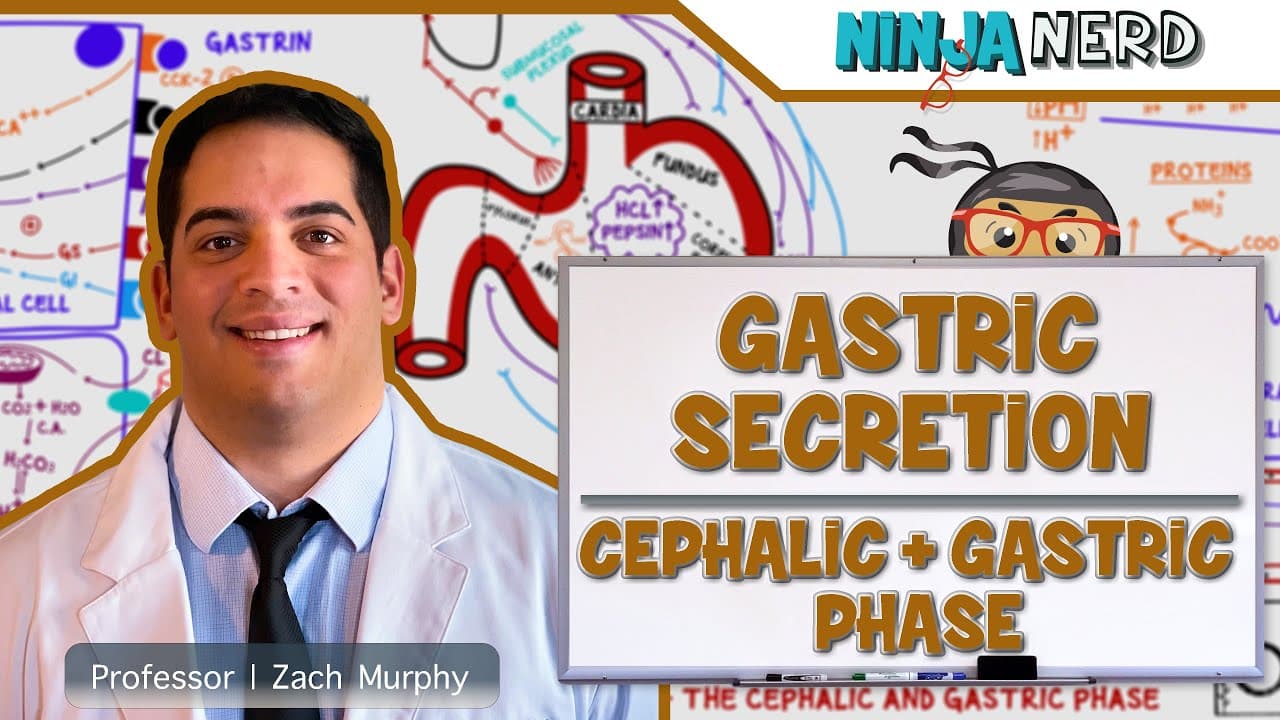
The cephalic phase of gastric secretion is triggered by the sight, thought, smell, and taste of food, accounting for one-third of gastric juice production. The gastric phase, stimulated by stomach distension and partially digested proteins, accounts for the remaining two-thirds. Key regulators of these phases include gastrin, histamines, acetylcholine, and somatostatin.
Transcript
I ninja nerds in this video we're going to talk about gastric secretions others three important phases of gaseous secretion cephalic gastric and intestinal in this video we're primarily going to discuss the cephalic in the gastric phase okay but again I want you to remember that when we talk about this gastric secretions have this in a two part vid... Read More
Key Insights
- ❓ The cephalic phase accounts for one-third, while the gastric phase accounts for two-thirds of gastric secretions.
- 🥫 Sight, thought, smell, and taste of food stimulate the cephalic phase, while distension and partially digested proteins stimulate the gastric phase.
- ❓ Gastrin, histamines, acetylcholine, and somatostatin are chemicals involved in regulating gastric acid and pepsinogen secretions.
- 😰 The parasympathetic nervous system promotes gastric secretions, while the sympathetic nervous system inhibits them.
Install to Summarize YouTube Videos and Get Transcripts
Explore YouTube Video Summarizer or Get YouTube Transcript Extractor
Questions & Answers
Q: What is the primary stimulus for the cephalic phase of gastric secretion?
The primary stimuli for the cephalic phase are the sight, thought, smell, and taste of food. These stimuli send signals to the brain, which then activates the release of gastric juices.
Q: How does the stomach know when to start secreting gastric acid in response to food?
The stomach has stretch receptors that detect the distension of the stomach walls when food enters. This triggers the release of gastric acid by stimulating the vagus nerve and activating the parietal cells.
Q: What role do G cells play in gastric secretion?
G cells, located in the gastric glands of the stomach, secrete gastrin in response to the presence of partially digested proteins. Gastrin then stimulates the release of hydrochloric acid and pepsinogen by the parietal and chief cells, respectively.
Q: What inhibits the release of gastric acid and pepsinogen during the cephalic and gastric phases?
The sympathetic nervous system is a strong inhibitor of gastric secretion during these phases. Stress, emotional upset, or activation of the sympathetic nervous system can inhibit the release of gastric acid and pepsinogen.
Key Insights:
- The cephalic phase accounts for one-third, while the gastric phase accounts for two-thirds of gastric secretions.
- Sight, thought, smell, and taste of food stimulate the cephalic phase, while distension and partially digested proteins stimulate the gastric phase.
- Gastrin, histamines, acetylcholine, and somatostatin are chemicals involved in regulating gastric acid and pepsinogen secretions.
- The parasympathetic nervous system promotes gastric secretions, while the sympathetic nervous system inhibits them.
- Mucus cells and the mucosal barrier protect the stomach from the corrosive effects of hydrochloric acid and pepsin.
Summary & Key Takeaways
-
The cephalic phase of gastric secretion accounts for about one-third of the gastric juice secreted by the stomach. It is stimulated by the sight, thought, smell, and taste of food.
-
The gastric phase is responsible for the remaining two-thirds of gastric secretions. It is stimulated by the distension of the stomach and the presence of partially digested proteins.
-
Gastrin, histamines, acetylcholine, and somatostatin are key chemicals involved in regulating the secretion of gastric acid and pepsinogen.
Read in Other Languages (beta)
Share This Summary 📚
Summarize YouTube Videos and Get Video Transcripts with 1-Click
Try YouTube Summary with ChatGPT & Claude or YouTube Transcript Generator
Explore More Summaries from Ninja Nerd 📚




Summarize YouTube Videos and Get Video Transcripts with 1-Click
Try YouTube Summary with ChatGPT & Claude or YouTube Transcript Generator